

Apple HomeView Is A $299 Smart Display That Looks Like A Tiny iMac And Recognizes Your Face
We may receive a commission on purchases made from links.
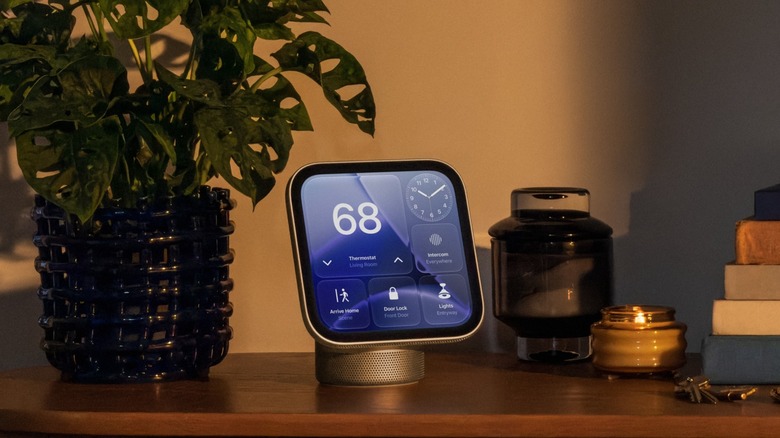
Apple recently announced Apple HomeView, a smart screen device that appears designed to rival competitors like the Echo Show and Nest Hub. Consisting of a 7-inch Liquid Retina display, the device will allow users to make FaceTime calls, access Messages and other personal content across Apple's native apps, manage smart home apps and devices, monitor their homes, set up automations with voice control, play music, and more.
Apple assumes that it will be a device multiple members of a household may use. Thus, it will recognize the faces of individual users, personalizing the experience accordingly.
Apple HomeView also leverages an updated version of Siri, Siri AI. The Cupertino company promises this incarnation of the well-known virtual assistant offers more conversational interactions and a custom experience when paired with an Apple Intelligence-enabled device.
Users can place the HomeView in various spots throughout a home. For example, it can be put on a table with a stand, or it can be wall-mounted in spaces that get a lot of foot traffic, like hallways.
The Apple HomeView is available for pre-order. It will become widely available to consumers starting November 13.
HomeView takes on Echo Show and Nest Hub, but will anyone care?

It's impossible to predict how well the Apple HomeView will perform when the company has just introduced the device. What's already clear is that Apple is trying to appeal to consumers who may have already been drawn to options like the Google Nest Hub or Amazon Echo Show.
To some extent, there appears to be demand for these items. According to a survey from Horowitz Research, about 70% of consumers who already own two or more smart home devices indicate they want a centralized hub that allows them to control these devices together. Apple's smart screen could be that hub.
Whether it will succeed remains to be seen. Those who've had the chance to see demonstrations of the HomeView note that it primarily seems like a new way to use an iPhone in the home without actually using an iPhone. Similarly, the "new" version of Siri it uses is the same one that was introduced with the iPhone with iOS 27. In other words, it's only really valuable to users who already own iPhones, and even then, it might not add enough extra features to justify the $299 price tag.
The fact that the HomeView allows users to add up to six profiles might sound like a convenient strength of a smart home hub — it's something that competing devices don't handle particularly well. There are definitely question marks here. For example, different members of a household may not feel comfortable all using the same device for personal tasks. Users might not fully leverage the personalization capabilities of the HomeView because they could worry about other users accessing their information. In a busy location, like a kitchen, how would the device hand off between users when two or more members of the household are present?
Apple bets the HomeView will be unique enough to outshine the Nest Hub and Echo Show
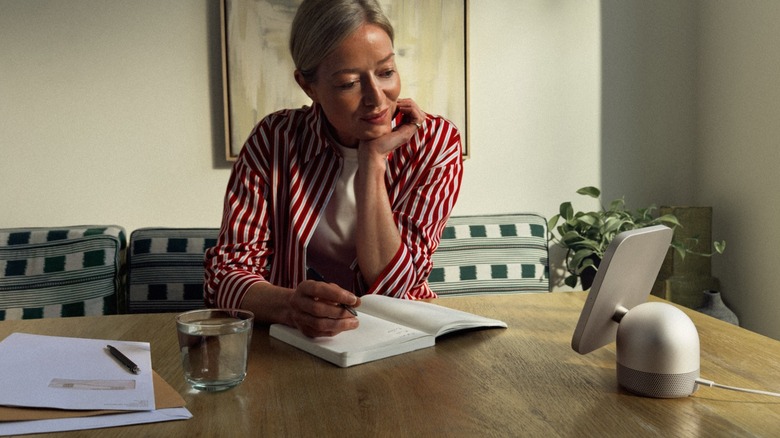
As is often the case with Apple products, the HomeView boasts a sleek and minimalist design that makes it look natural in virtually any home environment. Like many smart screen devices, the idea is that it will offer much of the functionality a smartphone or tablet already offers, but in a form that's more useful for certain household tasks. For example, compared to using a phone, it might be easier to use this type of device when following a recipe in the kitchen.
That's just one potential use case for the HomeView. While the price point is competitive — the Echo Show 11 retails for $249 on Amazon — it remains to be seen if consumers will be willing to shell out almost $300 for a first-generation product like this. What's already clear is the Apple HomeView will deliver the most value to users who currently use other Apple products. If that's not you, you'll have to consider the features and strengths of this device more thoroughly to determine if there's any reason to purchase one.