

What Are Spring Lines Used For In Boating And Why Are They So Important?
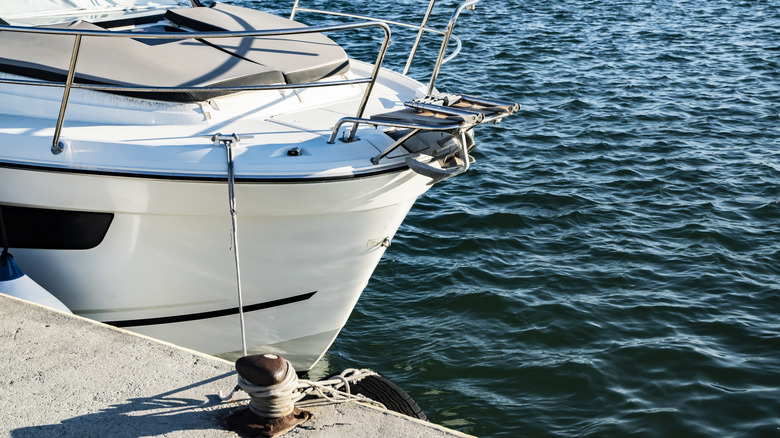
When you tie up a boat during mooring or docking, your goal isn't only to stop it from floating away. The boat needs to be prevented from sliding forward and backward as wind, current, waves, and even other boats push against the hull. This is where the importance of spring lines comes in. When docking, these ropes (or lines, as sailors call them) are used to stop the boat's fore and aft motion (going forward and backward). Used the right way, your boat will have limited movement, as spring lines add stability, take stress off your other dock lines, and help safeguard both the hull and the pier from damage.
There are two main types of spring lines: Forward spring lines and aft spring lines. The forward ones keep the boat from sliding backward, and they run from a cleat at the back of the boat to the one positioned toward the bow. On the other hand, aft spring lines stop the boat from going forward, and they run from a cleat at the front of the boat to a dock cleat positioned toward the stern. When you use both of these spring lines at the same time, the boat will keep steady without any unwanted movement from external factors.
Spring lines are a very important part of boating, as they keep the boat from moving around at the dock. They also help prevent any accidents, like people falling when getting on or off the boat, and keep the boat from bumping into things due to too much shifting in the water.
How to set up spring lines on a boat?
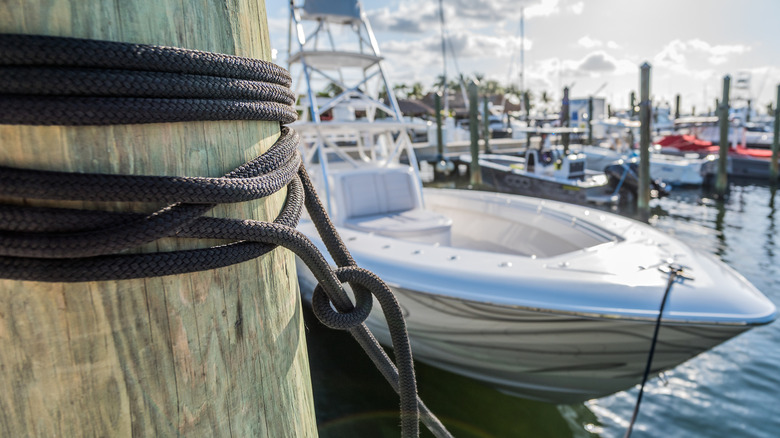
There are certain ways some things should be done, like the 1/3 rule, and it's the same when it comes to spring lines. As mentioned, spring lines are attached to dock cleats and boat cleats, but where you specifically attach a spring line on a boat depends on your vessel and docking situation. There are several options, since a spring line could go on the bow, the stern, a midship cleat, or a special spring cleat.
That being said, as a rule, boats longer than 55 feet need four main tie-up points: Two up front and two in back. Also, a couple of extra cleats have to be placed along the middle sides, and when setting up the spring lines, they ought to be attached to the front and rear cleats on the boat. The forward spring line goes from a cleat at the back of your boat to a dock cleat at least half the boat's length toward the front. Similarly, the aft spring line goes in reverse, where it runs from the bow to a dock cleat at least half the boat's length toward the back. With this, in combination with the breast lines that tie the boat to dock cleats using two parallel ropes, the boat should barely move at all, even in harsher weather.
When using any sort of lines, you should also make sure that your boat cleats are the right size and firmly attached. In addition, lines should be a little longer than the boat, and preferably made out of nylon, as its elasticity functions well under tension and helps absorb shock loads. Outside of spring lines and docking, though, you'd do well to bring some seaworthy gadgets when boating, as the right accessory may improve your docked and undocked boating experience.