

Why Do Some Marine Buoys Have Bells On Them?
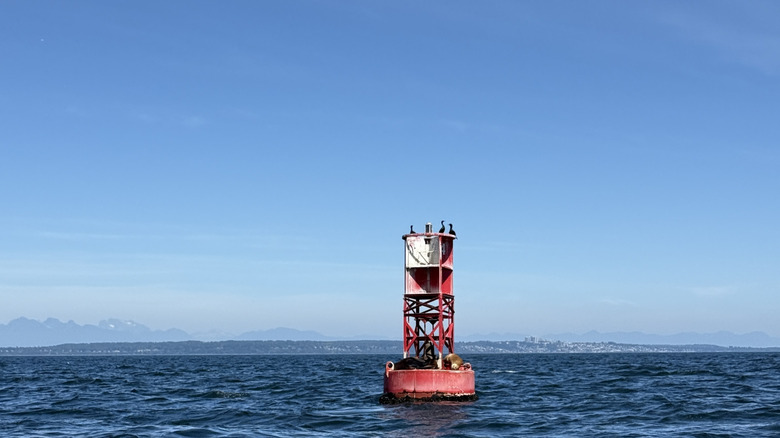
Buoys are basically the traffic signs and signals of the water. They provide essential information to boaters, ensuring safety and adherence to all applicable laws and regulations. For example, red and green buoys mark navigation channels, white buoys indicate mooring points, while orange buoys signal controlled waters where special rules apply. However, conditions don't always make it easy (or possible) for a boater to see a buoy ahead of them. That's why some buoys have bells.
Even when fog or other conditions render a buoy practically invisible, the water's rocking motion can cause the bell to toll, providing boaters with an auditory alert. Of course, bells aren't the only mechanisms that notify boaters of a buoy's presence in poor visibility. Some buoys have gongs that serve the same essential purpose. Some buoys may also have lights that boost visibility in poor conditions.
The bells attached to buoys usually aren't small "jingle" bells, as those certainly wouldn't be loud enough to attract boaters' attention. Instead, they're often corrosion-resistant silicon bronze bells that can weigh between 200 and 400 pounds. These factors may explain why buoy bells have attracted thieves in the past.
Bell buoys are less common than they used to be
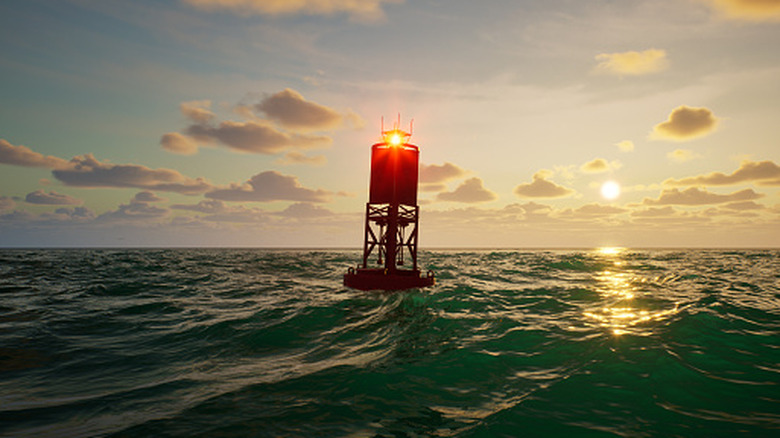
Bell buoys aren't as common as they used to be, but they still exist: the U.S. Coast Guard maintains lists of buoys and other navigation aids under its jurisdiction, indicating that bell buoys are still present in U.S. waters. However, some bell buoys have had their bells removed as part of an upgrade.
The Coast Guard's current network of buoys was deployed long before many of the tools and technologies, such as GPS, that today's boaters use. GPS-capable buoys, for example, may be more effective than bell buoys. It also acknowledges that these buoys can't actually serve their purpose when waters are too calm for bells to toll. Combine outdated tech with the fact that the bells may attract thieves, and it's easy to understand why the Coast Guard has upgraded some buoys to use lights.
For now at least, bell buoys are part of the boating experience in the U.S. Depending on where you take your vessel, you might hear one tolling someday. If that happens, be on your guard and proceed cautiously until you can determine what the buoy is trying to tell you.