

How Do CO2 Lasers Work And What Are They Used For?
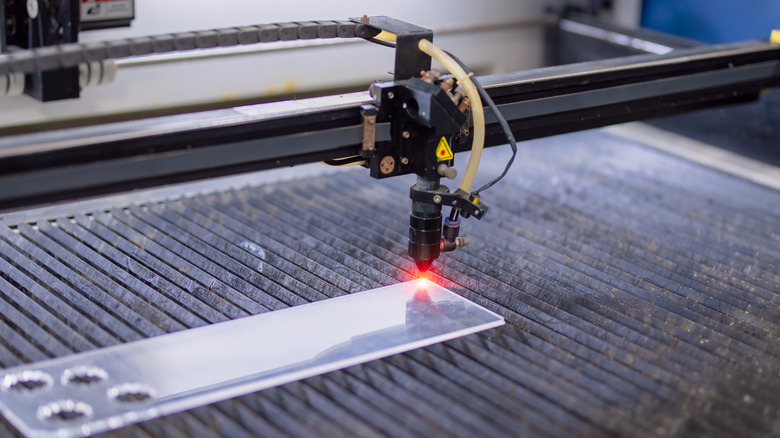
Lasers are used everyday for a variety of applications, but understanding what a laser actually is means knowing that it's much more than just a concentrated beam of light. There are different types of lasers, including CO2 lasers, which use electricity to energize a mixture of gases. That mixture includes carbon dioxide, helium, and nitrogen.
The electricity first energizes the nitrogen, which then passes that energy on to the carbon dioxide. As the carbon dioxide molecules release the energy, they produce infrared light, which is strengthened inside the laser before being formed into a narrow beam. This light, though invisible to the naked eye, carries enough energy to both heat and cut materials. CO2 lasers are useful because they can efficiently utilize energy while producing powerful beams in the process.
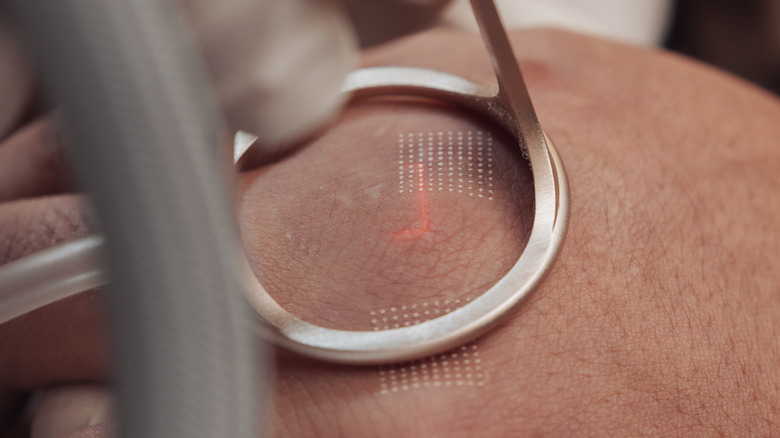
CO2 lasers are used in manufacturing, where they can cut, drill, mark, and weld materials like fabric, metal, and paper. These lasers also have medical applications and can be used for surgery and cosmetic skin treatments. CO2 lasers are effective in the medical field in part because their infrared light is easily absorbed by water, which makes them suitable for cutting soft tissue. Additionally, they can cauterize an area to help reduce bleeding. CO2 lasers are often used in dermatology as well, because they can remove layers of skin during resurfacing treatments.
CO2 laser ownership and risks
Unlike a typical laser pointer, the infrared light used by a CO2 cutter is invisible. While some of these machines use a separate red laser pointer to help users see where the cutting head is positioned, that visible dot doesn't actually do the work. Instead, the CO2 laser performs the cutting or engraving, while the red dot helps users track the cutting path.
You can even buy your own CO2 laser cutter, like the XTool P2, as they're not just used in medical offices or industrial facilities. Individuals can buy them for personal workshops, where they can be used for engraving designs and cutting materials for crafts. The Transon TS1290 CO2 Desktop Laser Cutting Machine, for example, handles both cutting and engraving, and is designed to work with materials such as acrylic, fabric, leather, and wood. It has power options up to 180 watts and optional laser tubes rated as high as 350 watts.
However, no matter the application, CO2 lasers can be dangerous when not utilized properly. The laser's invisible infrared beam can cause serious eye injuries, including blindness, and skin burns are also possible if the user is directly exposed to it. CO2 laser cutters can also start fires if the beam accidentally ignites the material being processed. Additionally, the act of cutting or engraving certain materials can release toxic gases. This means that proper ventilation must be in place while working, and users should always follow the safety guidelines as outlined by the device's manufacturer.