

What Does A Laser Pointer Do To A Security Camera?
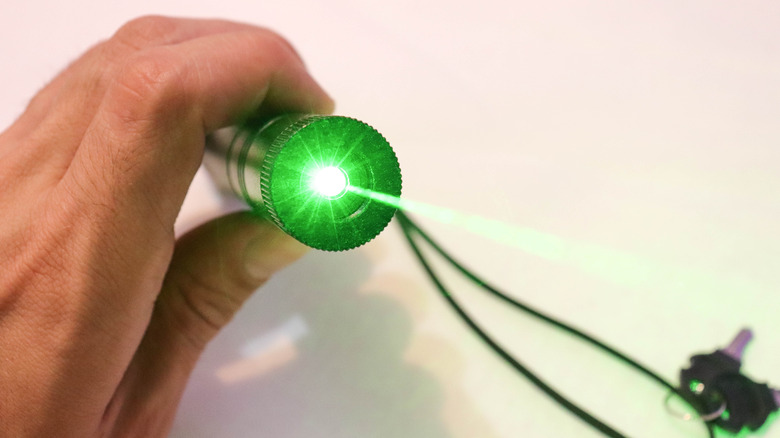
A laser pointer can be fun when playing with your cat, but these devices can actually be very dangerous if used improperly. They can also potentially cause some problems for security cameras, as they can overwhelm the camera's image sensor with a bright light. This can result in intense glare, bright areas, or other distortion in the image while the laser is reaching the sensor.
But in some situations, the problem can be more serious. Depending on the laser and the amount of exposure a camera has to it, the sensor can suffer permanent damage, leaving spots, lines, or other defects that remain in the camera's image. A camera may recover from temporary sensor saturation once the bright light is gone, but permanent sensor damage can leave lasting problems with the image long after the laser is no longer present.
A laser pointer can also cause some problems even if it isn't aimed directly at the camera. Reflected laser light can also severely damage a camera's image sensor, and that damage can occur even when the camera is turned off. In other words, a laser doesn't necessarily have to hit a running camera head-on to cause a problem. Under the right conditions, exposure can result in permanent damage, which is why it's important to keep a camera's lens protected when lasers are being used in the surrounding area.
What you should know about laser pointers
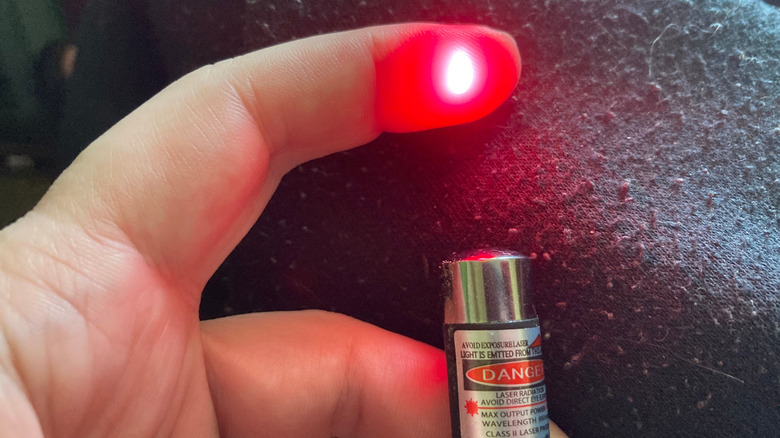
The reason laser pointers can be dangerous to cameras and other equipment is because their light is highly concentrated. Unlike ordinary light, a laser beam doesn't spread out as quickly, which allows it to remain dangerous even at a great distance. The apparent brightness of a laser also isn't a true indication of its potential danger. That's because different wavelengths can appear brighter or dimmer even when they have the same power.
But while a laser pointer can cause problems for a camera, lasers aren't technically bad for cameras. In fact, some cameras use built-in lasers, as they can help achieve autofocus by measuring the distance to a subject. The same type of laser distance measurement can also be used for other camera functions, including recording a subject's distance in the image data. On some cameras, the measured distance can also be used to estimate the size of an area shown in the image.
The risks of laser pointers go beyond just damaging equipment. A beam that reaches someone's eyes can cause temporary vision problems. This can be especially dangerous when the person is driving a car or flying a plane. More powerful lasers can cause actual eye injuries as well. This is why a laser pointer's potential danger depends not only on its power but also on where the beam is directed.