

Could Lenovo's $700 IdeaPad Vibe Be A True MacBook Neo Competitor?
Apple isn't really known for chasing the budget end of the laptop market. However, that changed in March with the launch of the MacBook Neo, an actually cheap option priced at $599, which the company called its most affordable ever. Unfortunately, that price lasted just over three months. Thanks to the memory shortage, Apple was forced to kick it up to $699. And at that price, Windows PC makers have begun to line up rivals to the Neo.
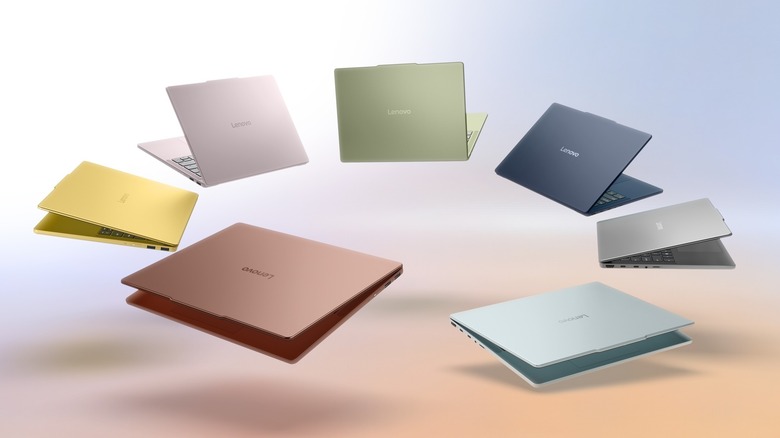
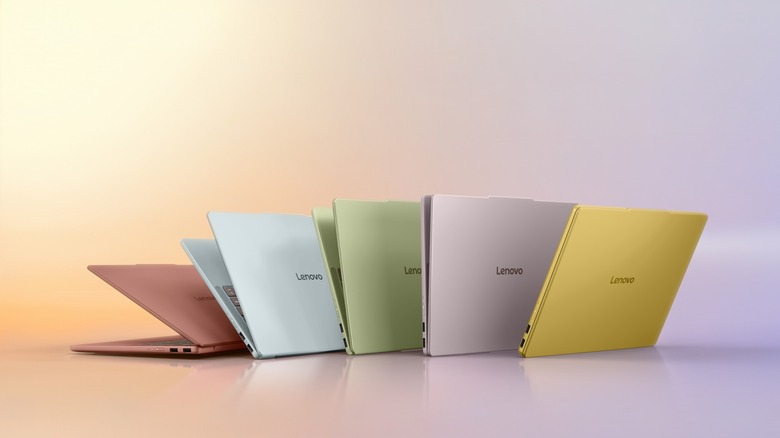
Lenovo's latest is the IdeaPad Vibe, first unveiled in Berlin on September 3. It starts at $699.99 in the U.S. Where the Neo is sized 13 inches, the Vibe is available in 14-inch and 15-inch sizes, with the smaller model weighing 2.87 pounds – only slightly heavier than Apple's. The Vibe also leans on color, coming in seven shades developed in partnership with the Pantone Color Institute. Meanwhile, Apple sells the Neo in four.
So with a matching price and similar focus on weight and color, you could say the Vibe is basically designed to rival the Neo. However, Neo does appear to be better built. For one, its entire shell is aluminum. Things get muddier with the Vibe. The unit Notebookcheck tried had aluminum for its lid and bottom cover, though the palmrest was plastic. Some configs even use plastic for the bottom. That said, the Vibe offers a backlit keyboard, which the Neo never does. Lenovo also plans to sell color-matched keycaps, a cherry on top.
Where the Vibe beats the MacBook Neo
Upgradability is perhaps the clearest advantage with the IdeaPad Vibe. The AMD version (the Vibe offers AMD and Qualcomm variants) can be upgraded after purchase. Lenovo has generously given it two memory slots, which can be filled with up to 32GB of RAM. There are two SSD slots as well, supporting up to 1TB of storage. The Snapdragon version lets you upgrade storage as well, though its memory is soldered in place. The Neo only gets 8GB of RAM by comparison, soldered in place, and the storage can't be upgraded either.
Ports are another major advantage. The Neo gets just two USB-C ports, one of which is stuck at older USB 2 speeds, and a headphone jack. The Vibe not only has two USB-C ports but also gets two USB-A ports, a full-size HDMI port, and a microSD card reader. Worth noting, though, is that every USB port on the Vibe tops out at 5Gbps, while Neo's faster port reaches 10Gbps.
Lenovo also leaves you spoiled for choice in screens and keyboards. On top of that larger 15-inch screen, you also get select variants with richer OLED panels or smoother 120Hz LCDs. Of course, these models are also pricier. Finally, the Vibe's touchpad is slightly larger at 4.7 by 3 inches against the Neo's 4.5 by 2.8 inches, which is pretty small.
Where the MacBook Neo still has the edge

Bigger is usually better but not always necessarily easier to use with trackpads. The Neo's trackpad clicks evenly anywhere on its surface, since its mechanism uses a button in the center, making it more intuitive. Meanwhile, the Vibe's trackpad is more traditional.
The Neo also pulls ahead in performance, though not on all fronts. Notebookcheck's testing found that the Neo's A18 Pro outpaces the entry-level Snapdragon X chips like the one in the Vibe in single-core and graphics performance – though it does fall behind in multicore work.
As for the Vibe's AMD models, they go up to the Ryzen AI 400 series. PCWorld found that the Ryzen AI 400 laptops it tested weren't especially quick and that the battery life under load was pretty poor. For its part, Lenovo hasn't published a battery estimate for the Vibe beyond calling it all-day. Apple has, rating its Neo for up to 16 hours when streaming video. Finally, the Vibe's $699.99 price only covers the base config. The top models could reportedly reach $1,500, so at least some of the advantages offered by the Vibe won't go head to head with the Neo in pricing.