

Tesla's Virtual Power Plants Are Doing A Lot More Than Generating Electricity
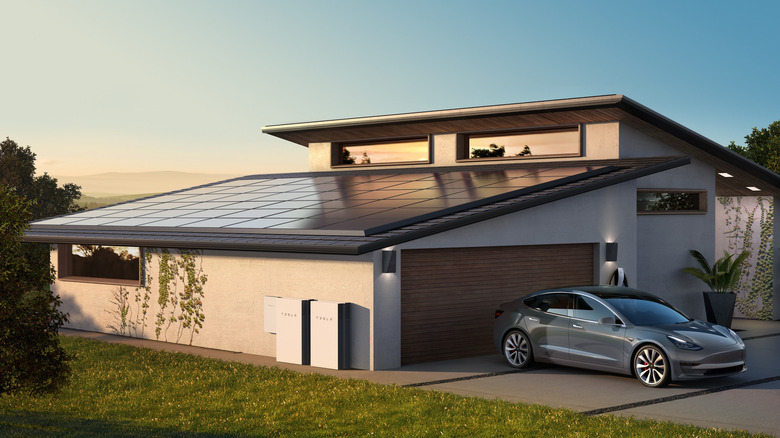
In Tesla's words, a virtual power plant, or VPP, is, "...a community of electric customers on the local power grid who agree to network their energy resources –- such as home batteries, smart thermostats, EV chargers, and solar systems –- to support the grid in ways similar to a traditional power plant." So, these electric customers are typically homeowners who have already invested in solar panels from Tesla or another manufacturer, have electricity storage systems like the Tesla Powerwall, and own an electric car to use and store energy provided by their VPP.
The benefits of VPPs include their supply of clean, electric power that can take the place of "peaker" power plants, which use heavily-polluting fossil fuels to generate electricity at times of peak demand. Other advantages of VPPs are their ability to replace the construction of additional electricity grid infrastructure, reducing utilities' budgets and keeping rates down.
The demand for electricity in the U.S. is estimated to increase by 25% by the end of the decade, along with a potential 78% increase by 2050. VPPs don't need upgrades to their distribution systems or transmission structures, either, positioning them as another way for utilities to reduce the costs of providing power. It has been projected that VPPs could meet more than 20% of U.S. demand by 2030, which could mean significant savings for a wide variety of ratepayers, as well as a major decarbonization of the energy production system as we know it.
What else should you know about Tesla's virtual power plants?

With its solar cells, Powerwall home energy systems, and electric vehicles, Tesla adopted this technology early, bringing VPPs to many areas. As of October 2025, these active or pilot VPP projects can be found in over a dozen U.S states, including Arizona, California, Connecticut, Florida, Massachusetts, New York, North and South Carolina, Texas, Utah, and Puerto Rico. Internationally, Tesla has projects in Australia and the United Kingdom.
The VPPs are controlled by software that regulates its electricity usage and the ways in which it is distributed. During calendar year 2024, Tesla paid its Powerwall owners a total of $9.9 million for providing electricity through the VPP system. Tesla's California VPP system now covers most of the state, and as of June 2026, there are eight states that have mandated VPP programs or active legislation.
What could be standing in the way of more VPPs feeding power back into the grid is the unwillingness of the regulators and the electric utilities themselves to trust sources of power that are not under their direct control, like utility-owned generation plants are. Most VPP programs are involved in providing relief when the grid is overloaded, instead of acting as additional power supplies at all times.
Other demands on the grid include AI data centers, extreme weather bringing new levels of cold and heat, the increasing costs of aging fossil fuel plants, and mandates at the state level to decarbonize and reduce emissions. VPPs have the potential to reduce the costs of adding the capacity to supply new customers, keeping rates lower. It's just a matter of making it happen.