

How To Clean Your Washing Machine's Lint Trap
We may receive a commission on purchases made from links.
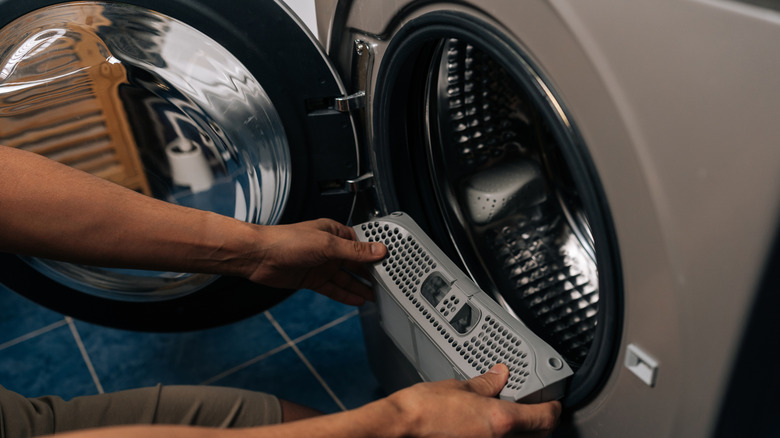
Unfortunately, most people probably aren't cleaning their washing machine often enough, including their lint trap. Southern Living recommends doing it at least every quarter. Although, you might need to do this more often if you do a lot of washing, especially with pets. It's important to note that not all washing machines have lint traps, such as combo washer and dryer units. However, this doesn't mean you're free from maintenance tasks. For example, LG says that while its all-in-one washers don't have lint traps, you'll need to clean the drain pump filter instead. According to Whirlpool, you should be cleaning your drain pump filter every half of the year. You can check your appliance's manual, the manufacturer's website, or their official YouTube channels to confirm if your model has a lint trap.
While you're at it, you can also check the manufacturer instructions for the location of the lint trap, since it can vary per model. But for reference, FamilyHandyman says that you can usually find the lint trap at the top of the agitator for top loading washing machines, while it says that the front loading models tend to have it behind the storage drawers near the bottom. Whirlpool notes that its combo washer and dryer units tend to have it inside the door (if at all). The recommended cleaning method for cleaning washing machine lint traps may vary, so you'll want to consult your manual for more specific instructions. But, if you're wondering how it typically goes, read on.
Steps to clean your washing machine lint trap
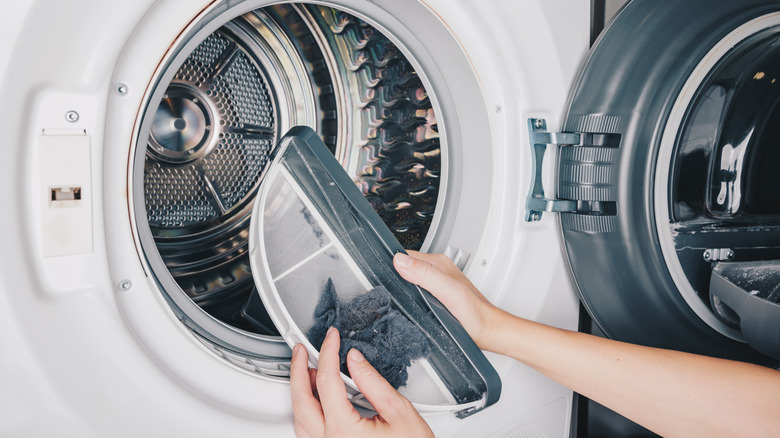
The first thing you should always do is shut the washing machine off entirely. If possible, you'll want to take out the filter, but if not, you can also clean it directly. Next, remove any large clumps by hand, run it through running water, and use a soft brush to dislodge any stuck parts. Alternatively, you can invest in something like a washing machine cleaning brush set, which can come in handy for other washing machine maintenance tasks too. Lastly, air dry the filter before returning it back to its original location.
While regular cleaning can help you spot the signs that your washing machine is on its last legs already, routine deep cleaning practices also make a difference. Regular lint removal is one way to increase your washing machine's lifespan. For example, if you have any furry friends in your home that shed a lot, you might want to consider using a specialized machine cleaner tablet, like the Uproot Clean Washing Cleaner Turbo. Made for pet owners in mind, it's powered by Furguard's mix of enzymes designed to dissolve hair, remove odors, and attack bio-film. Compatible for both front and top loading washing machines, it targets the drum, basket, drain lines, and rubber seals. For just under $50, you can get 12 tables, which can last you up to a year. As of October 2026, more than 340 Amazon users have rated it 4.3 stars on average.
How to manage lint build up in your washing machine
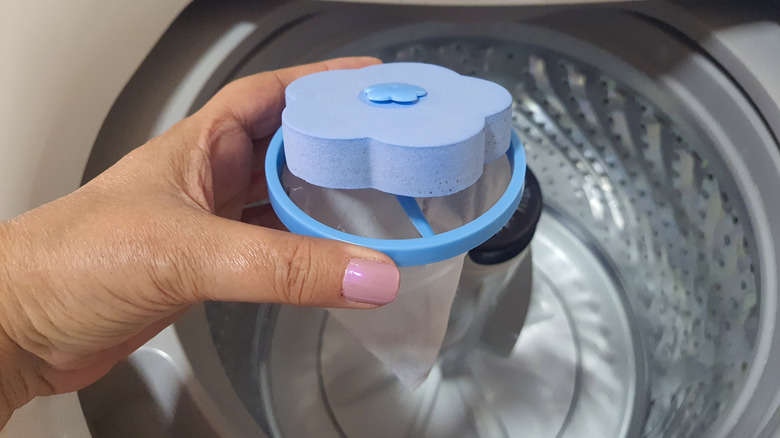
While it's normal to get some lint build up in your washing machine, there are methods you can follow to lessen it in the future. According to LG, some easy ways to have less lint in your load is by regularly cleaning the drum and door gasket and removing any papers in your clothes pockets before starting a load. During normal cycles, you can even throw in a pet hair remover, which traps the hair, dander, lint, and other debris. It also has a neat side effect of keeping your clothes from tangling. Retailing for $15.99, the GJPSBEN Reusable Dog & Cat Hair Remover Tool comes in a set of 12 and has been rated 4.7 stars by over 160 people.
In some cases, lint can escape the traps in your washing machine. If you don't want it to end up in your pipes, you can get washing machine lint traps. On Amazon, a pack of 12 DR Quality Parts washing lint traps is sold for just $6.98 (or around $0.60 each). Made of tear-resistant loops that can expand up to 10 inches in length and trap stray lint, you can install it with the included cable ties on your washer hose before it leads to any clogging. It can fit washing machine discharge hoses from 1 to 3 inches in diameter. An Amazon Choice product, more than 3,700 swear by it and have rated it 4.6 stars on average.