

Michelin Vs Goodyear: Which Tire Brand Has The Better Warranty?
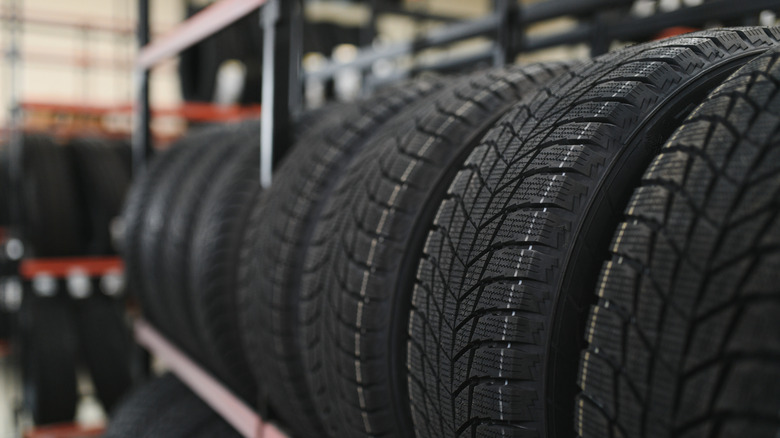
Michelin and Goodyear earned the top two spots in our ranking of every major tire brand, and with good reason. These two companies have a storied history of delivering a variety of high quality tires at decent prices that customers really enjoy. As with so many parts of a car, tires are an investment, and you want these tires to perform as well as, and for as long as, advertised. Of course, expecting perfection with every tire isn't realistic, but luckily, each company has its own warranties to help you feel like you're covered, though Michelin ultimately offers just a bit more.
A number of the conditions are the same for both Michelin and Goodyear. Each company offers a 60-day satisfaction guarantee on its tires. If you're not satisfied with your purchase within that time, you can get them exchanged for a different set of tires, while Goodyear lets you upgrade to a pricier set if you pay the difference. It even extends the replacement possibilities to tires from other brands it owns, like Cooper or Kelly. However, one of the important Goodyear warranty conditions you should know is that initially purchasing with one of those other brands means you only get a 45-day window, rather than the 60 days.
Both companies also offer limited warranties that cover tire replacements. These apply to any manufacturing or material defects either for six years or until 2/32 of an inch of tread remains, whichever comes first. If a defective tire is removed within 12 months of purchase and worn no more than 2/32 of an inch of tread, both brands will replace it for free. Notably, these don't cover damaged tires by hazards like cuts and punctures, improper mounting, or mechanical irregularities in the vehicle that exacerbates damage. If it's not a problem with how the tire was made, the warranty doesn't pay for a replacement.
Treadwear mileage warranty details
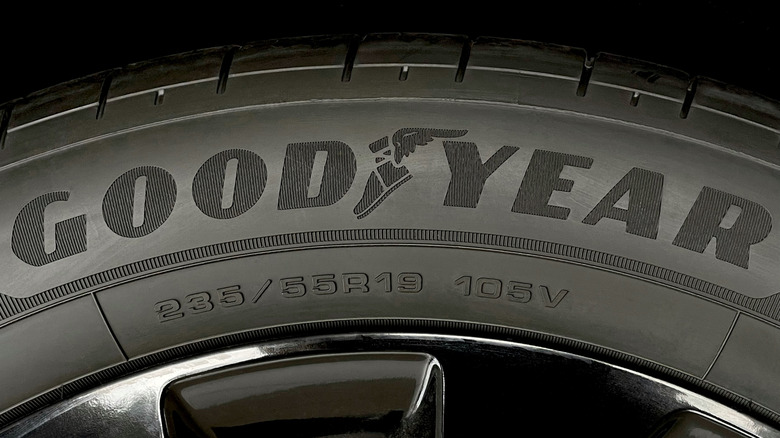
Michelin and Goodyear back their ties with limited treadwear mileage warranties as well. Every tire has a treadwear rating, which is an estimate of how long the tire's tread will last. If everything goes right, your tire's tread should wear down to 2/32 of an inch at or after a certain number of miles designated by the manufacturer, such as 45,000 miles. However, there are times when the tread wears away too quickly, and it doesn't make it to that mileage marker. Mileage warranties vary by tire line, so that's something you need to look up. Goodyear has fewer high-mileage options than Michelin, which why it ranked at a lower spot on out list of tire brands with the best warranty.
If the tread wears out early, Michelin or Goodyear will replace the tire. There are important distinctions between how the two companies do this, though. Both handle it on a prorated basis, where you pay the same percentage of a new tire's price as the percentage of the warranted mileage your current tire covered. So, if you only drive 30,000 miles on a 50,000-mile tire, you pay 60% of the price of a new tire.
One major difference is that Goodyear offers no treadwear mileage warranty on its winter tires. Michelin does, though there are specific requirements you have to meet. You need to provide information on when in the year you mount and remove them, as it will only recognize miles driven between September 1 and April 30. Goodyear winter tires only get the aforementioned manufacturing warranty.
Roadside assistance warranty
Michelin has another leg up on Goodyear when it comes to service. If you purchase Michelin tires, they come with access to its roadside assistance service. This gives you 24-hour, seven-day-a-week on-call help for when you have a flat tire, need a battery jump start, are locked out of your vehicle, or run out of fluids, or even gas. If you have no spare for a tire change, roadside assistance will also tow your vehicle up to 150 miles to an approved Michelin tire retailer for a new one. Plus, you get access to this perk for three whole years.
This is only available to those who purchase Michelin tires as replacements. If they're the original tires on your vehicle, you don't get this service. You also miss out if you purchase any of its Classic tires, a line designed with vintage vehicles in mind. Coverage is limited to passenger vehicles and light trucks, so if you have Michelin tires on a commercial vehicle, an RV, or anything else, you're out of luck. Any product required, be it a new tire or gas, must be paid for by the driver.
Goodyear does have a service warranty. However, it applies only to vehicles that have been worked on at a Goodyear service center. It covers a wide range of repairs, but it lasts just two years or 24,000 miles. Roadside assistance comes with it, but that coverage lasts one year and is limited to two claims where you get reimbursed up to $100. It's not a horrible perk, but incredibly limited, particularly compared to Michelin's.