

The US May Rewrite Some Rules Of The Road To Fight Annoying, Overbright Headlights
We may receive a commission on purchases made from links.
Motorists have relied on automotive headlights for well over a century, with the first being acetylene gas lamps equipped on early versions of the Model T. In the years since, several advancements have transformed headlights, bringing about lighting technology like Halogen, HID(Xenon), and LED.
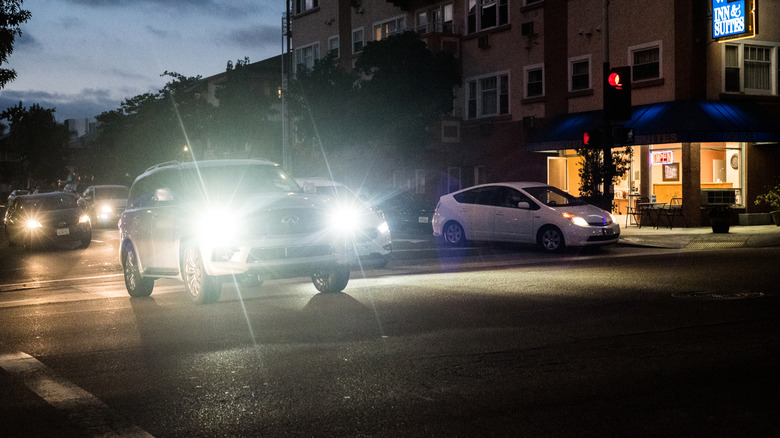
High intensity headlights are considered by some to be among the worst car trends we've ever seen. In the case of LEDs specifically, many are finding them far too bright. Members of AAA have been vocal for years about their disdain for LED headlights, and a petition on Change.org to "Ban Blinding Headlights and Save Lives!" have garnered well over 80,000 signatures.
Those struggling against the glare of LED beams aren't imagining it, these headlights are brighter, and feature a greater concentration of light than previous technologies. You can employ a little-known trick that can reduce glare from LED headlights, but it doesn't entirely solve the problem. In addition, the blue wavelength the LEDs produce can be especially hard on the eyes. Not only are many calling the situation unsafe due to extensive glare, it's also unclear at this time whether these LED headlights are potentially causing damage to people's retinas through extended exposure.
Finally, surely to many Americans' relief, the U.S. Department of Transportation signaled it's move to investigate and modernize regulations surrounding the LED headlight situation. In an update to the existing Federal Standard 108, the agency will reportedly study the relationship between headlight focus, height and glare, reexamine regulation around LEDs as well as more recent automatic and light sensor features. Jonathan Morrison, NHTSA Administrator promised in a NHTSA press release to "address [the] potential causes of glare," and "to update outdated regulations..."
Outdated and strict U.S. rules have been blocking the solution
More common in Europe, there is a technology called matrix headlights that contain many micro-LEDs spaced across a surface. In the Digital Matrix system by Audi, are each thinner than a human hair. With the help of tiny cpu chips and mirrors, these thousands of micro-LEDs selectively form patterns to focus light more intelligently at the road and actively away from other motorists. The video clip shows this technology in action, as an Audi with the Digital Matrix system selectively clicks off light pointed at an approaching driver, and then turns it back on after the vehicle passes.
Other countries in the world have been using these advanced headlights for years, so why not the states? The first issue was Federal Standard 108 instituted by the NHTSA back in the late 1960's – the same one the government is looking to update today. The rule deemed that high and low beams must be powered with different bulbs. Because matrix headlights utilize the same array of micro-LEDs for high and low beam functions, they were effectively illegal in the U.S.
This high and low beam rule was amended in 2022, but it didn't make the situation better. Even though the language in Federal Standard 108 was updated, it ended up making requirements even more stringent than rules in place across the ocean in Europe, requiring those matrix headlight systems to be reengineered for American cars. So, automakers just turned off the adaptive headlight features in the U.S. entirely.