

What Does 'Swamping' Mean In Boating, And How Can You Avoid It?
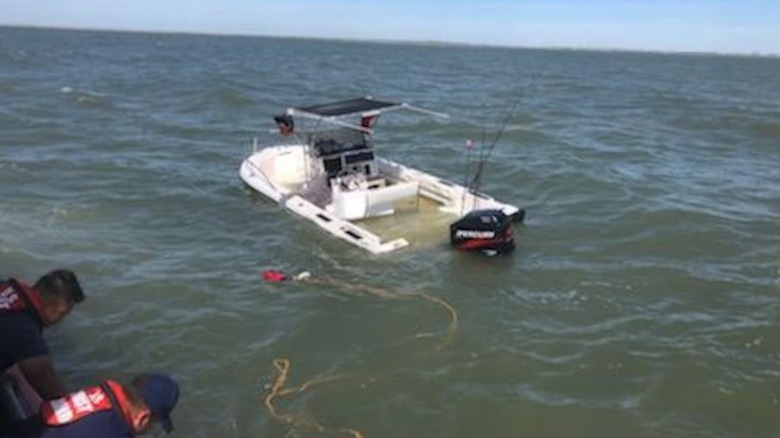
With approximately 11.6 million registered recreational boats as of 2023 (per Statista), boating is certainly a popular pastime. But while spending time out on the waves can be fun and relaxing, taking on water can quickly transform the experience into a potential emergency. While a bit of water washing into the boat is expected, swamping is much more serious. Swamping describes a scenario where a boat has taken on significant water, but remains in an upright position. The added weight lowers the vessel further into the water, so that the deck rails may sit near the surface.
Swamping can be a frightening scenario and can happen for several reasons including large waves, overloading the vessel, and poor weight distribution. Not every vessel is as susceptible to swamping as others, with examples like the odd jet capsule boats that feature an enclosed design that prevents water ingress. Unfortunately, unless your own vessel features one of these designs, your options may quickly become limited once you realize your boat is falling victim to swamping.
How to prevent swamping
The best defense against swamping is to actively work to prevent it from happening in the first place. Avoiding waterways like Haulover Inlet, a notoriously challenging stretch of water in Miami, Florida, is a great start.
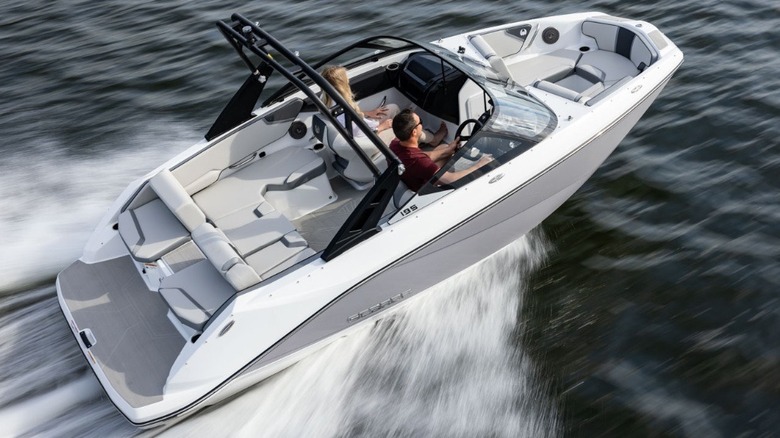
However, in general, you should avoid anchoring from the rear of the boat (the stern), which can pull down on an area of the deck that's already the most susceptible to water intrusion. Comparing the Yamaha AR195 vs. Scarab 195 SE, notice the latter's design features a flat transom at the rear, with no vertical surface above the deck other than rear seats. If you were to anchor from the stern or travel in reverse, water could potentially splash into the boat. One captain behind the helm of an "86 hydra-sport 2500WA" explained on The Hull Truth, "Anchored with the stern against the waves once. Three waves in a row washed over the engine before we could get the anchor up." Fortunately, in this case the captain was able to recover before becoming completely swamped, but indicated a lesson was learned that day.
Weight and where it's located on the vessel can also contribute to swamping. Something as simple as going beyond weight capacity, or too many passengers on one side of a small vessel can cause the boat to sit deeper and uneven in the water. A vessel leaning heavily to port just as some stronger waves come rolling in might see those waves crest over the side that's sitting closer to the waterline than usual.
What to do if your boat begins to swamp
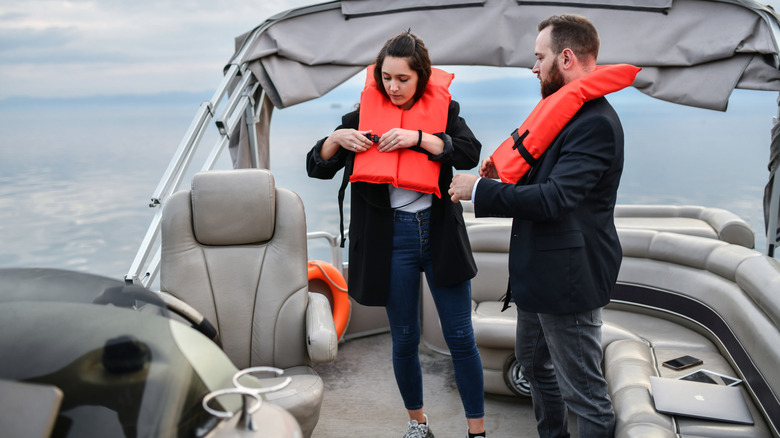
In a worse case scenario, your boat can become swamped within just a matter of seconds, so immediate decisions are paramount. According to USCG Boating fatalities in boating are more frequently a result of drowning than any other cause. So, ensuring everyone on board is wearing a lifejacket is critical. Taking quick stock of the situation, see if you can pinpoint things like where the water is entering, and whether or not the vessel is level. This can allow for simple corrections, such as replacing a drain plug mistakenly left open or adjusting the weight distribution across the deck.
Fortunately, under Federal Law, powered inboard/outboard and airboats with a monohull under 20 feet are required to have basic flotation capabilities. Meaning, the manufacturers must include enough buoyant material in the vessel to keep it from completely sinking, even when swamped. However, this doesn't mean a swamped boat can't still flip over.
Since too much water in the boat is the problem, the obvious solution is to get rid of it. Regulations require every vessel be equipped with a bilge pump, which should activate in response to rising water levels. However, you can also kick them on manually from your boat's marine multifunction display (MFD) in some cases. Having a manual bilge pump aboard is also recommended by the U.S. Coast Guard in the event the fixed one isn't functioning properly. If bailing efforts aren't making headway, you may need to signal for help before the situation worsens.