

Why Many Movie Theaters Are Switching From Xenon Lamps To Laser Projectors
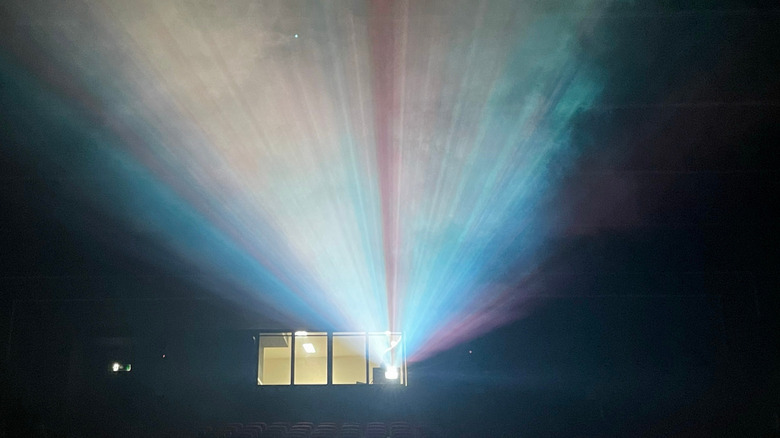
The art of movie projection has been evolving since the very first time the Lumière brothers turned the hand crank on their Cinématographe in 1895. These days, the projection game no longer relies on celluloid, with digital formats supplanting it as the de facto standard in most movie theaters not fronting a 70-millimeter IMAX label.
That is not likely to change in the near future. Even still, innovation continues to push the medium forward, and theater chains are starting to invest in the next wave of cinematic exhibition tech, the laser projector. This tech is hardly new. Laser projectors have been around since the 2010s, and while they didn't immediately take off, the method has very much been on the rise of late. It seems exhibitors are finally starting to see the potential financial benefits it offers.
In the digital age, many theatrical projectors have utilized Xenon lamps to create the proper color producing light required for theatrical projection. Those projection systems have, historically, been cheaper on the whole than laser-based models, leading many exhibitors to stay the course even as Xenon builds tend to require far more energy to operate due to cooling and ventilation needs, among various others. Laser projectors do not need those systems to run cool, and as their average cost continues to drop, the systems have become an appealing option for theater owners looking to maximize their energy-efficient benefits.
Other benefits of laser projection technology
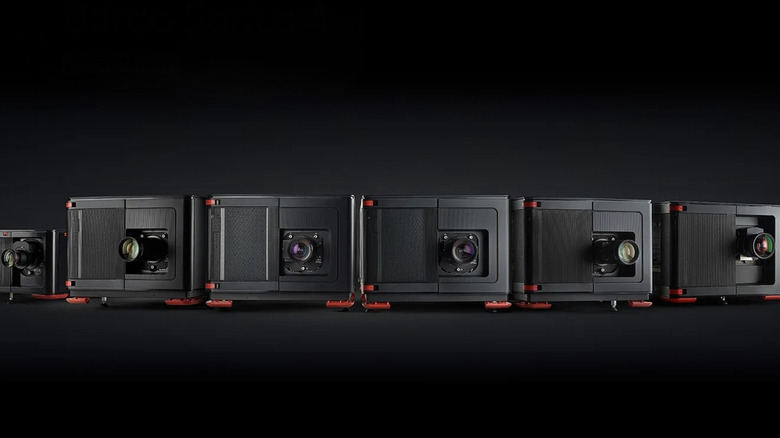
With energy costs on the rise, it's hardly surprising that theatrical exhibitors have a vested interest in shrinking their bills. That's particularly true as most theater chains are still struggling to get butts back in seats. The quandary has already led to a sharp increase in ticket prices, and with movie goers flinching at the cost of the theatrical experience, exhibitors are wisely looking to save money elsewhere.
However, while the average cost of a laser projection system has fallen from the $300,000-plus pricing of a decade ago, the systems are hardly cheap. Expense is a big part of why only about 13% of theaters have made the transition so far. With prices dropping to as little as $38,000 for a laser projector, that number is expected to rise, particularly as lasers become more important to specialty projection like IMAX.
Apart from energy efficiency, laser projectors boast a few other notable benefits over lamp-based projectors. Perhaps most importantly, they're believed to deliver better picture quality in terms of color reproduction, contrast ratios, and consistent illumination. With theaters promising to deliver the best possible picture quality to their clients, laser projectors increasingly look like the way to do so. On top of a boost in picture reproduction, laser models are also known to be considerably more durable than Xenon, with some estimates claiming they can operate up to 20,000 hours or more in the right setup. By contrast, Xenon lamps are known to max out at anywhere between 500 and 2,000 hours before needing a replacement, marking a potentially massive reduction in overall operating cost.
The potential drawbacks of laser projectors
While the advantages of making the switch to a laser projector system would seem pretty clear — and maybe even necessary to project in proper Dolby Cinema — there are still potential drawbacks. First and foremost, even as the general price for a new laser projector has dramatically decreased in recent years, the systems are still pricey.
And even though they're cheaper over time, they still tend to cost more up front than a Xenon lamp system. Some estimates claim that an exhibitor may not see a proper return on their laser projector investment for anywhere from 30 months to 5 years. That number is based on the current state of the energy market, which as most folks can attest, hardly feels stable. In any case, that may be too long for some exhibitors to wait given the uncertainty in the theatrical arena these days, especially those running theaters with multiple screens that need upgrading.
Laser projectors may be marketed as low-maintenance devices, but it's also worth noting that if they do break down, they'll likely be far more expensive to repair — lasers just aren't as DIY-friendly a thing to fix as a burned-out bulb. According to some sources, when such a device's light engine fails, a fully system replacement is one possible fix. The question then becomes what sort of risks a theater owner is comfortable taking in service of a little cinematic innovation.