

The Reasons Why Old-School Fire Trucks Had No Roofs
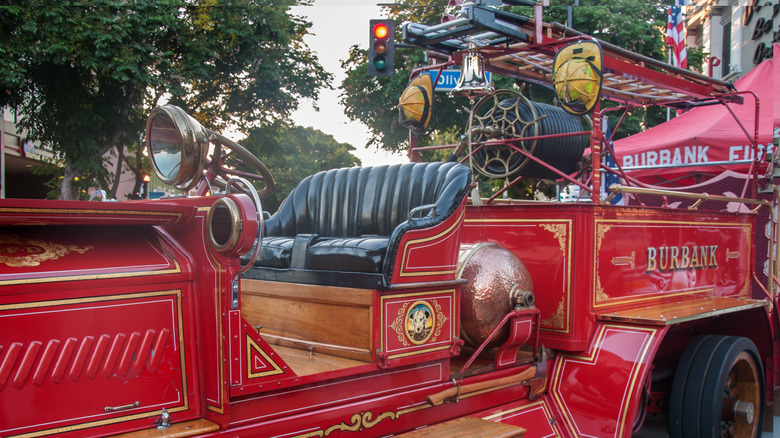
If you've ever seen an old-school fire truck, whether in-person or simply in a picture, you may have spotted a curious detail. Often, older fire trucks had no roofs. You might naturally wonder why such an important vehicle wouldn't have a roof to protect occupants from the elements.
Before fire truck cab designs became more standardized, the open cab design served a few practical purposes. First, it allowed those operating a fire truck a less obstructed view than an enclosed cab would offer. Similarly, when firefighters in heavy gear had to climb in and out of trucks, the open cab design made doing so easier.
Various factors caused this design to fall out of favor. Again, the standards for how fire truck cabs and trucks should be designed has become more comprehensive over the years. In addition, as far back as the 1960s, fire departments with open cab fire trucks were already experimenting with creating makeshift enclosed cabs with plywood roofs. Generally, automotive safety features and requirements have expanded over the decades, which has affected safety requirements for fire truck designs.
Additional reasons for the switch from open to enclosed fire truck cabs
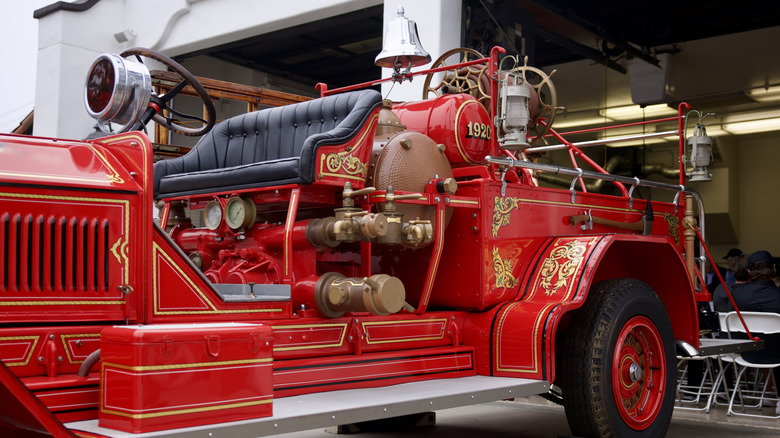
It's worth noting that firefighters typically don't ride in fire trucks on a consistent basis. When they do, the trip may not last particularly long. This is another reason the open cab design used to be more common. Because a trip in a fire truck was only an occasional, brief experience, protecting firefighters from the elements and keeping them comfortable wasn't a priority.
There's some reason to believe that fire departments started erecting plywood roofs partially in response to civil unrest in the cities they served. A roof may have become necessary to protect firefighters during riots or other such hazardous encounters.
The more you research fire truck design standards and trends, the more you realize how much thought has gone into the design of these vehicles. For example, today's fire trucks are often red because this makes them easy to distinguish on the road. Similarly, American fire trucks tend to be larger than their European counterparts because they may provide a greater range of emergency services. That's one of the reasons there's technically a difference between a fire truck and a water truck.
The main point to understand is that the open cab design of old fire trucks wasn't just a strange relic of a previous time. There was a logic behind why that design was so popular. However, it eventually became evident that an enclosed cab is a necessity on this type of emergency vehicle.