

MIT Study Pushes Back On One Of The Biggest Solar Energy Myths
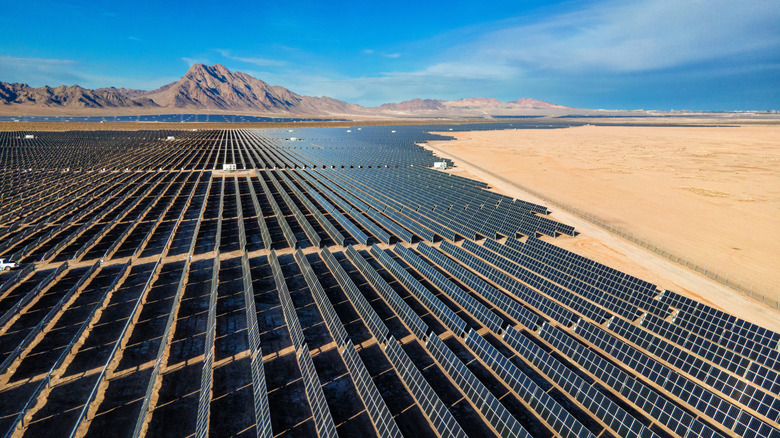
Renewable energy is a greener alternative to using fossil fuels, but it still only accounts for a small percentage of U.S. energy consumption. Solar power is itself a small fraction of that: Out of the total amount of renewable energy consumption in 2023, solar power made up only 11 percent, according to EIA data. One long-standing argument against increasing national solar capacity is that building large-scale solar farms will result in higher bills for customers, but a recent study from MIT's CEEPR (Center for Energy and Environmental Policy Research) proved that argument wasn't backed up by the latest data.
The study evaluated how much energy bills actually went up for consumers after different types of renewable energy were connected to state energy grids. It found that large-scale solar farms (which the study called "utility-scale") did not increase bills, and in fact decreased them slightly on average.
Researchers argued that the decrease in costs could be put down to the fact that solar farms don't need to have fuel piped or transported to their location, which reduces their input costs to effectively zero. This helps reduce the total operation and maintenance costs that energy providers pay, which is subsequently passed on to customers in the form of lower bills.
There are, of course, still some operation and maintenance costs to consider. There are many different ways that solar panels can break, and they'll also need to be cleaned occasionally to keep them operating efficiently. Nonetheless, the study found that building large-scale solar farms generally resulted in lower bills for customers, and that states with the largest large-scale solar deployment saw the most pronounced drop in electricity costs.
Rooftop solar panels did not bring prices down
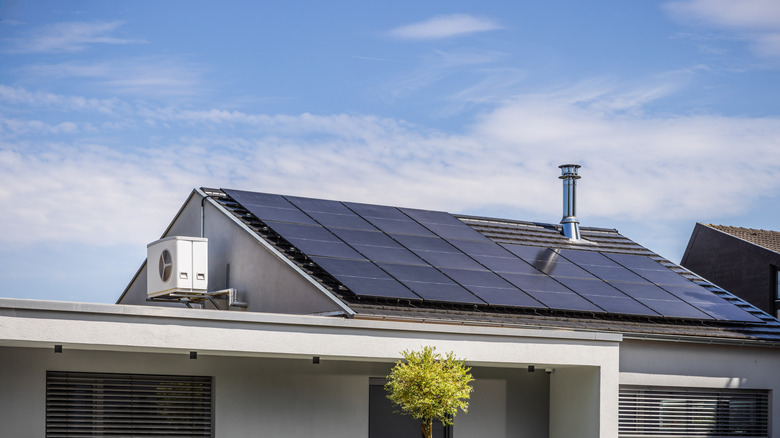
While America's largest solar farms lowered prices for buyers, rooftop solar panels did not have the same effect. In fact, the MIT study found that the opposite was true, and that states with higher rates of rooftop solar generation actually saw prices rise slightly.
The authors suggested that there were several reasons for this. One was that homeowners with solar panels paid very little for their electricity; in some cases, they ended up exporting more electricity to the grid than they used. This led to energy companies having to pay homeowners with solar for the power they generated, with that cost being paid for by homeowners who did not have solar panels.
Widespread rooftop solar was also associated with higher operation and maintenance costs for energy distributors, which the authors said was down to the high cost of modernizing the grid to support two-way power distribution. A large-scale solar farm can be connected to the grid in a similarly straightforward fashion to a new fossil fuel-powered plant, but rooftop solar requires operators to invest both upfront and over time to maintain a more complex system.
Aside from the potential cost benefits, there are also other benefits that utility-scale solar farms can bring. A study involving China's largest solar farm found that soil quality improved in the immediately surrounding area, which in turn boosted the presence of plants and microbial life.