

When Was LaserDisc Discontinued & Does Anyone Make Players Anymore?
On the surface, it's not hard to see why someone might struggle to know the difference between a Blu-ray and a DVD (not to mention 4K discs); after all, they share the same physical format. That hasn't always been the case, though: the transition from film reels to tape, then from tapes to discs in turn, made the changes a bit more obvious — although that chronology, admittedly, simplifies things a bit. Either way, there have been plenty of discontinued home video formats over the years that didn't enjoy the longevity of VHS tapes and DVDs, including LaserDisc (LD).
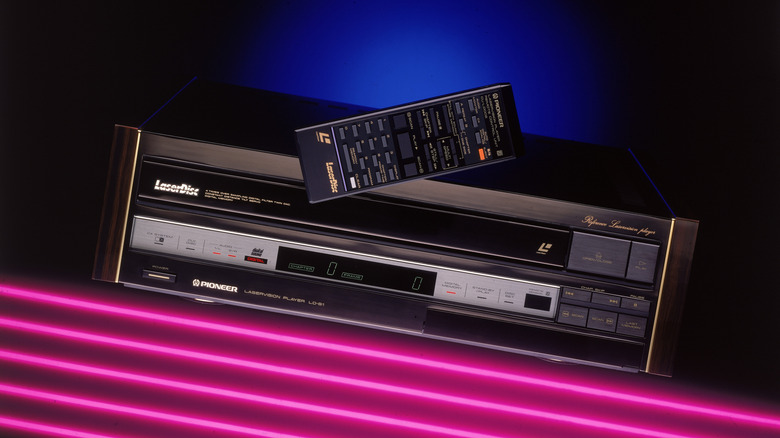
First introduced in 1978 and discontinued in 2001, LaserDisc was an analog format that had a devoted following during its heyday in the 1980s, thanks to high-quality picture and sound that the more successful VHS struggled to match. Despite that, LaserDisc never became the dominant video format of its time; in the U.S., for example, VHS tapes hit the market around the same time and soon beat LD as the preferred home video format. As a result, LD never became more than a specialty product, with sales declining throughout the '90s before its 2001 discontinuation. Despite that, players remained in production until 2009 at the latest.
DVDs eventually eclipsed LaserDisc
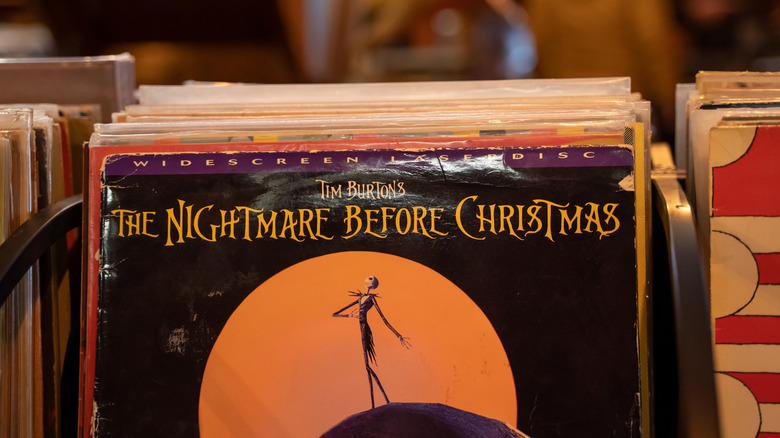
LaserDiscs had the technical advantage over VHS tapes, but their size and cost meant they struggled to catch on. DVDs took the disc concept and ran with it, shrinking the disc to CD size while offering more storage and digital encoding. That combination of higher-quality digital video, easier handling and storage, and more economical production gradually pushed LD out of the mainstream for good.
That's the U.S., though. In Japan, LaserDisc still had a decent hold on the home video market as late as 1999, at which point the format was on the way out of the American market. Thanks to this overseas base, as well as a niche community of collectors in the States, the format survived well past the ascendancy of DVDs. Pioneer, one of the most prominent names in LaserDisc manufacturing, made LD players until 2009. Its final run consisted of about 3,000 units, after which Pioneer exited the market.
But with over 15 million players sold worldwide by then, the end of production didn't mean the format disappeared overnight. Collectors (including this writer) still own and maintain working players to this day, allowing them to enjoy their LD libraries.