

What Is A Nitrogen Generator And How Does The Technology Work?
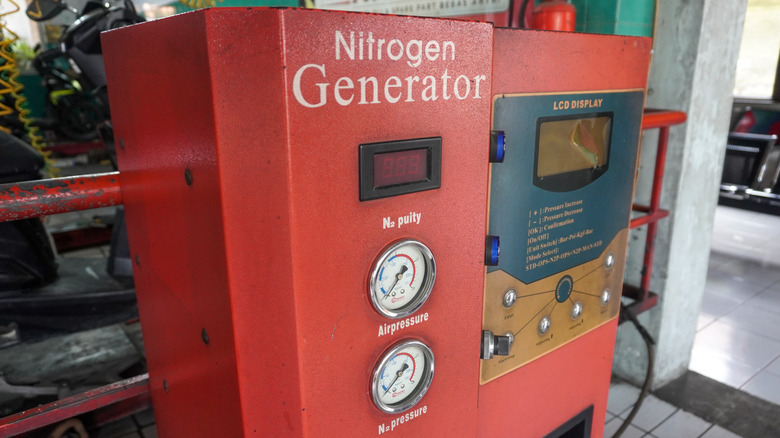
The industrial and commercial use of nitrogen gas is common for some tires in the worlds of aviation and automotive. But nitrogen generator technology may not be familiar to some people, as these devices have a unique function. Simply put, a nitrogen generator is a system that produces nitrogen gas by separating it from the air. There are two primary types of nitrogen generators, which use different technologies to perform that separation. These devices are useful because while atmospheric air is already about 78 percent nitrogen, it's not pure enough for many industrial applications.
Both types of nitrogen generators begin with compressed air. Before that air reaches the separation equipment, it is cleaned and dried. This removes any preexisting contaminants and moisture that could interfere with the process. From there, the two types of generators take different approaches to separating nitrogen from the other components of air. Once the nitrogen has been separated, it can be sent to the equipment that needs it or stored for later use.
Membrane generators use groups of hollow fibers that allow oxygen and other gases to pass through the membrane more easily than nitrogen. Pressure swing adsorption (PSA) generators instead use a material known as a carbon molecular sieve to capture oxygen and other gases while also allowing nitrogen to continue on through the system. In other words, both types produce nitrogen from compressed air, but they use different separation methods to do it.
Why industries use nitrogen generators
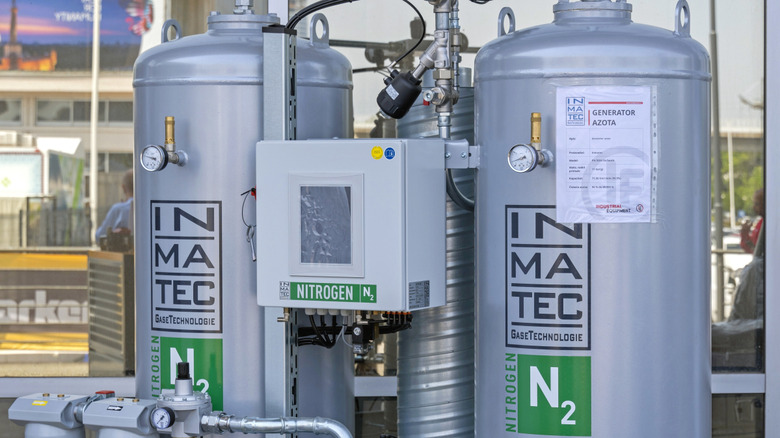
Nitrogen generators are used across a wide variety of industries, including chemical manufacturing, electronics, laser cutting, pharmaceuticals, and wastewater treatment. These devices can also be used in fire prevention systems, marine operations, and for other industrial applications. When it comes to how much nitrogen is needed and how pure that nitrogen needs to be, it depends on the application itself.
One of the reasons that a nitrogen generator is so useful in industrial applications is due to the inert nature of the gas itself. "Inert" means that it typically does not react with the materials it is used around. For example, nitrogen generators are often used in food packaging, where nitrogen can displace oxygen from the package. This helps prevent both oxidation and microbiological changes that can affect the product. Nitrogen can also create a barrier around the food, which helps keep the package from collapsing during distribution and sale.
A nitrogen generator can also give industrial users more control over how its nitrogen is supplied. Instead of receiving gas in cylinders or tanks, the equipment makes nitrogen at the facility where it is needed. Additionally, the nitrogen generator can be selected and adjusted based on the demands of the application, including how much gas is required, as well as the purity and pressure that are needed. This makes nitrogen supply easier for a business to manage.