

'Wrong All These Years': Mechanic Gets A Shock From GM During A Routine Oil Change
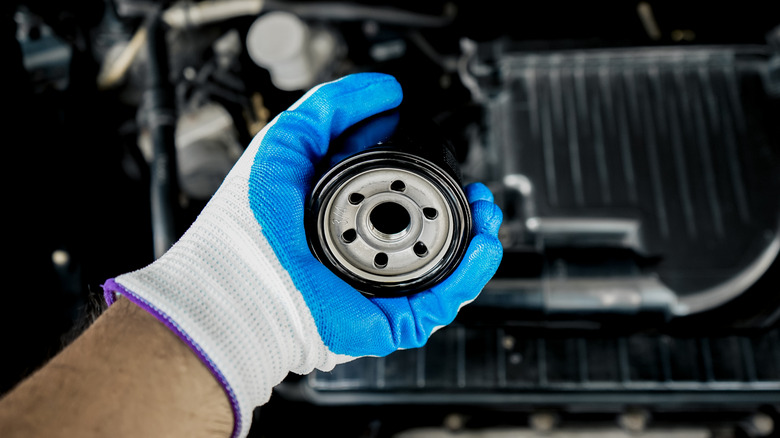
For experienced mechanics, there are a few jobs that you can learn to do blindfolded given their frequency and simplicity. Oil and filter changes are one such example, since they're simple, most cars on the road need them routinely, and most people take their rides to a shop to have this service done. However, as it turns out, even seasoned mechanics can make oil change mistakes, and realize years into their career that they've been making them for a while. One mechanic learned that something as simple as attaching an oil filter on General Motors vehicles during oil changes demands precision.
@royaltyautoservice How is this the first issue? 😬 #mechanic #automotive #diy #fyp #viral
Royaltyautoservice on TikTok shared a video of its mechanic team learning they'd been installing oil filters incorrectly for some time, at least according to GM standards. They had a vehicle come in that seemed to keep leaking oil from the filter for no clear reason. Upon further research, the team learned that GM vehicles between the 2011 and 2026 model years require the filter to be torqued to a surprisingly tight 20 newton-meters. Despite oil filter installation typically being a simple hand-tightness job, the crew took a torque wrench to it and tightened it to manufacturer specification, hopefully remedying the leak once and for all.
Given how many car brands GM owns, lots of drivers should take note of this oil filter torque requirement on affected vehicles. If they don't, they could face some major troubles on the road.
What oil filters do and why they need to be properly tightened

As its name explains, the oil filter is essential for filtering out all kinds of gunk and dirt from your vehicle's oil supply. It's key to keeping oil running uninhibited throughout the vehicle, and preventing harmful debris from reaching sensitive engine components. Unlike GM vehicles made between 2011 and 2026, apparently, most oil filters can be installed and removed by twisting them on and off by hand. So long as they're set on straight and sufficiently tight, you shouldn't have any trouble with leaks. If you do, this isn't something to ignore.
Incorrect installation of oil filters should be remedied as soon as possible. Oil leaks are messy and can rapidly deplete your engine's oil supply if they're severe enough. With less oil to go around, components will lack lubrication and potentially break down sooner than they would with normal wear. If you're handling the filter swap, you want to make sure that you're using the right filter for your vehicle, since the wrong model could mean poor connection, reduced filtration, further oil leakage, and subsequent engine damage. It's also a good idea to apply fresh oil to the new rubber filter gasket just before installation, this way it slides on easily and forms an even, leak-proof seal all the way around.
Whether you're a mechanic or someone who just wants to learn how to change their vehicle's oil and filter themself, doing it right on any model is essential. Otherwise, you may end up with a loose, leaky filter that opens the door to all kinds of mechanical problems.