

Here's How Much Coal China Burns Compared To The Rest Of The World
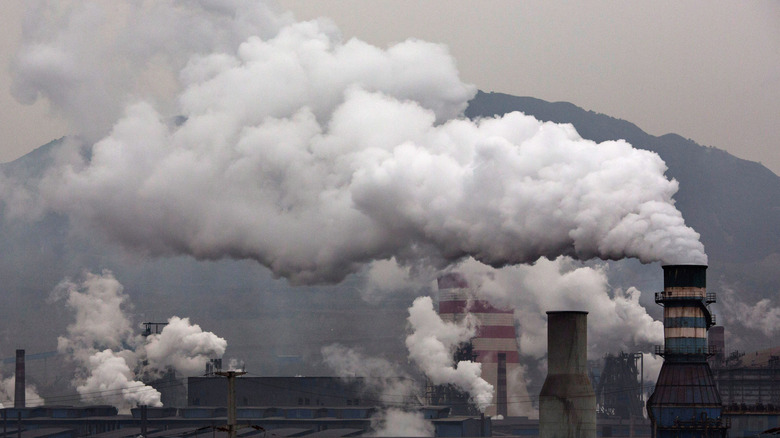
In the 19th and 20th centuries, coal literally turned cities black. It was the fuel of the industrial revolution, used to power homes, steam engines, ships, and more. It was a catalyst for massive change, and the world has never been the same since it was adopted as a major source of fuel. While we can't deny the impact of coal on human history, it's also a major contributor to global warming.
You may be wondering, aren't we burning less coal with the rise of renewable energy resources like wind and solar? Unfortunately, those energy sources represent a mere fraction of the world's energy consumption. Still, despite the fact that coal is cheap and easily available, many developed nations are reducing their reliance on it due to its impact on the environment. The U.S. was following the same trend for a while. Yet in 2025, our coal consumption grew more than any other in the world. One country, however, has the dubious honor of hosting more coal power plants than any other: China.
In 2024, China was responsible for more than 56% of the world's coal consumption, using close to 5.5 billion short tons. India followed as the second-highest contributor but accounted for only about 14% of the world's coal consumption, or 1.25 billion short tons. The U.S. was third on the list, using about 372 million short tons, or 4% of the world's coal consumption. When you add in Russia and Indonesia, only five countries accounted for more than 80% of the world's coal use. China's continued reliance on coal has massive ripple effects for the entire planet.
Why does China burn so much coal?
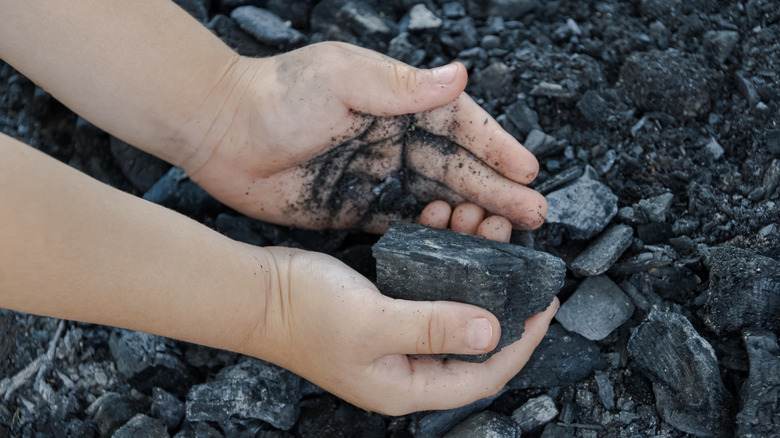
In 2017, China stopped development on almost 100 coal plants. Yet later in 2025, China commissioned more than 50 large coal units, each representing a generating capacity of 1 gigawatt or more and capable of powering up to 2 million homes. So what changed? China's reliance on coal hinges on several issues. The country experienced power shortages in 2020 and 2022 that exposed problems with grid management and the availability of power plants. This led to renewed focus on the country's energy security, and China began using coal to prop up renewable energy sources that can be affected by uncontrollable factors such as weather.
According to Carbon Brief, these new plants may not necessarily mean China will burn more coal and increase carbon emissions. In 2024, the country's average rate of usage for its coal power plants was about 50%. This does make one wonder why the country continues to build more units. However, power generation fueled by coal is often used to fill gaps left by renewable energy. If China continues to build out alternative energy sources, power generation by coal should decrease — at least in theory.
A global issue
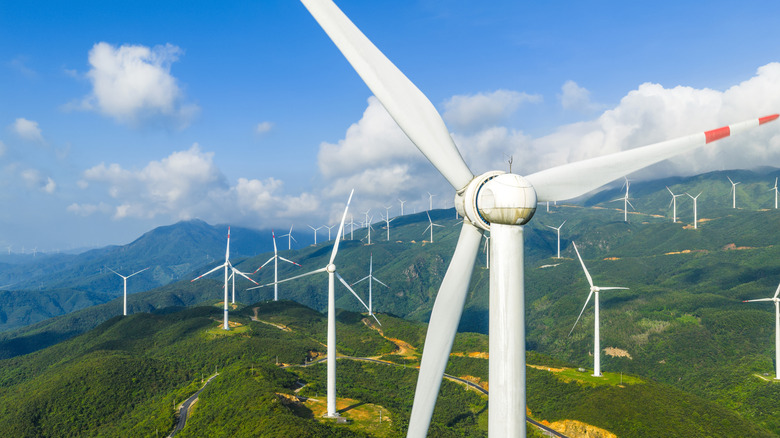
The Paris Agreement, adopted in 2015 and now including more than 190 parties, seeks to limit global warming to 1.5 degrees Celsius above pre-industrial levels. The Earth is already about 1.2 degrees Celsius warmer than it was 120 years ago, and emissions are still rising. To meet the Paris Agreement goal, experts agree that emissions must be reduced by at least 45% by 2030 and reach net zero by 2050.
China is investing in clean energy: In 2024, more than 33% of its energy came from renewable resources. That same year, however, the country released more than 11,000 million metric tons of carbon dioxide, almost 2.5 times the amount released by the U.S. Some of the country's renewable energy innovations actually aren't for China, however. The country is manufacturing and selling technology to other countries to help them meet goals in reducing greenhouse gas emissions.
In 2025, China's emissions did dip slightly. In early 2026, the country announced details of its 15th Five-Year Plan, which outlines its developmental objectives for 2026 through 2030. The plan includes a commitment to increasing energy-production capacity by between 16 and 20%, with a focus on renewable energy. Still, its ongoing commitment to coal concerns much of the rest of the world, as building up coal capacity may lead to a slower transition to renewable energy. If China fails to reduce emissions, it likely won't meet its pledge to reduce carbon intensity by 2030, and it's possible the world will struggle to achieve the goals outlined in the Paris Agreement.