

America's F-35 Fleet Could Be Getting A Liquid-Cooled Enhancement
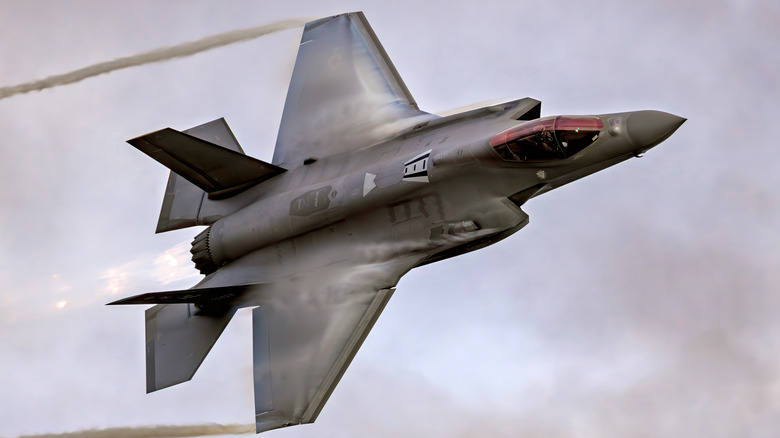
Even the best fighter jets and planes of all time can stand to improve in one way or another, be it to improve combat capabilities, fuel efficiency, speed, or other areas. The Lockheed Martin F-35 is no exception, being one of the most well-known and widely-used jets in the entire United States military arsenal with room to innovate. For example, the F-35 could stand to receive a cooling upgrade for the benefit of multiple jet systems. The aviation technology-focused contractor Honeywell Aerospace has taken on that challenge, claiming stellar results.
In a September 22, 2026, announcement, Honeywell Aerospace shed light on the development of its 40-kilowatt Power and Thermal Management System, or P40, upgrade for the current American F-35 fleet. The P40 upgrade brings an F-35's cooling capacity — the amount of excess heat the system can pull out of the jet — up from the previous 32 kilowatt limit, said to be done through nothing more than software updates and highly specific improvements to the liquid cooling system. Overall, though, Honeywell explains this new system doesn't require seriously invasive physical modification to the F-35 fleet, so it projects that rollout could occur sometime between 2029 and 2030.
Improved cooling ability is the core of the new P40 upgrade, but Honeywell Aerospace promises so much more from its innovation. With better cooling, the F-35 could reportedly see performance enhancements in a few notable areas.
How improved cooling could benefit the F-35 fleet
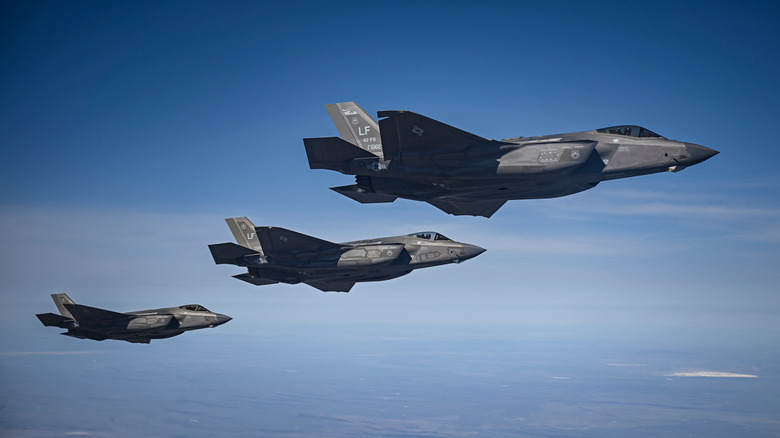
While Honeywell Aerospace doesn't intend for active F-35s to take on its new cooling system for another few years, should widespread adoption come as hoped, the company claims a host of positive downstream effects beyond cooling. First and foremost, Honeywell anticipates P40 will reduce the likelihood of system shutdowns due to overheating while in flight. This has become an increasing concern as F-35 cockpits have taken on more power-hungry, cooling system-stressing technology over the years and heat removal tech has lagged behind. Thus, the new P40 upgrade supposedly has the ability to increase system reliability and decrease the workload of repairing F-35s back to flight-ready shape.
On top of this, the new Honeywell P40 system is seen as a path to further increase cooling capacity down the line. Honeywell foresees using the 40-kilowatt limit as a stepping stone to reach potentially as high as 62 kilowatts or higher in the cooling system upgrades to come. Not to mention, with the lack of serious physical change to the F-35 fleet, the United States military will save time and money in getting its jets up to par on the cooling front. If only it could also tackle the other major F-35 flaws in dire need of fixing.
Honeywell Aerospace makes a lot of big, game-changing claims about its P40 cooling upgrade. If its promises are held up in practice, it could mark a notable improvement for the F-35 fleet on multiple fronts. We'll just have to see in the coming years if the software and minor structural upgrades come to fruition on America's jets.