

Will Drones Make Helicopters Obsolete? Here's What Experts Say
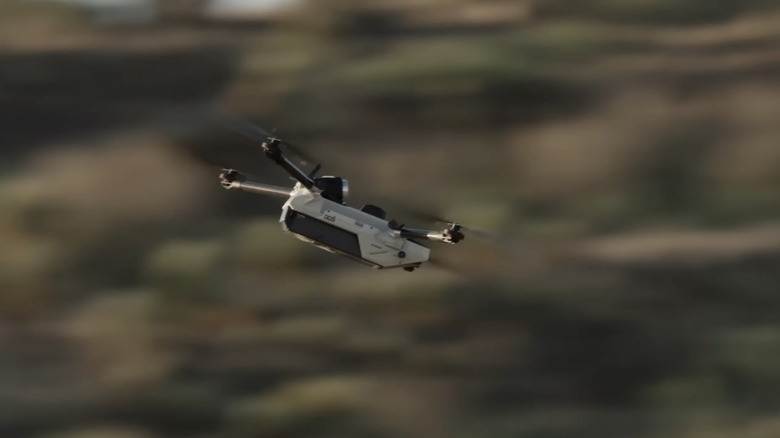
In March 2026, a small Ukrainian drone basically took out an attack helicopter — the Russian Ka-52 — and forced it into an emergency landing. This drone was an FPV model, short for first-person view, a pretty common type of drone in use in the Ukraine war today. An operator on the ground flies it while watching a live camera feed. In this case, it was actually a fiber-optic drone, a variety that has a cable attached to it, helping it take commands without interference from radio jammers. Price-wise, something like that runs for about $500. Meanwhile, the Ka-52 it damaged is estimated to cost $16 million.
Run the math, and it won't be a stretch to consider replacing helicopters with drones altogether. However, things aren't really that simple, at least according to experts. The gist is that drones seem like they'd take over plenty of the riskier scouting work. However, crewed helicopters would still be useful for hauling troops and delivering firepower. Today, most of the evidence comes from Ukraine, where cheap drone tech that nobody's really tested at scale before is pretty common.
In an essay for the national security publication War on the Rocks late last year, Stephen Olguin, a former Apache pilot, laid out one big reason why helicopters still matter, and will continue to for the foreseeable future. He argued that drones able to find and hit targets on their own are still years away from participating in active combat. Still, this hasn't stopped militaries from cutting back on helicopters.
Why militaries are cutting back on helicopters
Signs of cutting back have been looming for years, but perhaps the most concrete piece of evidence flew in when the U.S. Army canceled a planned scout helicopter called the Future Attack Reconnaissance Aircraft (FARA). While plenty of military aircraft have been canceled in the past, this one was special because one big reason was the existence of drones. In the Army's official announcement, Army Chief of Staff Gen. Randy George pointed to Ukraine, saying that the war showed that "aerial reconnaissance has fundamentally changed." Drones and satellites have simply pulled ahead in terms of scouting capabilities.
That said, Ukraine wasn't the only reason here. Arkadii Dotsenko, an aviation observer at Ukrainian defense outlet Oboronka, notes in a July 2026 analysis that the Army also needed that money for its Black Hawk and Chinook transport helicopters. In 2025, Pentagon leaders directed the Army to stop buying the older AH-64D Apache attack helicopter and even labeled it obsolete. Even Japan is headed the same route. It flies the same D-model Apache, and its Ground Self-Defense Force is now handing the helicopter's scouting and strike work to drones.
These decisions make even more sense considering how Russia's attack helicopters fared in Ukraine. In the war's first weeks, Russian Ka-52s flew low raids well behind Ukrainian lines. Ukrainian troops answered with thousands of shoulder-fired anti-aircraft missiles called MANPADS. By April 2022, Russian crews had mostly stopped crossing the front line. Instead, analysts found that Russian helicopters assumed a new role: lobbing unguided rockets from a distance.
Why helicopters aren't going anywhere yet
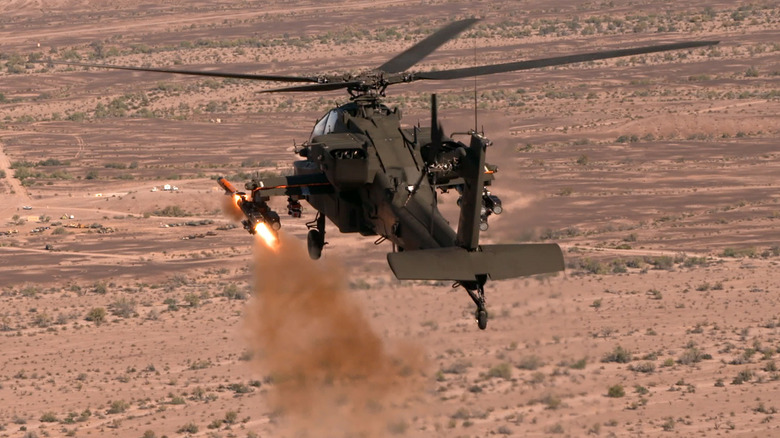
That said, despite the advantages, a drone still can't do everything an attack helicopter does. So for certain operations, the latter remains more suitable. Retired Marine Col. Rob Bodisch explained in a March 2026 essay for Small Wars Journal that an Apache carries 16 Hellfire missiles, which no tank can survive against, and that a drone doesn't come close to that kind of firepower.
Moreover, Bodisch thinks the whole debate leans too heavily on a single war – Ukraine, in this case. He cites Jonathan Panter of the Council on Foreign Relations, who argues that a grinding war of attrition in Europe tells you little about the requirements in any other future wars, like perhaps a clash between superpowers in the Pacific. That's why he would rather see helicopters and drones fight together, supporting each other. In fact, a concept that's made it past the whiteboard called Air-Launched Effects already proposes something of the sort. It sees Apache helicopters launching small expendable drones in flight, which then fly ahead to scout or jam enemy radios. Meanwhile, the helicopter itself stays back from enemy air defenses.
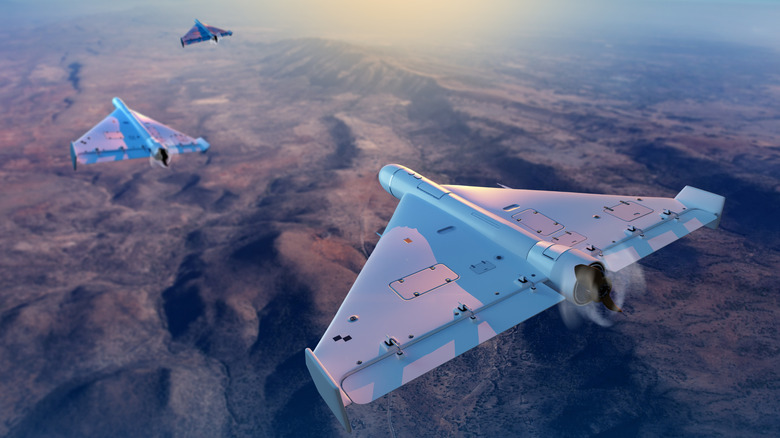
Helicopters themselves are catching up at the same time and are increasingly capable of shooting drones down themselves. For instance, Ukraine now flies old Soviet-designed Mi-8 transport helicopters against Shaheds, which are cheap Iranian-designed attack drones that Russia launches by the hundreds. To conclude, the honest answer here is that drones are taking away jobs from helicopters slowly rather than taking over entirely.