

3 Disadvantages Of Self-Propelled Lawn Mowers

A self-propelled lawn mower, as the name states, has its own propulsion system. That's the key distinction between this type of mower and a push mower. With a push mower, an operator needs to push it as they traverse the yard, which can be difficult when a property is hilly or large.
A self-propelled lawn mower moves forward without being pushed, meaning the person operating it only needs to steer it. While there are obvious benefits to mowing your lawn with a machine that does a lot of the harder work for you, before investing in one, it's wise to familiarize yourself with some potential disadvantages of using a self-propelled mower.
There's no one type of mower that's right for everyone. Factors ranging from your physical fitness to the terrain of your property will play roles in determining which type of mower is right for you. It's merely helpful to understand that while a self-propelled mower might sound like it's always the better option, the power this type of mower offers doesn't come without trade-offs.
Self-propelled mowers may be heavier than other mowers
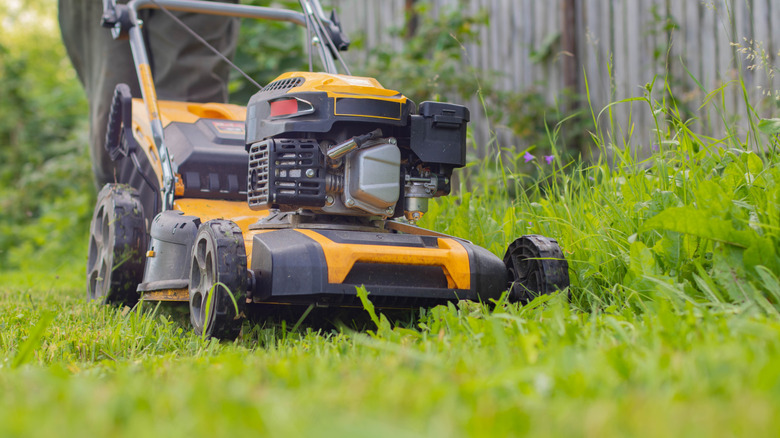
The main reason you may be considering a self-propelled mower in the first place is because you want something that will be easier to operate than a push mower. During the actual mowing itself, a self-propelled mower may be ideal in this capacity.
However, the propulsion system and overall complexity of a self-propelled mower can add to its weight. Thus, when you're not actively using the mower, moving it can be a challenge. This is something you might realize when you move the mower in and out of storage for mowing sessions. Similarly, if you ever have to lift the mower over curbs or other such obstructions, doing so can require some exertion.
Once again, it's important to understand the importance of considering your own unique circumstances before deciding whether or not this type of mower is the way to go. For example, if you have a large lawn with hilly sections, self-propelled might be your best option. If yours is a smaller lawn that's already fairly easy to mow with a push mower, a self-propelled lawn mower might simply be a bulky piece of equipment you don't need.
Self-propelled mowers may need more maintenance than push mowers
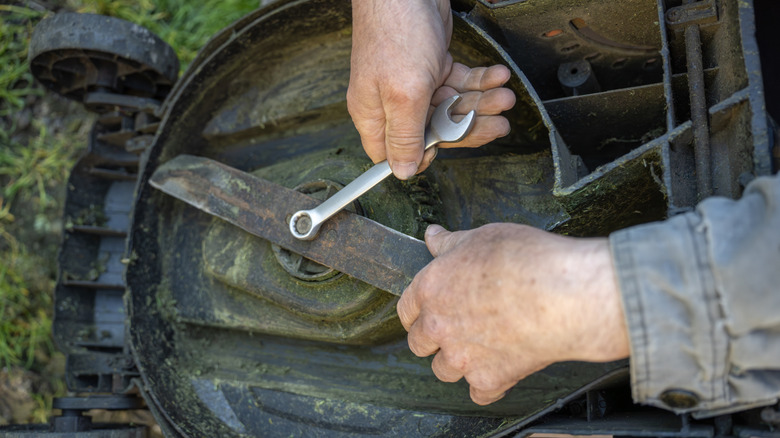
Although it's a bit of an oversimplification, it's generally true that the more complex a machine is, the greater its maintenance needs are likely to be. This is typically true of self-propelled mowers. Their propulsion systems consist of numerous parts, and naturally, those parts are prone to wear and tear over the years.
Be aware that self-propelled lawn mowers already tend to cost more than equivalent push mowers. They may also require servicing and repairs more often. Thus, the cost of owning a self-propelled mower compared to a push mower can get fairly substantial over the years.
That said, self-propelled lawn mowers come in both electric and gas forms. As you might expect, electric models require less maintenance than gas-powered options. In addition, electric variants are lighter, which may somewhat offset another disadvantage of self-propelled mowers. Just remember to thoroughly evaluate all of a mower's features when determining which is worth your money. Although electric self-propelled mowers can offer some benefits, that's not to say gas-powered models are inferior in all contexts. For example, a gas-powered mower may be the better choice if you need something with more torque.
Fueling a self-propelled mower may be expensive
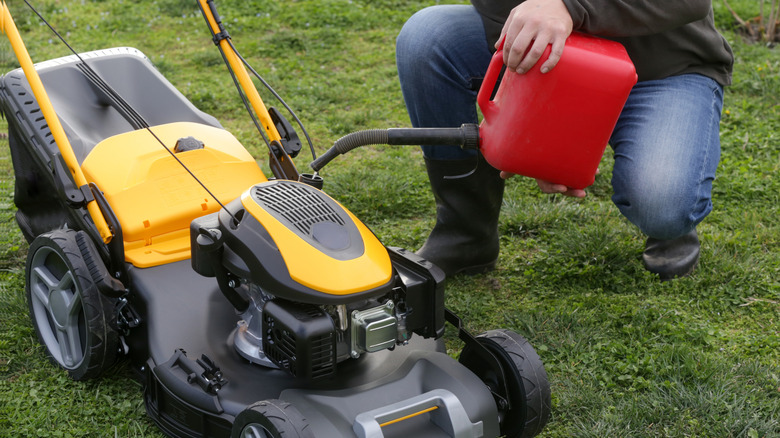
You already know the upfront, maintenance, and repair costs for a self-propelled mower may be greater than that of a push mower. You should also consider how expensive it may be to keep a self-propelled mower fueled up.
Self-propelled mowers — at least those that run on gas – use more than an equivalent push mower. Over time, the cost of gas adds up, and it can be pretty substantial. On the other hand, you may have bought an electric self-propelled mower. Even so, keeping it charged can add to your utility bills. While push mowers may also require some degree of fuel, the associated costs will usually be lower with a push mower.
These are all important factors to evaluate when deciding between a self-propelled mower and another option. Researching the different types of mowers on the market, as well as which lawn mowers you should steer clear of, can help you more comfortably understand the pros and cons of each, making it easier to make an informed decision.