

5 Downsides Of Using Run-Flat Tires
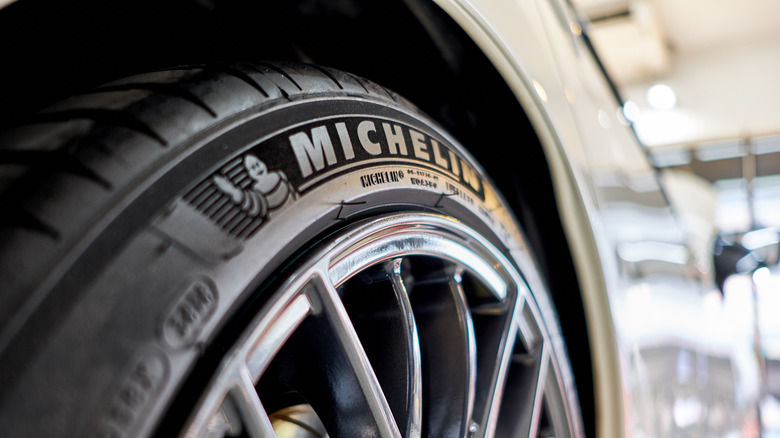
If you want to go as fast as possible around a corner on a dry track, a slick/semi-slick tire is your best bet. If you want to go through mud and dirt in your weekend SUV off-roader, a mud tire is best, and if you want to stay straight on an icy patch, studded ice tires should do the trick. There are also tires built for different seasons, durability, comfort, longevity, and pretty much everything else you can think of.
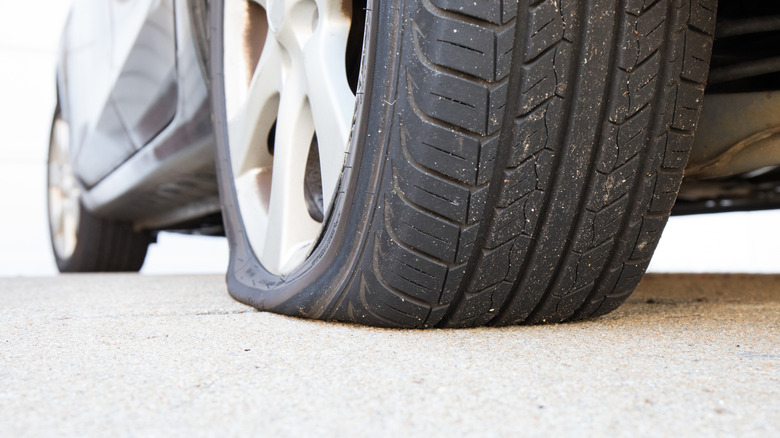
However, the problem with each of these tires is that once they lose pressure, you can't do any of the above. A regular tire goes flat, and you're stuck on the shoulder swapping in a spare or waiting around for a tow. This is where run-flat tires come in, as they are designed to support the car's weight even when fully deflated, meaning you can continue driving even if your tire has been punctured.
Reinforced sidewalls hold the car up after a puncture, so instead of pulling over, you can keep going to the nearest shop, usually for a limited distance at a reduced speed. That added convenience is the whole selling point, but run-flats aren't a free upgrade. Like every other tire here, they excel in certain areas and aren't the best in others, and those trade-offs are worth knowing before you commit. Here are five downsides of using run-flat tires.
A harsher and stiffer ride
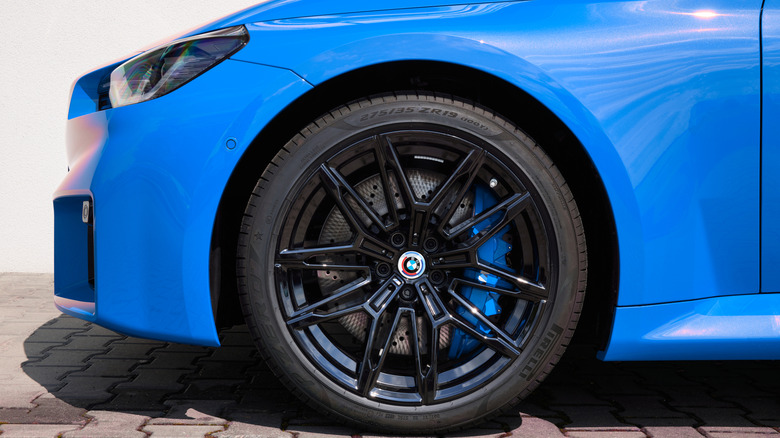
Since the sidewalls of a run-flat tire are reinforced and not as flexible, there is more mass and material within it. That is how deflated run-flat tires support the car's weight without damaging the wheel. However, all of that added mass and stiffness makes the ride harsher and stiffer. This is especially true with cars that come with larger-diameter wheels, where there is less sidewall to soak up an impact.
The difference is easiest to feel on expansion joints, bad quality pavement, and potholes, exactly the spots where a softer conventional tire would flex and take the edge off the hit. Modern-day run-flats are indeed a lot better and softer compared to what they used to be, but this also has to do with suspension tuning, meaning that automakers tune their car's suspension with run-flat driving in mind. With all of that added stiffness, run-flats are likely to transmit more road vibration into the cabin.
This is also why many automakers that equip their vehicles with run-flat tires don't recommend replacing them with regular tires. Not everyone is willing to live with the trade-off. BMW owners in particular have been vocal about the harshness of their factory RFTs, and plenty of them make swapping to conventional tires the first change they make to the car. It's one of the most common complaints drivers raise about run-flats, and coming from the buyers most particular about how a car rides, that says something.
Run-flats cost more money
As we've already established, the world of tires is about compromise. A run-flat's whole purpose is to, as the name suggests, run while the tire is flat, saving you from swapping a tire roadside or paying for a spare or a tow. But that safety net costs more up front: run-flats can run 35% to 200% more than a comparable conventional tire, often $150 to $500 apiece, partly because makers build fewer run-flat models to meet lower demand.
The gap continues after the sale. A 2013 J.D. Power study of more than 30,000 vehicle owners found run-flats last about 6,000 fewer miles than conventional tires, which averaged 22,559 miles before replacement, and that 31% of run-flat owners had already replaced at least one tire, against 19% on conventional tires. One likely reason is a softer tread compound used to ease the stiff ride, which wears away faster. The problems go further because many punctured run-flat tires cannot simply be plugged or repaired, particularly after they have been driven with little or no pressure.
Since they should be changed in pairs, one puncture can force you to replace a perfectly good second tire just to keep the axle matched. This is recommended for conventional tires as well, but with run-flats, the differences between a run-flat and a conventional tire on one axle are a lot more noticeable. So even when you could replace just one tire, the risks are higher if one of them is a run-flat.
No easy repair, plug, or patch
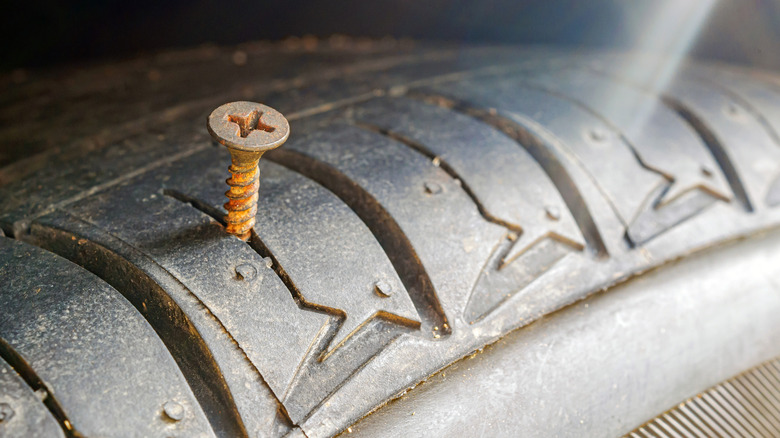
Here's the part that kind of stings with run-flat tires: the feature run-flats are sold on — driving away from a puncture — is often the very thing that makes them non-repairable afterward. Makers and experts advise against repairing a run-flat that has been driven on with little or no air. Rolling on a flat can bruise the inner liner or weaken the sidewall in ways that never show on the surface.
This means no one can green-light a repair without dismounting the tire and checking its interior — and that inspection alone can run as much as $75 before a single repair is even made. Even where a repair is technically allowed, the window is narrow. Bridgestone and Michelin permit repairs under strict conditions and only for specific tire models. In many cases, a tire that has already carried the car home on a flat has usually blown past what these manufacturers deem safe.
An external-only plug isn't an accepted permanent repair, precisely because it seals the hole without the tire ever coming off the wheel to be inspected inside. The result is a lopsided cost equation that doesn't always hold up. A conventional tire that picks up a nail is often a cheap tread-area fix, and you can patch up that tire for about $20 to $50. On the other hand, a run-flat tire that carried you home usually can't be saved, turning a single puncture into a full replacement.
Run-flat tires have other limitations

The run-flat's pitch is that you'll never be stranded — but both halves of that promise come with fine print. Start with buying them: there are far fewer run-flat options on the market than conventional tires. Stock is thin, too — a lot of shops keep none on the rack, so tracking down the right one can mean waiting several days while it's ordered in.
Then there's the headline feature itself, which is smaller than it sounds. Bridgestone and Michelin rate their run-flats for up to 50 miles at up to 50 mph after a loss of pressure, and that ceiling shrinks further with speed, load, and heat. If it is more than just one tire, the advice is to stop driving, not press on. The same goes for the 50-50 small spare tire rule: you should drive both a small spare tire and a punctured run-flat tire up to 50 miles, tops.
So, the ability that justifies the stiffer ride and higher price is really a limp-to-the-nearest-shop allowance, rather than a license to carry on with your day. Compare that with a conventional tire that has been patched properly, for example, in accordance with the BSAU159 standard, which you can drive like a normal, healthy tire. In that respect, a run-flat tire can even end up being worse.
Run-flat tires depend heavily on TPMS
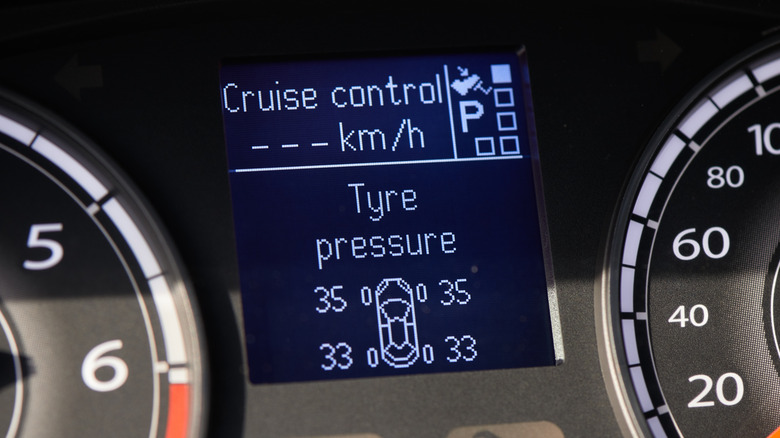
A run-flat's big benefit can also be its big drawback, meaning that because the reinforced sidewall holds the tire's shape even at zero pressure, a deflated run-flat can look like a fully inflated one at a glance. From the driver's perspective, everything is fine — no sag, no flapping, often not even an obvious pull or thump. That is exactly why the tire pressure monitoring system is so important with a run-flat tire.
The dashboard warning is usually your only cue that the 50-mile clock has even started, which is why Bridgestone restricts its run-flats to cars that already carry TPMS — on many vehicles it's effectively a requirement rather than an option. The catch is that you're now trusting a second system to do its job. When you roll on a deflated conventional tire, the problem is obvious. The tire sags onto its sidewall, the steering turns heavy, and the car pulls or jumps.
A run-flat hands that entire job to the sensor — and the sensor isn't flawless. When AAA checked the tire-pressure monitors in 11 vehicles, the pressure readouts came in accurate to within about 1.5%, yet most only tripped the warning once a tire had sunk to roughly 75% of its recommended pressure, and one truck didn't light up at all — even at 65% and after a mile of driving. On ordinary tires, that's a minor gripe. On a run-flat tire, it can be a massive problem since you can never truly know when that 50 miles from puncture has actually started.