

The Biggest Downsides Of Using Performance Tires
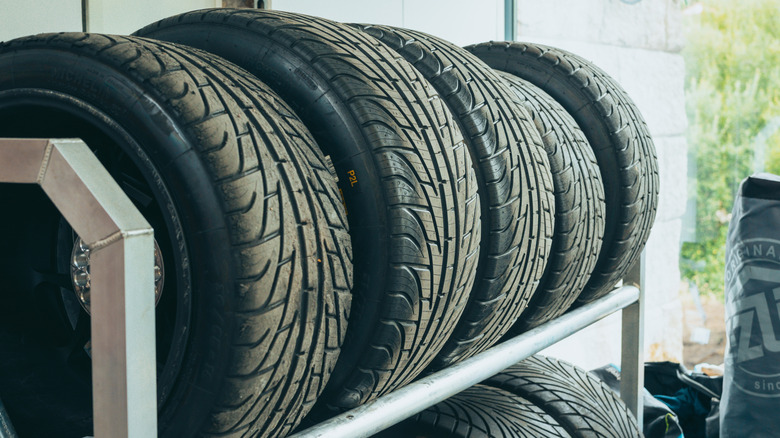
Some drivers prefer to use performance tires with good treadwear ratings on their vehicle. Before trying a set yourself, it's important to know that they do come with their share of downsides. It begins with how quickly their tread can wear down. That's because performance tires are built with a focus on traction and handling, which means they typically don't last as long as standard passenger tires before the tread wears out.
The shorter lifespan isn't the only drawback, however, as performance tires can also change how a vehicle feels on the road. This is due to their construction, which is geared toward responsive handling versus absorbing every bump. Because of this, you may notice a firmer ride and more vibration through the vehicle. Performance tires can also be noisier than standard tires and they can result in worse gas mileage. This is due to their focus on grip, which increases rolling resistance and can cause the vehicle to work harder to overcome it.
Performance tires can have some limitations when they're used outside the seasons they were designed for as well. As an example, summer performance tires can be challenging during the winter months because they're built with rubber that is designed to be flexible in warm conditions. Driving with summer tires during the winter is not recommended either way, and it also affects performance tires — when temperatures fall, these tires can become much less flexible, decreasing their ability to maintain traction.
Why some drivers choose performance tires over other options

While performance tires do have their drawbacks, there are reasons why some drivers often choose them over other options. That includes the aforementioned handling and the all-important traction, both of which make the vehicle feel more controlled when taking turns or making quick changes on the road. That grip can decrease braking distance as well, which is beneficial especially if you have to slow down for a corner quickly.
Performance tires come in different grades and types, and the terminology used can vary between manufacturers. Some are designed to provide a balance between improved performance and everyday drivability, while others are more specialized toward maximum performance. For example, Tire Rack separates performance tires into categories like Ultra High Performance, Max Performance Summer, and Extreme Performance Summer.
When it comes to whether or not performance tires are the right choice, the answer depends on what features are the most important to you. If you prefer steering response and the ability to corner confidently, then performance tires may be the best tires for you. But if a shorter tread life and firmer ride are dealbreakers, then performance tires may not be the most ideal option. In the end, it's about deciding if the tradeoffs of performance tires are worth the advantages.