

What's The Difference Between Transmission Fluid And Hydraulic Fluid?

Understanding the difference between transmission fluid and other fluid types can be tricky, unless you know what purposes they serve. For example, transmission fluid is formulated for the specific demands of a vehicle's transmission, where it lubricates the transmission's internal parts. It also helps maintain the correct amount of friction for components like the clutch while allowing for the transfer of power between the engine and transmission.
In contrast, hydraulic fluid serves a different purpose as it transfers power through a hydraulic circuit in heavy machinery such as cranes, forklifts, and loaders, among other equipment. It also lubricates moving parts and carries heat away from system components while also acting as a sealant that helps remove contaminants from the system. So while both hydraulic and transmission fluid can provide lubrication and protection, their exact formulas are designed around the different jobs their specific systems need them to perform.
However, the line between the two isn't always so clear, as some fluids are actually designed to serve both purposes. For example, Xtreme 334 Tractor Hydraulic Fluid is formulated for tractors, construction equipment, and logging equipment. These equipment types are designed to use a single fluid for the transmission, power steering, and final drives. This product also uses additives intended to protect loaded gears while providing resistance to corrosion, foaming, oxidation, and rust.
The risks of swapping transmission and hydraulic fluid
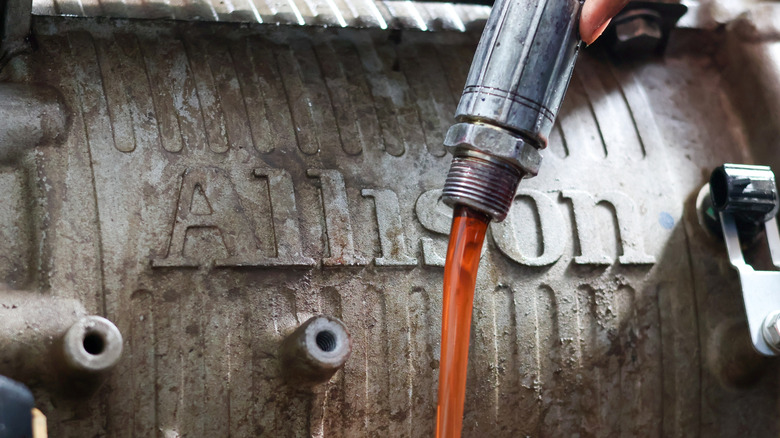
Swapping transmission and hydraulic fluid safely depends on both the fluid and the application. Some hydraulic fluids are designed for both, but that doesn't mean that all transmission fluids can be used as hydraulic fluid. Transmission fluid can only be used in place of hydraulic fluid when the equipment's specifications allow it. Transmission fluid isn't a universal substitute for hydraulic fluid because its additives and friction properties may not make it the right fit for every hydraulic system.
If you do use the wrong fluid, you can cause problems beyond just reducing performance. For example, using automatic transmission fluid in a hydraulic system that isn't designed for it can contribute to excessive heat and wear, interfere with normal hydraulic operation, and affect seals, as well as other components. An incompatible fluid can also reduce lubrication and shorten the service life of components such as pumps, valves, and hydraulic rams.
A transmission can also suffer when its fluid doesn't meet the specific requirements set for that system. One example comes from Eaton, a vehicle component manufacturer, which requires a specific lubricant for its Procision transmission. That's because it's designed around the transmission's wet clutches, gears, and bearings. But using an unapproved fluid can lead to reduced service life, and eventual failure.