

The Pros And Cons Of Using Flex Seal To Coat Your Gutter Seams
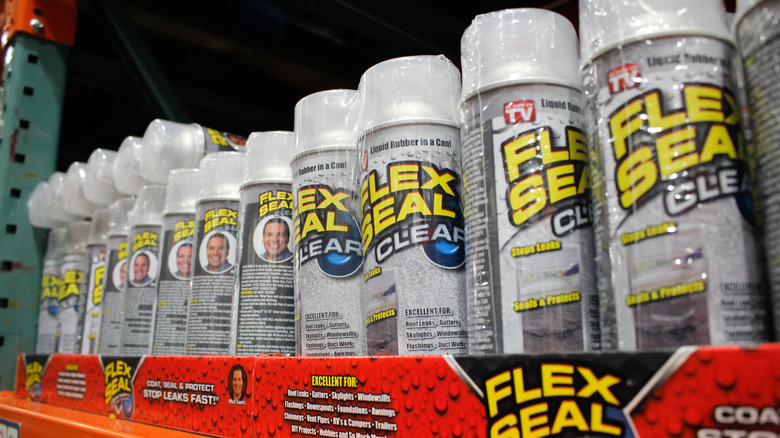
The spray can version of Flex Seal is a breeze to apply and may look, at first glance, like a great solution for coating everything from an RV roof to a leaky gutter. Spray it on and it leaves a rubberized layer in its wake that, in theory at least, seals gaps and holes and can even prevent further damage and erosion. Flex Seal itself provides instructions for using it on gutters: Clean out any leaves or other gunk (these Ryobi tools can help with that), find the leak, clean and dry, tape off the area, and then spray it down. A full seal may require multiple layers; drying takes about 24 hours, while a full cure needs around 48 hours.
Those instructions highlight Flex Seal's strengths: An easy to use aerosol can, no caulk gun required, and you can apply it to odd-shaped breaks or holes a lot more easily than conventional beads of sealants. It lets you fix smaller issues with your gutter without having to break down the entire gutter system and can be a useful stopgap even when bigger repairs are imminent.
However, Flex Seal can be finicky. It depends on the surface being immaculate, as any dirt, moisture, or residue can weaken the seal. There are also all the challenges inherent in having to wait for a multi-coat application to cure, such as needing the weather to cooperate and give you a long, dry window. It also struggles with seams and joints, and long-term durability and failures can be an issue as well.
Why gutter seams are different
Flex Seal has all kinds of wild uses — keeping your lawnmower tires from going flat, for instance — but it can struggle around bends and joints, like the seams of your gutter. Unfortunately, those seams are common leak points because of the way sections overlap or connect, but a proper seal requires a continuous, solid layer across the entire joint.
According to My Gutter Doctor, Flex Seal isn't up to the task. There are the issues we've already mentioned, like applications being ruined by rain or some kind of debris. But beyond that, the long window between applications and the annoyance of having to set up a ladder and clamber up to the gutters means many homeowners don't apply enough layers to be effective, especially around tricky seams.
Flex Seal can also gum up future repairs because it leaves a permanent layer of rubber behind that's difficult to remove. According to My Gutter Doctor, unlike caulk or other sealants that can be scraped away, spraying a gutter seam with Flex Seal often means you can't reuse the miter (the piece at a corner where two lengths meet), meaning you may need a more costly replacement or repair.