

What Causes Those Black Spots On Concrete Driveways, And How To Get Rid Of Them
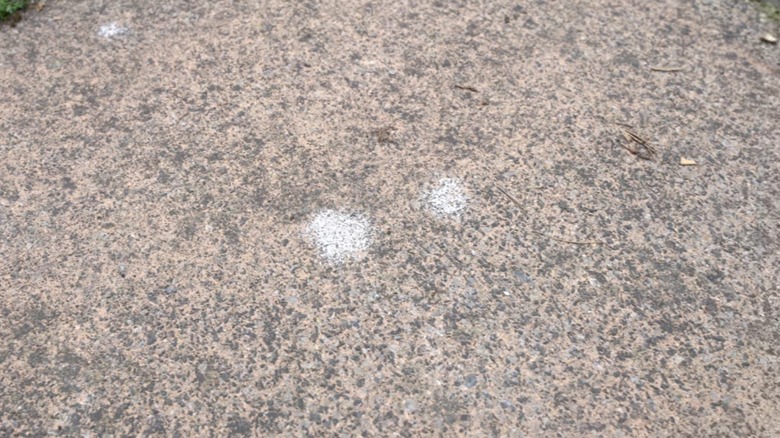
There are a few different driveway materials to choose from, and concrete is a common option. After all, it offers a nice clean look and is rather long-lasting. That's not to say it's perfect, however, as concrete driveways are known to have a few common issues, including when little black spots pop up all over them. These marks are typically a byproduct of concrete's porous nature. If moisture can get in and stay there, these unsightly spots are likely to appear.
More often than not, you're looking at a form of outdoor mold, algae, lichen, or some other natural growth that relies on high-moisture, high-shade areas to thrive. Given its ability to retain water, concrete can be a perfect breeding ground for such growths.
As these growths can pop up and spread rapidly, you'll want to remove them as soon as possible. If left untreated, they can possibly inflict damage on the driveway. Fungal growths have the ability to break down concrete over time, weaseling their way into the material, growing, and making room for other contaminants like water and dirt. In time, this leads to concrete cracking and general material degradation. Fortunately, cleaning up a driveway to make it look new again is possible no matter the severity of the growth.
Black spot removal can become quite a project
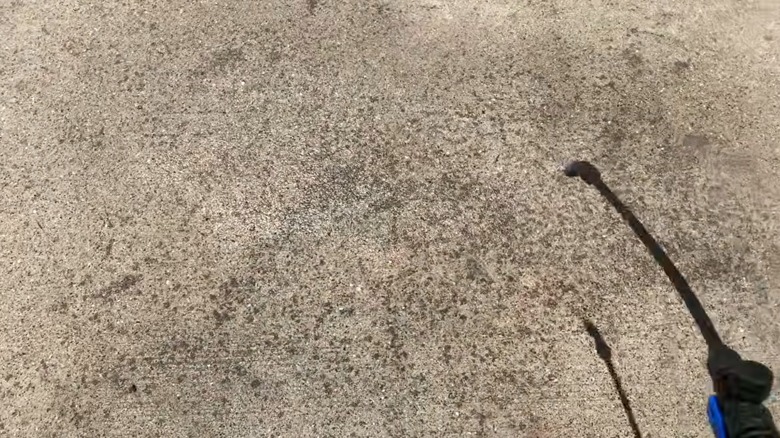
If you catch it early, removing black spots from your driveway is pretty straightforward. For instance, if you've just noticed a small handful of tiny black spots, a good brush for scrubbing, a sprayer, and a cleaning solution could be all you need. You can first try with a simple combination of vinegar or a mild cleaning detergent and warm water. A diluted 1:10 ratio of bleach and water could prove successful at this stage, too, though you want to double check that your driveway can handle bleach exposure. Concrete driveways that have a sealer coating across them, for instance, shouldn't be bleached since the cleaner can eat away at the protective layer. The bleach solution should be thoroughly rinsed away once cleaning is complete.
In the event the mold and mildew growth has gotten out of hand, though, you'll have to turn to larger-scale solutions. For some, power washing could be the answer. However, some concrete driveways can't take such strong blasts of water, and the growths may return if the area remains wet. Worst-case scenario, if you're not confident in how to proceed or overwhelmed by the task, seeking professional help could finally bring an end to your driveway growth woes. A biocide treatment like Bio-Shield gets to the root of the growth, pulling it out and killing it to eliminate the risk of regrowth over the course of several months.