

5 Practical Automotive Tools Every Mechanic's DIY Kit Should Include

We may receive a commission on purchases made from links.
At first glance, getting into automotive repair and maintenance can be rather daunting. There's a lot of moving parts, and many expensive elements that can feel risky to work on. Fortunately, working on vehicles isn't just about swapping tires and taking apart engines. Sometimes it's small-scale, but still, in order to get these much less intense car jobs done, you need to have the right tool kit at your disposal. Putting together such a DIY mechanic tool set isn't all that difficult either, nor does it need to be expensive.
Getting to work on a vehicle, even if it's just a small job, requires a few key things. First and foremost, you need to be confident. You can do it, and if it's hard, at least you've learned a thing or two throughout the process. There are some recommended apps to guide beginner mechanics along, too, and it's a good idea to have another person, particularly someone with mechanic experience, to help out and check your work. Otherwise, it's basically you and your trusty tool set against the world.
So, what exactly goes into a DIYer's mechanic tool box? These are just a few of the essentials that those of all experience backgrounds and skill levels can benefit from.
Sockets
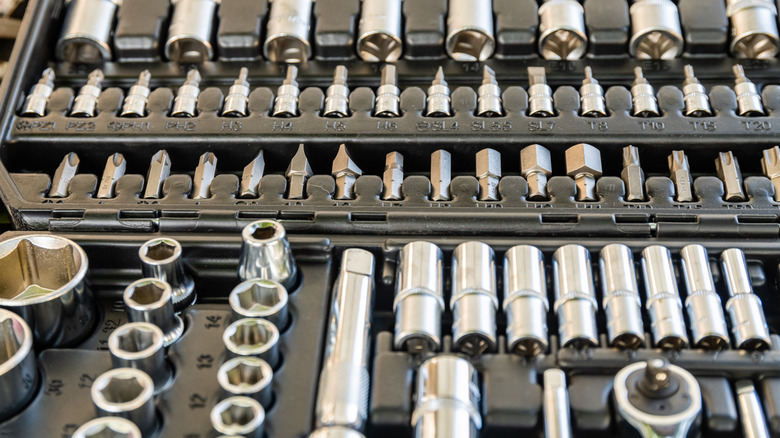
Everywhere you look on a vehicle, you're bound to encounter nuts and bolts of all shapes and sizes. A quick and easy way to get them moving is with a good ratchet and a socket of the correct size. Socket sets are all over the place, reaching up to hundreds of pieces to ensure no fastener is left unopposed. If you're willing to pay up a bit and look into the major socket set brands, you could realistically get a set that will last you years upon years with infrequent use. You could even use them on other projects simultaneously, getting even more for your money.
With all of that said, you need to be discerning when it comes to your socket purchase. While brand and price are important, the shape and size of the sockets shouldn't be overlooked. In this case, a hex socket is the right way to go, as their six points mean a sturdier grip and more torque. 12-point star shaped sockets are more likely to roll on overly-tight fasteners and strip more quickly. It's also worth picking up both deep and shallow sockets, too, since sometimes you'll have to contend with tight or awkward workspaces and fasteners that demand specific sizes. This way you can ensure all fasteners can be held and moved properly without damage to them or your tools.
Screwdrivers
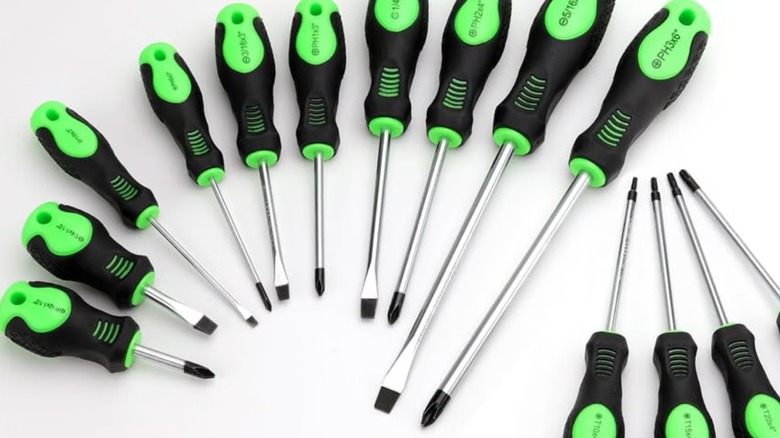
Generally speaking, if you're dealing with fasteners on a modern vehicle, you'll need a socket or wrench to remove them. Screws aren't all that common in vehicle construction, especially under the hood where nuts and bolts reign supreme. At the same time, this doesn't mean there's no place for screwdrivers in a mechanics-based tool kit. After all, flathead screwdrivers are excellent for prying, and for releasing small plastic tabs on plugs that could prove troublesome with hands alone. You may even encounter small screws here and there to remove by hand, further justifying purchasing an entire screwdriver kit for your automotive endeavors.
When shopping for automotive-use screwdrivers, you have some options to weigh. For one, there's the size of the kit, since screwdriver sets can contain hundreds of pieces. Some might be more content with a smaller set with only a few dozen essentials. In any case, you want to do some research into the material your desired set is made from. Chrome molybdenum steel, chrome vanadium steel, carbon steel, and S2 tool steel are among the many options, each bringing their own level of hardness and durability to the table. It's a good idea ahead of time to look into the stats behind the material your screwdrivers are made from, this way you can ensure they'll be able to meet your needs on the job.
Breaker bar
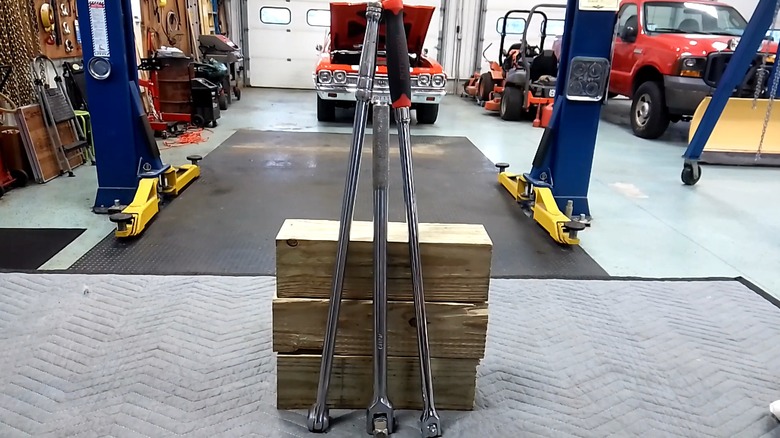
In many cases, a good ratchet and the appropriate-sized socket will be more than enough to get a vehicle's nuts and bolts moving. Unfortunately, not all will unscrew with ease, with old, rusty, and highly-torqued examples potentially damaging ratchets and sockets that try to move them. That's why if you're going to undertake automotive repair, you want to invest in a sturdy breaker bar. Ideally, this tool will be the key to getting frozen bolts free without having to bring in a blow torch or power tools for assistance. Better yet, they're often inexpensive, with stores like Harbor Freight having these garage essentials and more for under $25.
The idea behind a breaker bar is simple. It's basically an extended ratchet handle that can give the user added leverage, putting more force onto a stuck fastener than a simple ratchet and socket setup could provide. They come in different lengths and thicknesses, so you can determine which is the one that will best suit your needs. You could even pair it with a good penetrating oil for instances where you face the most seized-up bolts on your ride. Overall, the breaker bar is an easy tool for DIY mechanics of any skill level to take advantage of, with a wide range of use cases that justify its purchase and place in the tool box.
Lighting solutions
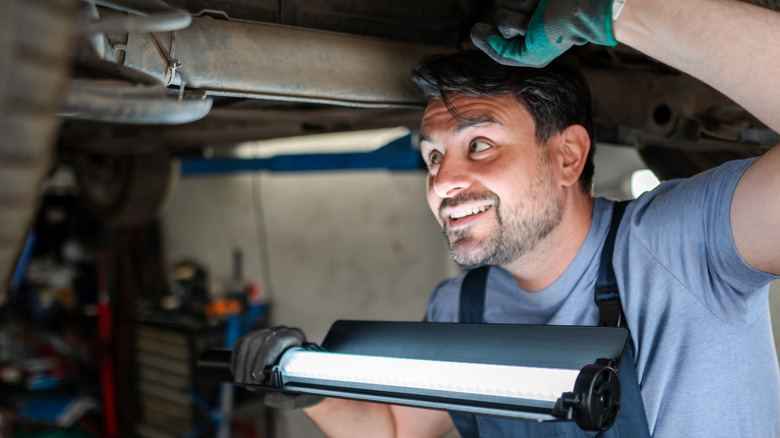
Even with the daylight on your side or ample garage lighting, visibility can be a problem when performing car repairs. That's why any DIY mechanic worth their salt keeps a good flashlight handy in their tool box. A bright, durable flashlight is great for illuminating the little nooks and crannies where problem areas, failing parts, debris, and more can reside, possibly overtaken by shadows otherwise. Not to mention, if you drop something small like a nut or washer, a flashlight can make all the difference in trying to track it down.
At the same time, flashlights are more ideal for quick inspection and assessment. What about when you're all alone in low light but don't have a third hand to hold a flashlight while you work? Situations like these call for different kinds of lighting solutions. One option is a light bar, like the Icon 800-lumen rechargeable light bar, which is basically a long flashlight that provides a wider area of light. They often come with hooks or even magnetic elements for positioning them just right. Alternatively, there are lanterns such as the Lepro 1,000-lumen battery-powered LED lantern, that can stand on their own or be hung on the underside of the hood while working in the engine bay.
Soft-faced hammer
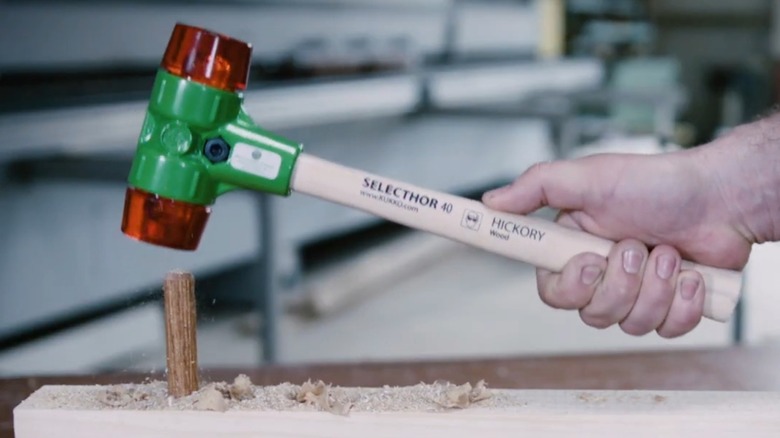
No matter the intended use for your tool kit, chances are you'll need a hammer of some variety around. While the debate over a tack or pin hammer being right for the job rages in other circles, in the world of automotive care, a different type of hammer takes center-stage. The soft-faced hammer — a hammer with a head made from softer materials like rubber, plastic, or soft metals — can be a life-saver when faced with a part that just won't move, or needs to be put back into place with an additional level of striking force. It won't be the most frequently-used piece in your kit, but when it's needed, it'll more than come in handy.
The reason why soft-faced hammers are perfect for automotive work is twofold. For one, as the name suggests, these hammers are made of softer materials than traditional sledgehammers or clawhammers. Thus, when they strike a surface, they're less likely to do cosmetic damage to it like scratching or denting. That brings us to the second point, which is that you can strike your intended parts with force to get them moving without worrying about harming them. This all makes a soft-faced hammer great for everything from getting rusty brake rotors moving to reconnecting detached parts like outer plastic trim and hubcaps back into position.