

China's Coal Generation Has Stopped Growing In Half The Country – Here's Why

China consumes the most electricity of any country in the world, totaling more than 10 trillion kWh in 2025. For reference, that's over double the total consumption of the U.S. To meet its vast power demands, China has invested in both renewable energy sources and in fossil fuel power plants. The country's largest solar farm is far larger than any solar farm that has been built in America — and it has had some unexpected positive effects on its surrounding environment — and it has also invested heavily in wind power.
Until recently, these investments have primarily supplemented China's fossil fuel power stations rather than replaced them, but a recent report by Ember Energy suggests that a switch from fossil fuels to renewables is now starting to take place. Coal is still the main fuel source for the country's fossil fuel power plants, but in 2025, coal generation did not increase in more than half the country for the first time in a decade.
This wasn't because overall electricity demand decreased, but rather because the pace of new renewable projects was fast enough to cause a drop in demand for fossil fuel-generated electricity. Increasingly, China's diverse array of manufacturing industries has prioritized switching to electric power, but that power is now coming from greener sources rather than simply ramping up coal production.
China still consumes a vast amount of coal
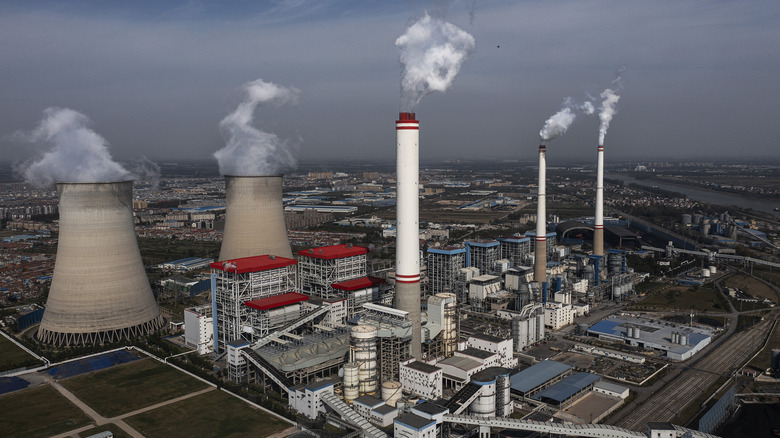
It's worth stressing that the switch to renewables is still in its early stages. China still has the highest number of coal-fired power plants in the world, and its emissions from burning coal shot up 248% between 2000 and 2023, according to IEA data. Around 75% of coal power consumption in 2023 was attributed to industrial use.
Nonetheless, since then, many sectors of China's industry have reduced their reliance on fossil fuels. That includes some industries that were previously thought to be difficult to make greener, like metal smelting and petrochemical production. Heavy-duty vehicles are also increasingly electrified. According to the Ember Energy report, 26% of new truck sales in China were all-electric in 2025, and 2026 has seen adoption increase even further. Meanwhile, the market share for electric passenger cars passed 50% in 2025, the first year ever that more EVs had been sold in China than combustion-powered cars. In contrast, U.S. EV sales made up around 10% of the overall new car market that year.
Part of the reason that China has been able to increase its usage of renewable energy sources is that it has made significant investments in battery storage. Solar panels are only able to produce their maximum output for a limited number of hours per day, and wind turbine output can be affected by changing weather conditions. By increasing battery storage, China ensures it can keep its electricity supply steady through those ebbs and flows in energy generation.
Have fossil fuels peaked in China?
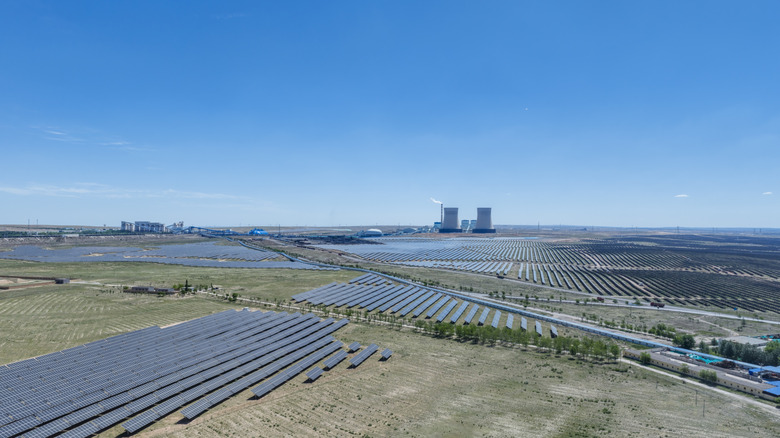
The report suggests that fossil fuel usage in many industries might have peaked as a result of the increased focus on renewables, and in some, it has already dropped significantly from its all-time highs. Textile production, machinery, and — ironically — fossil fuel extraction have all seen drops in fossil fuel consumption of more than 66% from their peaks. However, it's not an entirely clear-cut drop, with China's electronics industry still increasing its use of fossil fuel power, alongside the mineral processing industry.
According to the IEA, electricity demand in China is expected to grow just under 5% annually between 2026 and 2030. As a result, whether or not China can actually replace its fossil fuel power plants depends on the continuing construction of renewable energy plants. It takes well over a million solar panels to replace a single coal power plant, and the supporting infrastructure to connect those panels to the grid also needs to be rapidly and reliably built.
Solar plant construction slowed in China in the first half of 2026, but renewable energy technology exports also increased compared to the year before. These exports are fast becoming a valuable part of the overall Chinese economy, which should help keep interest in renewables strong even if coal remains the country's biggest single energy source for now.