

Tile Cutter Vs Wet Saw: What's The Difference?
We may receive a commission on purchases made from links.
A great option for flooring and arguably more attractive in showers than molded acrylic surround kits, tile offers a few advantages. Porcelain tile, for example, is highly moisture-resistant and requires little maintenance, making it an excellent choice for bathrooms or kitchens. However, no matter the tile application, you will need to make cuts to get everything fitting properly.
The thing is, tile isn't the easiest material to cut, because not just any tool will do the job. It's not difficult to end up chipping the edges of your cut, making it a pretty unforgiving material. That's why free-hand options like the Chicago Electric Dry-Cut Tile Saw from Harbor Freight is an example of a tool beginners should steer clear of when cutting tile.
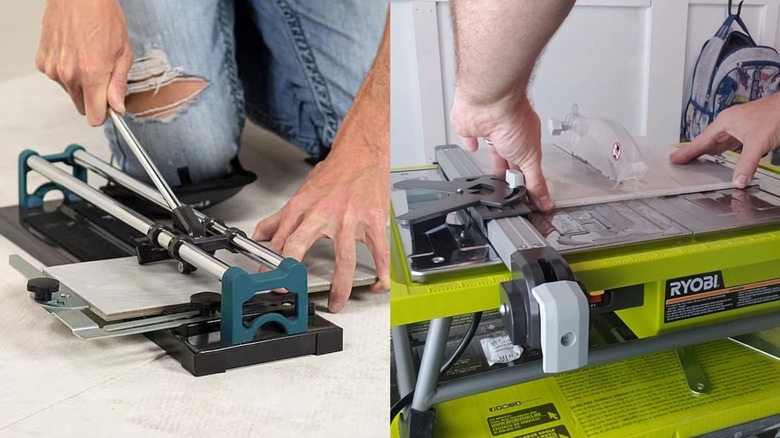
When cutting, you'll want to employ either a tile cutter or a wet tile saw. A tile cutter is a manual tool, using a wheel on a track that the user slides by hand to score the material. This then allows you to gently snap the piece into two parts using an included snapping foot. When scoring tile, finesse and balanced pressure are required; otherwise it won't break apart cleanly.
A wet saw, on the other hand, is powered and runs water over a diamond blade to make cuts. Some wet saws utilize pumps to distribute the water, while others include a reservoir beneath the blade, which picks up water as it spins.
Tile cutter vs wet saw: which one is better?
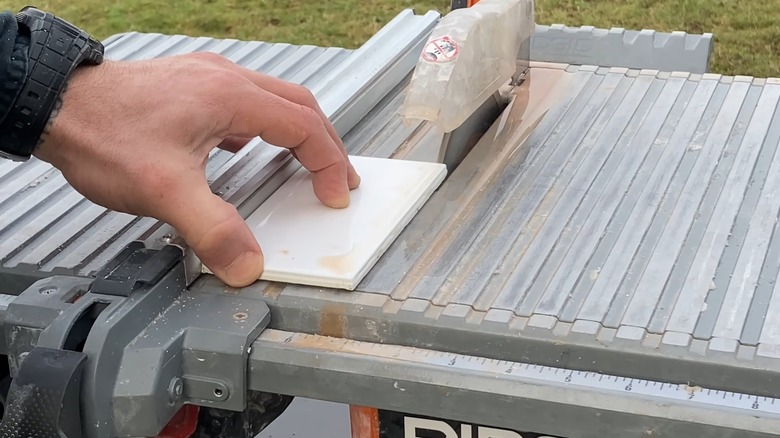
The short answer is, it depends. Both tools have their own set of pros and cons. A tile cutter, for instance, can be purchased for much less, and some can accommodate tile up to 3/8-inch thick for under $30. In addition, transporting a tile cutter is easy, and they make less noise during use. Still, this tool often has limitations in terms of what it can cut, making it more suited to softer tile or thin-slash-standard porcelain.
In terms of performance power, a wet saw is the clear winner. Wet saw diamond tile blades, typically sized between four and 10 inches, can easily work through tough materials like stone, porcelain, and ceramic. However, they're more expensive, with basic name-brand models starting well north of $100. One of RYOBI's handy tools for flooring installs is its 4.8-Amp 7-inch Wet Tile Saw listed for $149 at Home Depot. You can easily spend more than $600 on a wet saw using 10-inch blades. Wet saws are also noisy and messy, with many users preferring outdoor setups.
Should you use a tile cutter or wet saw for your project?
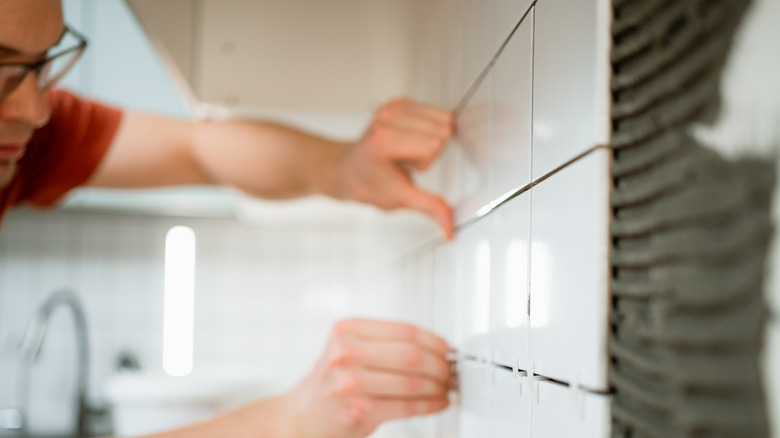
When trying to decide which tool would be the best option for you, consider the project type, size, materials, and your skill level. Jobs that call for fewer, simpler cuts will likely be suited to a tile cutter, saving you money in the process. For example, if you are adding some visual interest to your kitchen with a new backsplash, a wet saw might be overkill.
Tile cutters are also often less intimidating for those undertaking their first project. With a wet saw, the blades generally average seven inches, and many options resemble the nerve-racking table saw, one of the most dangerous workshop tools. Conversely, manually-operated cutting wheels on tile cutters are typically less than an inch in diameter.
If you move on to larger projects using harder materials like marble or glass, you'll need to graduate to a wet saw. Because the wet saw does the cutting for you, jobs that require many cuts take much less effort. A wet saw is also a far better option for precise cuts, such as fitting tile around doorways or other areas that require an irregular shape.