

Why Do New Cars Have Orange Peel Paint?
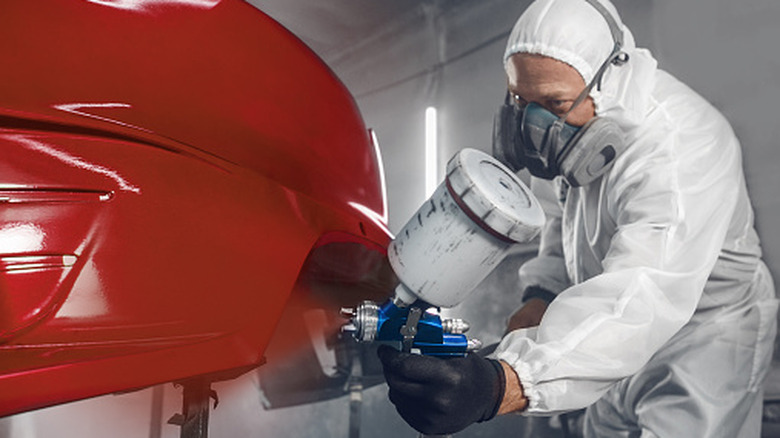
Modern cars come in a variety of cool colors, which can make selecting the right vehicle both tough and fun at the same time. Just don't try to pick "orange peel," since this actually isn't a new shade that an automaker is introducing. Instead, orange peel refers to the slightly uneven texture that can appear in a car's paint, similar to the surface of an orange. This condition exists in many manufacturer automotive finishes.
The reason that new cars can have the orange peel effect is because the paint doesn't always spread out onto a perfectly smooth surface before it dries and cures. Oftentimes, tiny variations remain in the coating, which is best seen when light reflects off the body of the vehicle. Since some amount of orange peel is common, especially on new cars, it doesn't necessarily mean that there is a problem with the paint itself.
In terms of how much orange peel actually appears, it depends on several factors. This includes the thickness of the paint, how it's applied, and the temperature during its application. The amount of drying time can also come into play, and the condition of the underlying body panel can contribute to the vehicle's final appearance, too. For most mass-produced vehicles, leaving some amount of texture in the factory finish is normal, which is why it's easy to assume that the paint job itself is intentionally done to achieve the orange peel effect.
Living with and removing orange peel
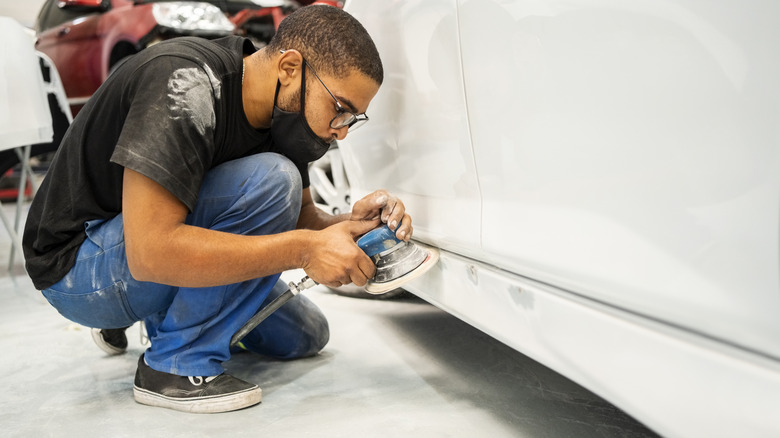
Many automakers choose to leave a certain amount of orange peel on new vehicles because of the work involved to remove it. Getting rid of the orange peel texture happens after the paint has cured and requires sanding and polishing the finish by hand. This takes a considerable amount of time and labor, which would drive up the cost of producing the vehicle. Rather than put every vehicle through this extra work, manufacturers choose to accept some of the orange peel effect.
Of course, if you want to remove the orange peel yourself, it can be done. It begins with sanding the paint to level the textured surface, and once that's done, you can change the sanding grit to a finer paper to smooth out the finish. The process can be performed using either dry or wet-sand abrasives, depending on how you want to do it. After the sanding is complete, you can use a rotary polisher to apply compound to bring the shine back to the finish, much like the process to remove scratches on a car.
However, this is a task you may not want to tackle unless you're a professional. Excessive sanding can ruin your car's paint, which could put you in a much worse situation than before. Without the knowledge, experience, and proper equipment, you could end up spending more money on repairs if something goes wrong. The right move may be to consult an automotive paint service in your area for the best advice on how to move forward.