

How Many Solar Panels Would It Take To Replace A Hydropower Dam?
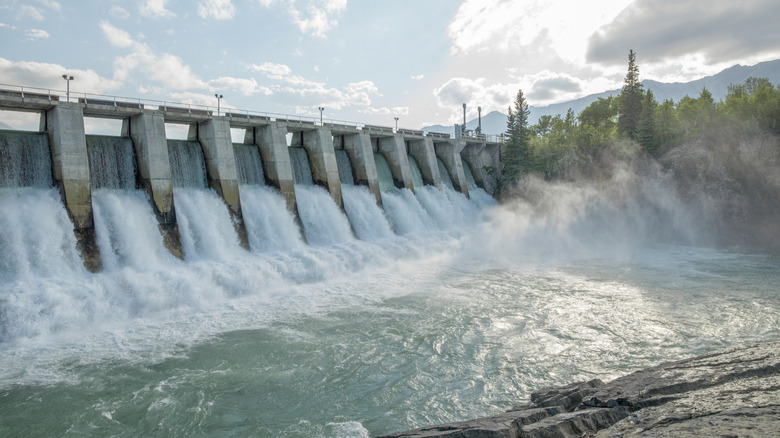
Sometimes you ask a simple question only to find a complicated answer. If you've ever pondered whether you could replace all the hydropower dams in the United States with solar panels, the simple answer is yes, of course, with enough time and money. The more complicated answer is that it would take millions of commercial solar panels to replace just the Grand Coulee Dam, which is the largest hydroelectric facility in the country. How do you reach this conclusion? Math, of course, and we promise that it's not Common Core!
In simplest terms, hydroelectric dams work by using water to spin turbines, which are connected to generators. The generators produce an electric current. Every year, the Grand Coulee Dam generates 21 billion kilowatt-hours (kWh) of electricity. The average commercial solar panel is rated at 500 watts, or 0.5 kilowatts. Unlike the dam, which works 24/7, solar panels only make power when the sun is out. One single commercial panel produces an average of 500 to 900 kWh every year. To generate the same amount of electricity as this one dam, you'd need at least 23 million panels!
Now that we've gotten the math out of the way, let's turn to hypotheticals. In a study published in Nature Sustainability, researchers laid out theoretical results for a big question — could solar panels produce the same amount of energy as all the dams in the U.S.? The finding is a rather surprising yes, but it wouldn't be easy.
Solar farms instead of hydroelectric?
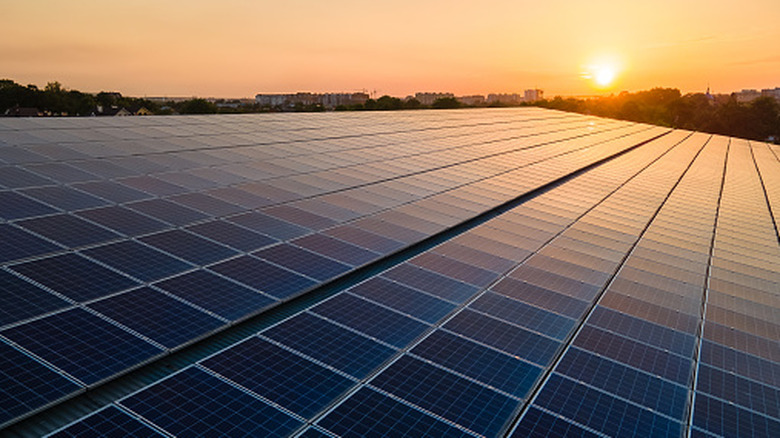
The U.S. has more than 1,400 hydroelectric power plants, and hydroelectric dams generate 6% of the country's electricity. In 2023, solar energy generated only about 4% of electricity. A team of biologists and civil engineers from the City University of New York explored the idea of replacing every hydroelectric dam with a solar farm, and the results, while theoretical, are surprising. To generate about the same amount of electricity, solar panels would only use about 13% of the space currently occupied by existing dam reservoir areas, or 529,885 hectares. That's about 1,309,374 acres, or an area about the same size as the state of Delaware.
The study is conceptual, but researchers highlight it because of the age of existing hydropower infrastructure and the environmental impact of these dams. Studies have found that they negatively affect fish populations, trap sediment in rivers, and change water temperature. Hydropower dams can also impede efforts to restore natural floodplains, which help manage stormwater and reduce the impact of severe flooding in our communities.
This intellectual exercise is intriguing, but the multi-purpose nature of many dams in the U.S. makes this simply not possible. The dams provide other benefits to local communities, including fresh drinking water and flood control. Before we invest in replacing one renewable energy source with another, perhaps we should consider exchanging non-renewable energy sources, such as coal plants, for solar power.