

Can You Use An Electric Screwdriver As A Drill?
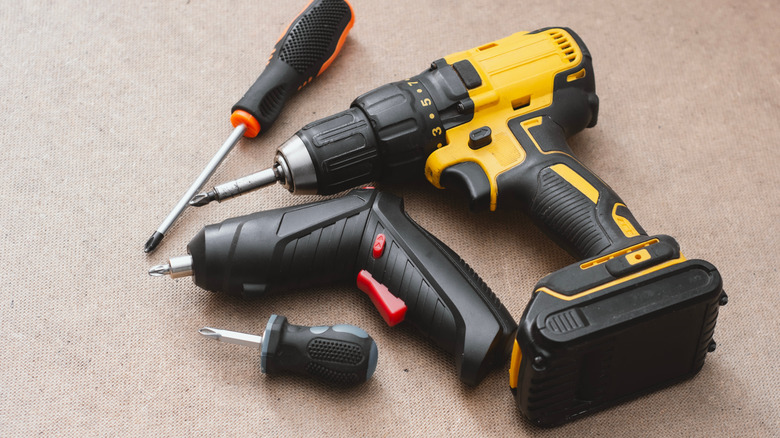
An electric screwdriver very closely resembles a drill, albeit shrunken down. You might assume that these tools can be used interchangeably. That's not necessarily the case. Although there are circumstances when you could choose either an electric screwdriver or a drill and achieve basically the same results, ultimately, these tools have different uses. In other words, some electric screwdrivers can handle limited drilling jobs, but a drill is designed for tasks an electric screwdriver isn't suited for.
An electric screwdriver is typically smaller than a drill. A drill tends to be bulkier and more powerful, with a grip designed to accommodate the substantial torque it can generate. In addition, as you likely guessed, an electric screwdriver fits typical screws and serves the same basic purpose as a manual screwdriver. A drill is more versatile, with a chuck that can fit a large variety of drill and driver bits. In that respect, you can often use a drill as an electric screwdriver. Whether you can use an electric screwdriver as a drill depends on several factors.
The different uses for drills and electric screwdrivers
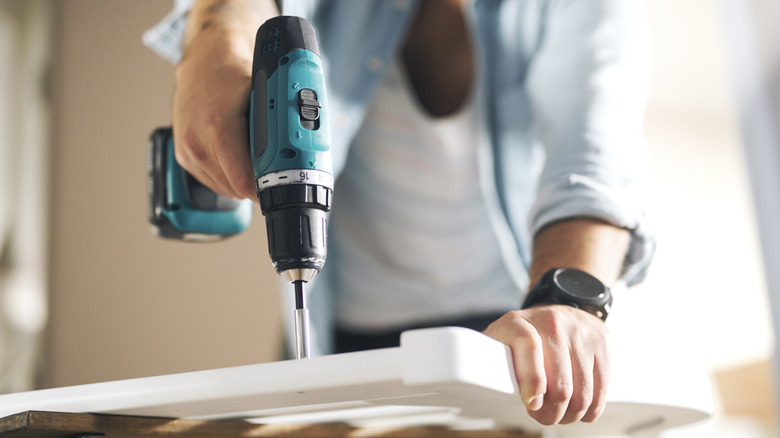
An electric screwdriver offers several features and benefits that distinguish it from a drill. Because it's smaller, it's easier for some people to hold. It also lets users reach tight spots that might be difficult for a drill. The fact that an electric screwdriver generates less torque than a drill isn't necessarily a disadvantage. Electric screwdrivers are ideal for driving screws into thinner or softer materials that might otherwise split or get damaged when exposed to the torque of a drill.
Because a drill's chuck can accept several types of drill bits and attachments, it can serve more purposes than simply replacing a manual screwdriver. Examples include sanding and grinding. There are also some unique potential uses for a cordless drill that you might not have considered.
A powerful drill can also bore into materials an electric screwdriver might not handle effectively. Therefore, you can only use an electric screwdriver like a drill in situations where a drill would already be serving the basic purpose of a screwdriver. Plenty of scenarios prevent an electric screwdriver from replacing a drill, such as drilling into tough materials like concrete or using an attachment the screwdriver can't accept.
Choosing between an electric screwdriver and drill

An electric screwdriver primarily exists to make basic manual screwdriver tasks easier. You might invest in one if you need help screwing into soft wood, assembling furniture, or driving screws into pre-drilled holes. A drill is the better option if you need a durable tool that can handle more jobs than an electric screwdriver alone.
Just keep in mind that, if you can justify the cost, it might make sense to own both. A drill is great for heavy-duty projects that may require different bits and attachments. An electric screwdriver is helpful if you need something lightweight that's suitable for basic screwdriver tasks that require a smaller tool with less torque. If you're on a budget, electric screwdrivers tend to be less expensive than drills, but that's not always true. A quality electric screwdriver can cost more than a cheap drill. That said, the tool you need is the tool you need. Saving money isn't a good reason to choose an electric screwdriver if you really need a drill to complete certain tasks.
Saving money also isn't a good reason to buy an unreliable product. A well-built tool is typically a more financially savvy purchase than a low-quality alternative, since the premium model will stay in better shape longer. Regardless of which specific tool you're buying, you can check rankings of cordless drill brands and rankings of the best screwdrivers on the market for additional comparisons.