

What's The Difference Between 12V And 18V Power Tools, And Which Do You Need?

We may receive a commission on purchases made from links.
If mobility is a key consideration for performing tasks requiring power tools, there's no question that cordless power tools are better than corded versions. However, the decision to jump aboard the cordless power tool train exposes another decision; the choice between 12 volt and 18 volt systems. You can include 20V power tool batteries with 18V varieties since they deliver the same power.
One primary difference between the two distinct power tool voltages is the power they deliver. Power tools designed for use with 18V batteries are inherently more powerful than those with 12V batteries. Most 18V power tools deliver more torque and can support heavier workloads for longer periods before their onboard battery management systems (BMS) shut them down to protect the battery.
However, that extra power comes at a cost, and not just higher prices. Heavy-duty 18V tools and the large, high-capacity batteries that drive them to their full potential are heavier than their more modest 12V versions. For example, Milwaukee's M18 compact impact driver with 2.0 amp-hour 18V battery weighs in at 2.69 pounds. Compare that to the 12V Milwaukee M12 Fuel impact driver with its 1.5Ah battery at 1.98 pounds, a difference of just over 11 ounces.
Isn't bigger always better?
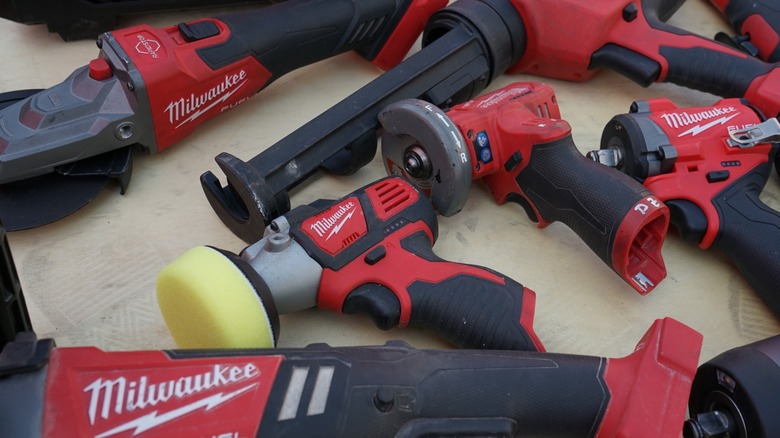
Budget and weight are two things you should consider before buying a power tool battery system. Of course, you could buy the more powerful 18V tools and know that they'll do jobs any 12V power tool can do and more. However, in some cases, that heavy, bulky 18V power tool might feel like using a sledge hammer to drive a nail.
Just because an 18V power tool is more powerful, that doesn't mean 12V tools aren't capable of doing a lot of work. The internet abounds with video evidence pitting various power tools against each other, like this video from YouTube channel HAXMAN.
There's no doubt that if you're boring large holes through lumber or into concrete, or driving 6-inch lag bolts, the more powerful 18V tools win every time. However, if your range of projects involve less taxing tasks, perhaps a few drywall or decking screws to build a DIY birdhouse for example, a set of 12V power tools will suffice.
Power tools with 12V batteries are less expensive. Using Milwaukee power tools from Home Depot as an example, the M18 Fuel 18V brushless impact driver kit comes with two 5.0Ah batteries, a charger, and case for $319.00. Compare that to the M12 fuel 12V brushless impact driver kit priced at $159.00. It includes a 2.0Ah battery, charger, and case.