

The US Army Has Used The Same Ammo Packaging Since WWII – That Could Be About To Change
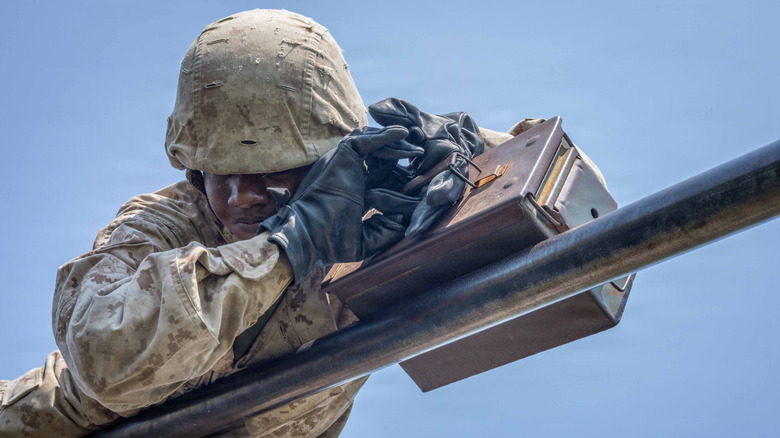
The U.S. Army is known for its constant innovation in military tech, from next-generation combat vehicles to novel AI-assisted data management tools. However, not everything in the Army has evolved quickly. The U.S. Army has been using the same ammunition packaging since World War II — but that's about to change.
In August 2026, the Picatinny, New Jersey-based U.S. Army Combat Capabilities Development Command Armaments Center revealed the SixPAC, which consists of two polymer ammunition containers enclosed in an outer layer made of steel. The U.S. Army had struggled with its supply pipeline for its metal ammo cases, in part owing to a lengthy manufacturing process and a lack of U.S.-based suppliers. It spent about a decade developing new containers that would be easier and faster to obtain.
At the time of writing, there are 800 U.S.-based molders that can create the new polymer cases without relying on a backed up production pipeline, according to the U.S. Department of War. The U.S. Army has also considered using 3D printing technology to boost future ammo box production in the event of emergency scenarios, but further research is required before that can happen. That said, several companies that make high-tech weapons have turned to 3D printing, and the Army actively leverages 3D printing technology (which it refers to as "additive manufacturing," or "AM" for short) for use in temporary replacement vehicle parts and defensive structures.
New polymer-based ammunition cases are lighter

Aside from being more convenient to procure, the Army's new ammunition packaging offers a key practical benefit. At just 2.8 pounds, the polymer-based ammo cases are about half as light as the prior full-metal cases were. That may not seem like a big leap, but per the Department of War, Army service members had maintained that "every ounce counts" toward reducing their equipment burden and increasing their agility, especially aboard weight-sensitive watercraft and aircraft.
The updated polymer-based ammunition cases were tested (and well received) by several soldiers between 2024 and 2025, but the U.S. Army hopes to conduct further testing before approving and implementing a final design. Polymer's durability for military uses in the U.S. also needs to be proven in a range of scenarios, including after it's been stored for several years. "It's a developing field, and polymers are unique — you can modify them, include additives that improve impact performance, stiffness or dimensional stability," said Edward Lucas, a mechanical engineer and the lead designer of the polymer ammo containers. Once the cases are ready, they're to be used for small-caliber ammunition, such as 5.56 and .50 rounds.