

Fiberglass Vs. Aluminum Ladders: What's The Difference?
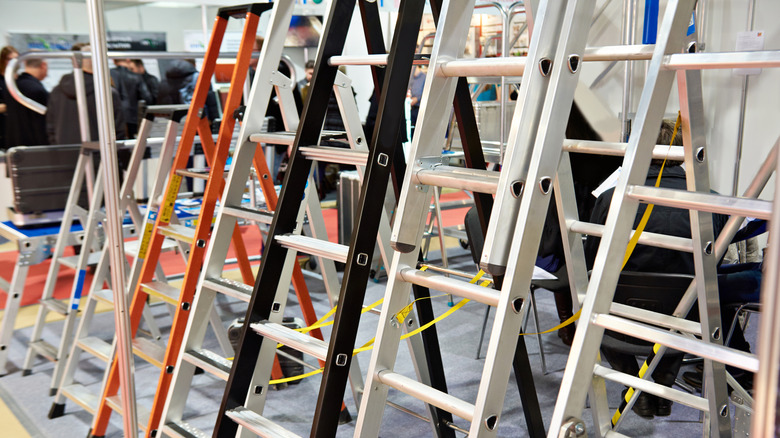
You may not put much thought into what material your ladder is made from, but one unthinking purchase could actually endanger your life in more ways than one. It sounds dramatic, we know, but the truth is that using a ladder is a lot like driving a car: it's a familiar routine where complacency can lead to serious injury more easily than you think.
If you're a new DIYer or have just bought your first home, you may have found yourself standing in the ladder aisle of your local home improvement store, overwhelmed by the choice. Not only are there many different types of ladders, such as step ladders and extension ladders, but they're also made of different materials. You have your pick of timber (or wood) ladders, fiberglass, and aluminum. You may be tempted to base your selection on price or style, but the type of material is just as important as the cost, duty rating, and height.
Ladders made from aluminum tend to be less expensive, and they weigh less than fiberglass ladders, making them a tempting option. You can purchase a 6-foot aluminum ladder from Home Depot for less than $100, for example, while a fiberglass ladder of the same height and weight capacity costs around $150 (at the time of writing). So why would anyone choose fiberglass over aluminum? There are several reasons, but the most vital reason (literally) is that aluminum conducts electricity. You should never use ladders made from this material when you're doing electrical work or near power lines. But that's just one reason.
Other factors in the aluminum vs. fiberglass ladder debate
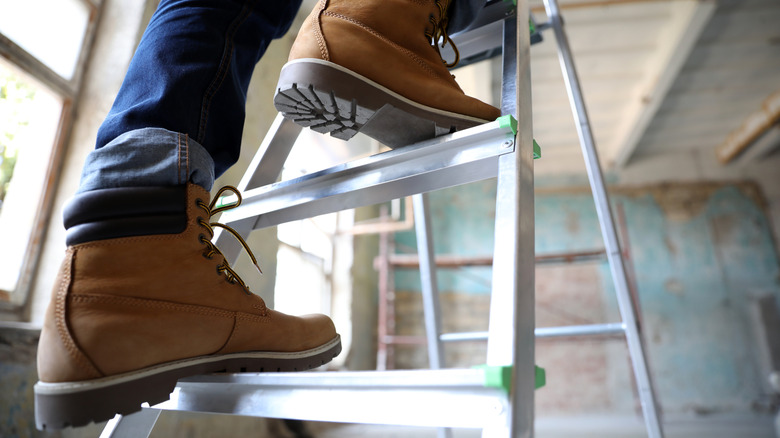
If DIY electrical work is not in your wheelhouse, you should still consider other factors before renting or purchasing a ladder. Aluminum ladders are more portable, especially if you are physically unable to lift or carry heavy items by yourself. They are lighter and easier to maneuver, especially in small spaces or up and down stairs. That being said, a heavier ladder may feel sturdier under your feet, and fiberglass tends to be more rigid. Aluminum ladders also often have a wider base to help prevent them from tipping. Aluminum may flex under you, which can be disconcerting, especially if you're not accustomed to being up on a ladder.
Despite weighing more, though, fiberglass ladders tend to have a lower duty rating than aluminum ladders. Duty rating refers to how much weight a ladder can hold. When considering duty rating, be sure to calculate not just your own weight, but the weight of the tools you plan to use while on the ladder.
Finally, consider durability and maintenance. Fiberglass may weather under the sun over time but holds up well when exposed to moisture and chemicals. Aluminum won't rust because it lacks the iron needed for that process, but it may dent or even bend if hit hard enough. If you have a specific job in mind and are overwhelmed by too many choices, ask a store employee for advice. They should be able to advise you on the type and size of ladder that will best meet your needs, and remember, you can save your cash and rent a ladder instead.