

J-B Weld Vs. Gorilla Epoxy: What's The Difference & Is One Better Than The Other?
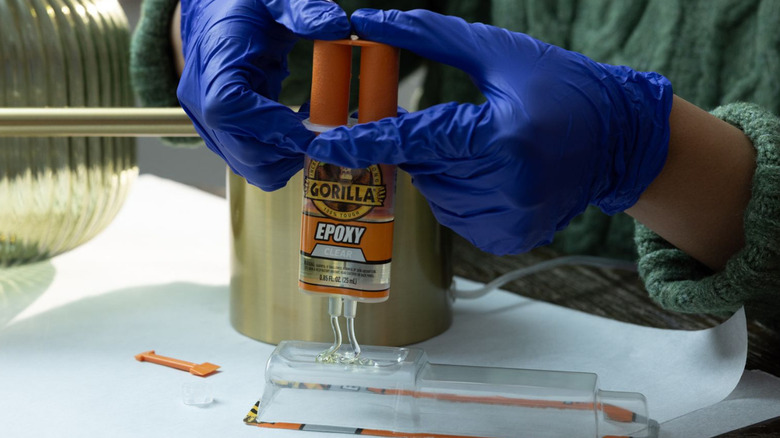
If you're preparing to do some DIY repair work around the house, you may be curious about the differences between J-B Weld's products and Gorilla Epoxy's offerings. While both have two-part epoxy adhesives designed for permanent repairs, their products approach the job differently.
J-B Weld's Original Twin Tube is a steel-reinforced epoxy that sets in four to six hours and fully cures in 15 to 24 hours. Once it cures, J-B Weld forms a hard, dark-gray bond that can be shaped, tapped, filed, sanded, and drilled. It has a tensile strength of 6,220 PSI, a temperature resistance of up to 550 degrees Fahrenheit, and can be used on wood, ceramic, metal, concrete, and fiberglass, among other materials.
In contrast, Gorilla Epoxy sets in five minutes and fully cures clear in 24 hours, with a gap-filling formula designed to bond metal, wood, ceramic, glass, and plastic. It has a tensile strength of up to 3,300 PSI and is rated for temperatures between -10 and 180 degrees Fahrenheit once it cures.
So, on paper, J-B Weld is the winner, at least when it comes to repairs where strength and high-temperature resistance are the priorities. Its versatility also makes it a good option for demanding repairs involving certain materials. However, Gorilla Epoxy could make more sense if you need a faster-setting adhesive, or if appearance matters, since it dries clear. In the end, the right choice depends on what you're repairing and which features matter the most for the job.
J-B Weld and Gorilla Epoxy: Limitations and specialized options
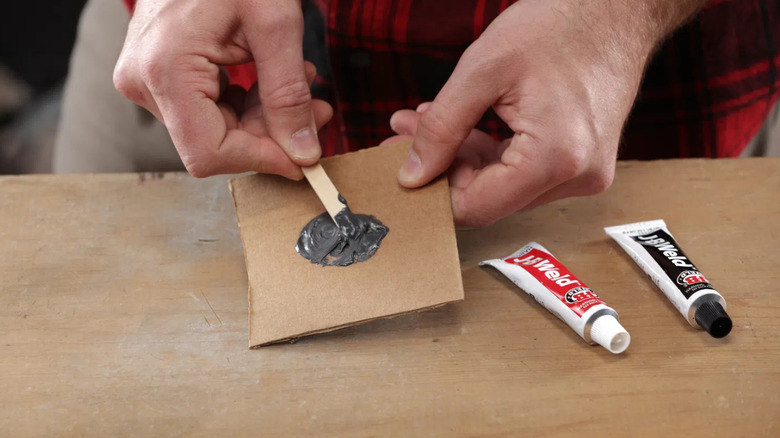
J-B Weld's original formula shouldn't be used with every material, so it's important to know its limitations before you use it. For example, polypropylene and polyethylene aren't suitable materials for J-B Weld, and it should also avoid flexible rubber, leather, vinyl, and canvas. J-B Weld products as a whole also aren't rated as food-safe, which means they shouldn't be used on surfaces that directly come into contact with food or beverages.
Gorilla Epoxy also has its limitations in terms of where it can be used, as it's not recommended for polyethylene or polypropylene plastics. While it does have a quick five minute set time, a repair should be clamped and left undisturbed for at least 30 minutes while the epoxy sets. A Gorilla repair also shouldn't be consistently exposed to water for long periods of time. When it comes to outdoor repairs and items regularly exposed to moisture, Gorilla recommends its Epoxy Ultimate formula instead.
This is where the similarities and differences between the two brands become more apparent, as both J-B Weld and Gorilla carry a variety of formulas and products. J-B Weld makes options such as KwikWeld for faster repairs, ClearWeld for a clear finish, and PlasticBonder for plastics, among other formulas. Gorilla also has other bonding agents in addition to its two epoxies, including wood glue, super glue, clear grip, fabric glue, and rubber cement.