

Does J-B Weld Work On Plastic?
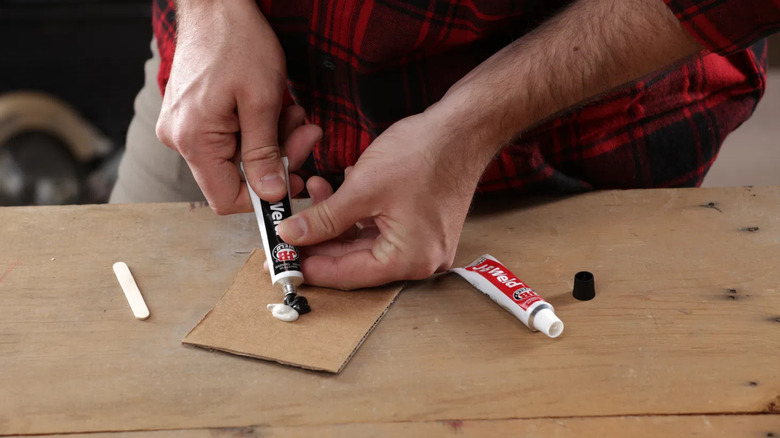
If you're tackling a project, either in the garage or workshop, J-B Weld is a product that could come in handy. That's especially true if you need to repair or bond two items together without a welding torch. When it comes to using J-B Weld on plastics, the original formula works on most rigid plastics, including PVC and CPVC, but that's also where the original's effectiveness on plastic gets a bit tricky.
J-B Weld lists "plastics" right next to PVC and CPVC on product pages, but does not elaborate on what is included under that blanket word. However, the company does warn that the original formula is specifically not recommended for polypropylene, polyethylene, or flexible plastics. But for projects where plastic is the primary concern, J-B Weld does offer PlasticWeld and PlasticBonder, two products designed for use on most plastics, which can also be used for auto bumper repairs and restorations.
Of the two solutions, PlasticBonder is the more versatile, with J-B Weld saying it works on virtually all plastics, including nylon. However, J-B Weld notes that when it comes to polypropylene and polyurethane, it only guarantees cosmetic repairs, not structural repairs. In contrast, PlasticWeld is recommended for most plastics and is described as ideal for rigid plastics, but it is not recommended at all for either polypropylene or polyethylene.
How J-B Weld works on plastic
Part of the reason J-B Weld doesn't recommend its original formula for polypropylene or polyethylene likely has to do with the characteristics of each plastic. Both polypropylene and polyethylene have low surface energy, which makes it very difficult for adhesives to bond. But plastics with higher surface energies are typically easier for adhesives to work with, which may help explain why the company offers specially formulated products for use on plastics.
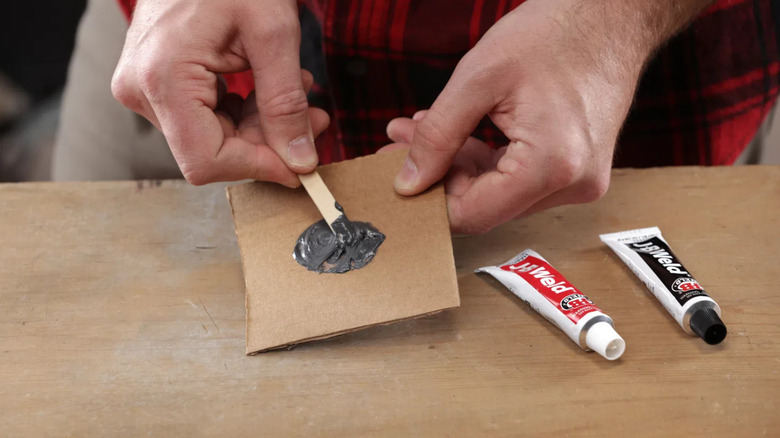
J-B Weld is a two-part epoxy, meaning it uses a resin and hardener that are combined to form the adhesive. Before using it on plastics, it's always best to check the specific formula and match it to the item you're working with to ensure you get a strong bond. Prior to applying the product, J-B Weld recommends cleaning the surface first, then roughening it up with a file or coarse sandpaper. This gives the epoxy a better surface to adhere to and can help produce a longer-lasting repair.
If you're using PlasticWeld, you can expect it to set in about five minutes. The bond then reaches a full cure in about an hour. But where this product uses the two-part epoxy, PlasticBonder uses a two-part urethane adhesive. This formula means it can work on thermoplastics and other materials. PlasticBonder sets in about six minutes and also cures in an hour. J-B Weld offers its two-part adhesives in several formats, including twin tubes, syringes, and putty sticks.