

Why Idling Modern Diesel Engines Is Worse Than Driving Under Load
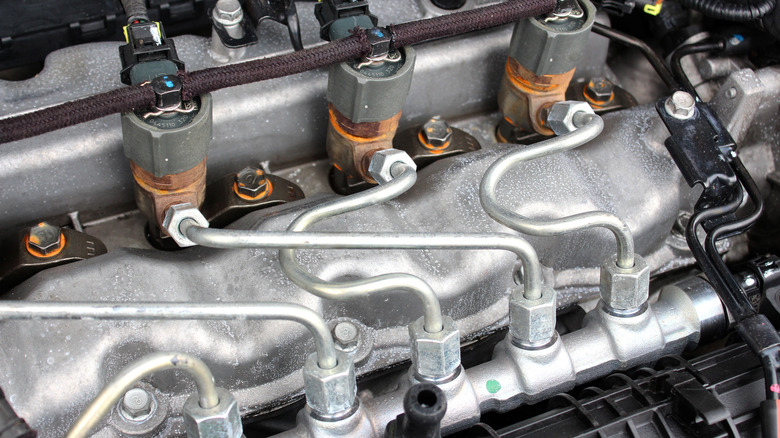
Old-school diesel engines earned a reputation for being able to stay put and idle for hours. Today's diesels, however, are an entirely different animal, as they use high-tech fuel injection and emissions gear with a whole lot of sensors. Some people idle diesel engines and others try to avoid it, but while it can be okay to idle for a short time, doing so with modern diesel engines is still worse than driving under load.
The reason is that when a diesel sits idling, it's running at low speed with barely any load, so combustion temperatures drop and fuel doesn't burn as efficiently. This translates to cooler running, worse fuel economy, and unburned fuel left over. So, unlike when an engine is running under load, idling doesn't allow it to reach the temperatures and pressures it needs. Over time, this can lead to deposits forming and fluids breaking down.
In fact, diesel engines are designed to operate under load, and idling can lead to low cylinder pressure and poor lubrication, causing extra wear and tear. It's one of the mistakes that can destroy your diesel engine in the long run, so if you keep it up, those maintenance bills will start to stack up. Still, it's worth stating again that short idling here and there is generally okay, as long as you don't do it too often.
Are diesels better at idling than gas?
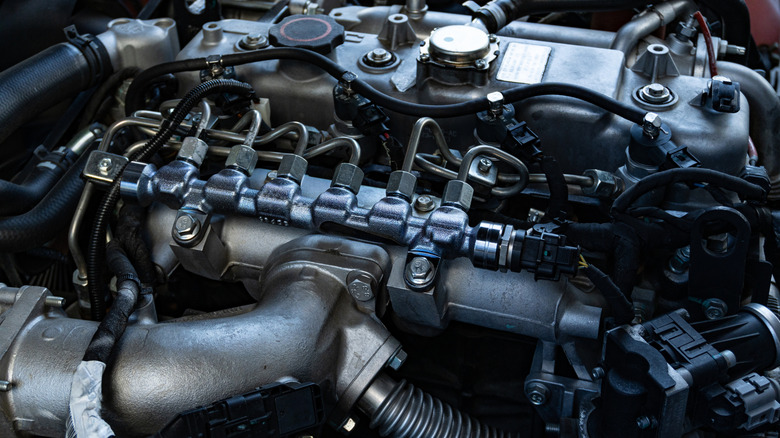
When compared to a gas engine, it becomes clear that diesels have their pros and cons, and even some downsides nobody talks about. When it comes to idling, though, it's a tricky situation since older diesel engines traditionally held certain advantages. However, this doesn't mean modern diesels are better-suited for long idle stretches over gas engines, since that has serious consequences, including engine damage and environmental damage due to increased emissions).
That said, what diesel engines do have when idling is better fuel efficiency. Unlike gas engines, they don't restrict the air coming in, so they burn less fuel. An older study on idle emissions, conducted by the National Library of Medicine, showed that medium-heavy-duty trucks with diesel engines used about 0.44 gallons of fuel per hour while idling, compared to 0.84 gallons for their gas counterparts.
Still, a diesel engine isn't necessarily better at idling than a gas engine. While it will use less fuel, any prolonged idling is a bad idea. Beyond what was already mentioned, idling a diesel engine can also lead to fuel contamination since the engine never gets hot enough to run properly. This can leave unburned fuel mixing with the engine oil, which will lead to more damaged parts on the inside. In the end, it's best to avoid idling a diesel engine frequently, or for long periods of time, if only to save yourself some trouble.