

What Are The Biggest Differences Between Grip Tires And Drift Tires?
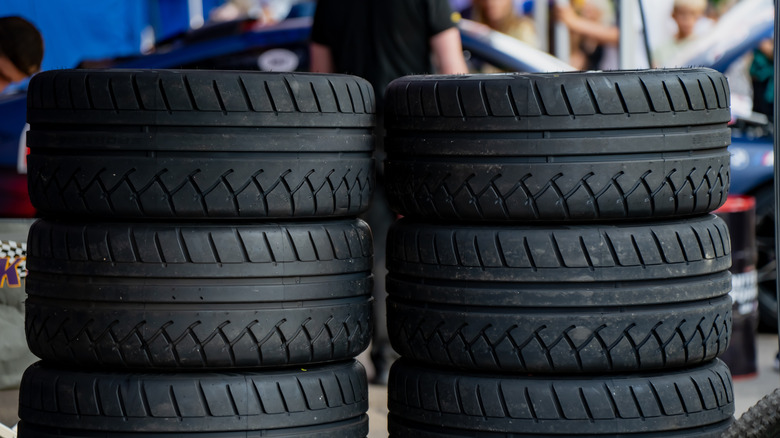
If you never drive on the race track, you may only be familiar with well-known street-legal tires designed for everyday use. Different tire types like drift tires or performance grip models may not be on your radar. The difference between these kinds of tires comes down to traction.
Grip-focused performance tires are designed to keep traction during braking, accelerating, and cornering. This helps a vehicle stay stable and respond to inputs from the driver. The tire's design makes this possible using features like firmer sidewall construction, and a larger tread area contacting the road. In contrast, tires used for drifting are meant to give up some of that traction so the vehicle can slide, while still giving the driver control. Tires used for drifting can feature reinforced sidewalls as well, along with specialized rubber compounds. These compounds help the tire handle both the heat and forces generated by sliding.
Both kinds of tires can wear down faster than standard tires. As drift tires slide, it creates a tremendous friction and heat, and that can affect a tire much faster than the forces at play during normal street driving. Grip-focused performance tires also tend to wear faster than standard tires because performance tires are designed with a bigger focus on grip and handling than tread life.
The tradeoffs with grip and drift tires

There are some things you should know before choosing a performance grip tire for your vehicle. Yes, they can handle high speeds and aggressive driving while also effectively managing heat. But unless you're in a race car on the track, these capabilities may not fit your everyday driving needs. Grip tires can also make for a firmer ride, and allow more road noise into the cabin than you might expect. Their added rolling resistance can also hurt your vehicle's overall fuel economy.
If you're thinking about trying tires for drifting, beware that even street-legal drift tires aren't necessarily safe for everyday use. That's because the compounds in the tires are soft, which causes them to wear faster. It's important to choose the right tire for drifting based on how much power your vehicle generates. For example, a lower-powered car may need a less expensive tire that can lose traction more easily. In contrast, higher-horsepower vehicles can make use of tires with more grip. Treadwear ratings are also important, but those numbers can vary between manufacturers.
Treadwear ratings are also important, but those numbers shouldn't be considered a universal measurement of how much grip a drift tire will have. That's because the ratings aren't necessarily consistent between manufacturers. This means that two tires with the same treadwear grade can actually have different levels of grip.