

What Are The Ropes On Extension Ladders For?

Whether you're a hardcore DIYer or just occasionally tinkering in the garage, there are must-have home improvement items you should own. That includes a ladder, which can vary in design based on its intended use. For example, many extension ladders have a rope that is used to change the ladder's length. This allows the person on the ground to raise or lower a section of the ladder without having to lift it by hand.
An extension ladder can have a pulley system that is used to move the upper section of the ladder, also called the "fly" section. Once the fly section reaches the desired position, rung locks on the ladder engage with the rungs to keep it there. However, the rope itself does not actually secure the ladder in its extended position. When attempting to adjust an extension ladder, the American Ladder Institute says that it should only be adjusted from the ground. That way, you can confirm the locks are properly in place before climbing.
You should also never try to extend or retract the ladder while someone is on it. Be sure the rope is always aligned with the pulley and inspect the pulley system regularly for any signs of wear or damage. Extension ladder ropes must have a minimum breaking strength of 560 pounds. Three-section ladders, which have an additional sliding section, can use a wire cable instead of a rope. But that cable must be at least 1/8 inch in diameter.
Using an extension ladder the right way
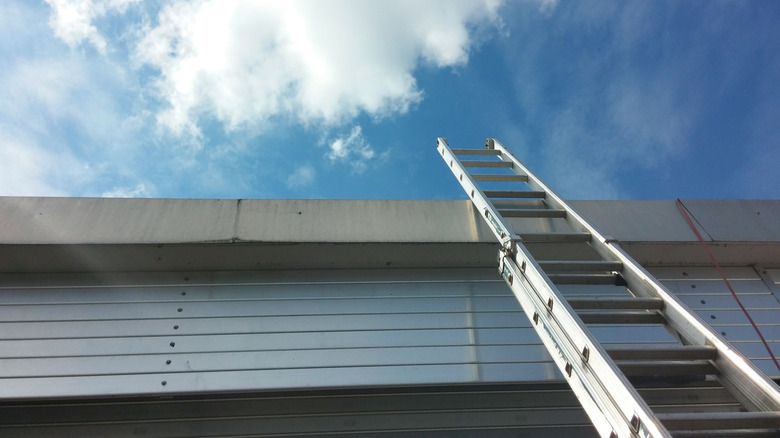
Extension ladders are designed for situations where you need to reach a higher work area and have a suitable surface to lean the ladder against. But an extension ladder isn't self-supporting, which means it needs an upper support point to stay in position. This makes it the right choice for jobs like cleaning out the gutters or getting onto the roof.
When using an extension ladder to access your home's roof, be sure it extends one to three feet above the roof eave. To ensure stability, the ladder should be positioned on level ground at about 75 1/2 degrees, with the base roughly one-quarter of the ladder's working length from the wall or other upper support. The top of the ladder should have equal support on both rails. Be sure to secure the ladder at the upper access point before climbing from the ladder onto the roof.
Once you're on the ladder, don't try to reach too far on one side or the other. That's because shifting your body weight can cause the ladder to tip over. If you do need to move the ladder to another area, climb down completely and move it before going back up. Keep your body facing the ladder while climbing up and down, and keep a firm grip with both hands. Additionally, you should always pay attention to the ladder's highest standing level and never try to climb or stand above that level.