

Should Solar Panels Be Flat Or Angled?
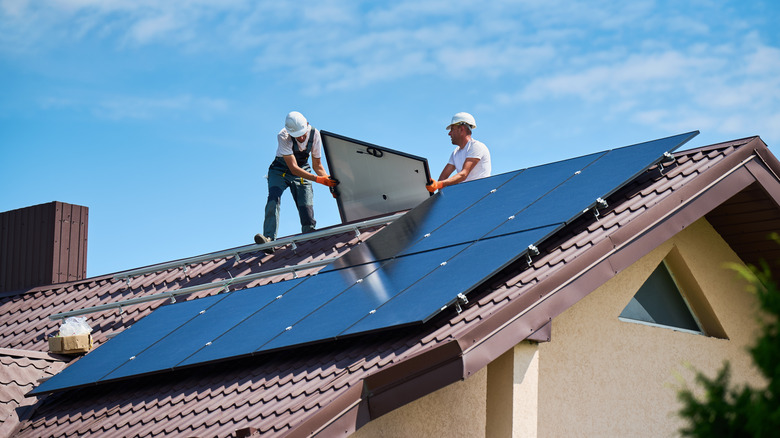
If you're considering installing solar panels to help protect the environment and serve your home's energy needs, you might also wonder whether they should be installed flat on a roof or at an angle. The short answer: It depends. Per the U.S. Department of Energy (DoE), consumer solar panels in the U.S. typically deliver the strongest results when installed on south-facing roofs with slopes that are between 15 and 40 degrees. Thus, the orientation of your solar panels will depend, in part, on the slope of your roof.
Be aware that the above angle recommendations apply specifically to homes in the U.S. The ideal tilt for a consumer solar panel is as close as possible to whatever the local latitude is. In the U.S., that means a slope or angle between 15 and 40 degrees is usually best, but the superior angle will likely be different in other parts of the world.
Naturally, you should always familiarize yourself with the different types of consumer solar panels beforehand to get a sense of your options. It's also important to understand some basics regarding how proper installation can optimize the power production of your solar panels. Although a professional installer should know how to effectively position them, it's beneficial if you also have a rudimentary understanding of the process.
Important information about installing solar panels flat or at an angle
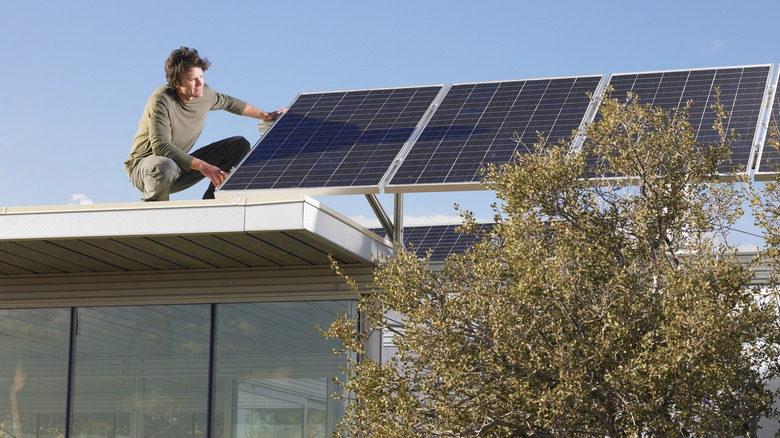
The angle at which solar panels are installed is critical because it determines how much sun exposure they get over the course of a typical day. Again, the current slope of your roof may provide the ideal angle already. In this case, unless a professional convincingly explains otherwise, it probably makes sense to install solar panels flat on your roof. If your roof's slope isn't reasonably close to the local latitude, installing solar panels so they tilt at the ideal angle is probably necessary.
Just be aware that other factors can influence how you should position solar panels on a residential roof. For example, if you live in an area that's prone to snow, hail, or other winter weather, an angle of 60 degrees can help solar panels shed precipitation that might otherwise damage them or impact performance. That said, a larger angle can also increase wind load. Similarly, trees and other such obstructions can determine whether a given spot and angle on a roof is the best choice for your panels.
Again, you can discuss all the relevant factors with a qualified professional to better decide how to install solar panels. While doing your research, you may also want to learn about some common solar panel myths, as debunking misconceptions about this eco-friendly energy option may convince you to finally add an array to your home.