

You Should Never Use This Type Of Power Tool On Concrete
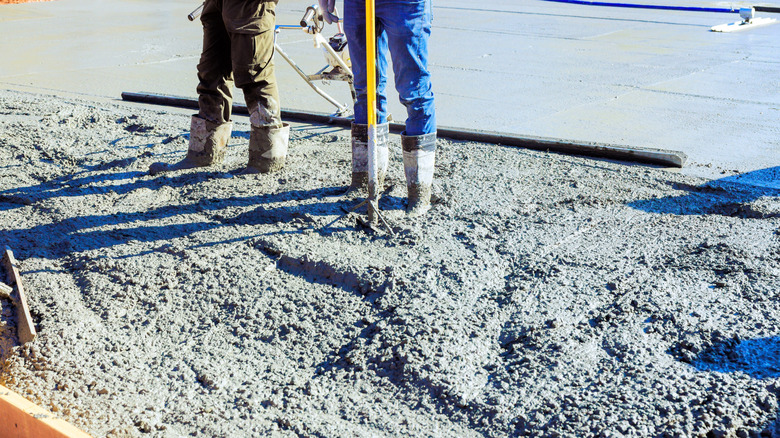
It's important to use the right tool for the job, which means understanding its limitations with the contact surface. This is why you shouldn't use a standard drill without hammer action when working with concrete, as it relies on rotation alone to penetrate the material and isn't the most suitable tool for the job. However, a drill with a hammer function could be the right choice, as the repeated impact helps the bit break through more effectively. There are a number of useful tools to have when working with concrete, and something like a rotary percussive hammer drill is the better choice, because it checks all the boxes for successfully penetrating concrete.
You could try a standard drill with the right bit to make small holes in masonry, but that still doesn't make it the best choice for drilling into concrete. If you do try to use a standard drill on concrete, you could end up straining not only the bit, but yourself as well. That's because the harder you push, the more likely the bit is to overheat. If this happens, you could damage the bit, thus make it less effective at drilling. The problem can then get worse because a damaged bit doesn't drill effectively, forcing you to put even more pressure on the tool. This can cause further damage to the bit and potentially increase your personal risk of injury.
Matching your power tool to the concrete
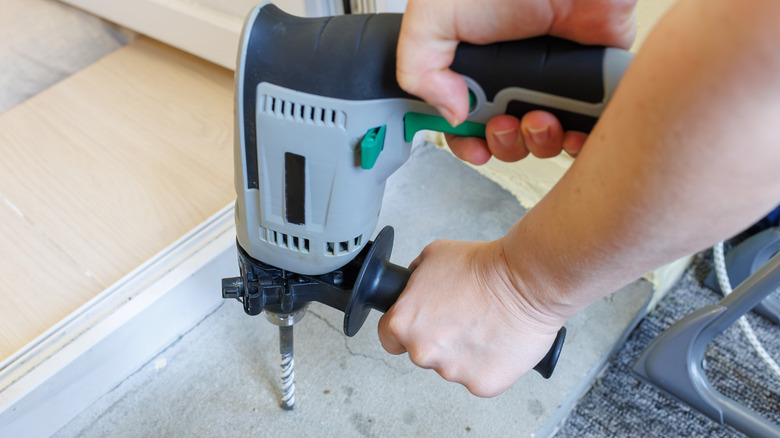
Choosing the right power tool when drilling into concrete isn't the only important consideration. The type of concrete work you're doing should also determine which power tool you use, since the size and depth of the hole you're drilling impacts the type of tool you'll need. For example, while a hammer drill can be suitable for smaller holes and occasional work, a larger and more complicated job may require a combination hammer or rotary hammer.
The concrete itself can also make a difference, as there are different kinds designed for various purposes. Normal-strength concrete is the most common type and may require a tool with different capabilities, rather than one used for a variety of tasks with different properties. Lightweight concrete, for example, uses materials like pumice or clay, while reinforced concrete contains steel bars that increase its overall strength. High-strength concrete is even more demanding, with a compressive strength of at least 6,000 PSI.
The best way to know if the power tool you're using is designed for working with concrete is to check the owner's manual. Toolmakers will typically list which materials each operating mode is intended for, along with the specific accessories that should be used. When it comes to hammer drills, manufacturers will usually specify which drill bits are appropriate for each job. So if carbide-tipped bits are recommended for drilling concrete, twist bits may be more suitable for wood and metal.