

3 Of The Biggest Drawbacks Of Using Portable Washing Machines
Hauling heavy laundry baskets from your apartment or home to a shared laundry facility can turn laundry day from a minor inconvenience into a real chore. Whether you're saving quarters for the laundromat down the street or visiting your building's basement, you may have to wait for a machine to free up, you can't leave your laundry unattended, and you can only hope those shared drums are actually clean.
It's a common issue for city dwellers and budget tenants, especially if you live in a historic building or an especially tight space. If you're tired of this necessary chore eating up hours of your day, you may have considered investing in a portable washing machine. These machines are typically designed for small dwellings and don't require permanent hookups. Otherwise, they have the same components as larger, permanent machines.
You can buy portable washing machines at stores like Home Depot, Lowe's, and Best Buy, with some of the smallest options costing less than $100. If you live in a rented space, however, you should review your lease to make sure these types of washers are allowed. While these portable washing machines may be more convenient than the laundromat down the street, they aren't for everyone. Despite their relatively low cost, there are several drawbacks that you should consider before making an investment.
Limited capacity
Laundry often feels like a never-ending chore, especially if you have a full house. According to the U.S. Census Bureau, about 19.6 million households don't have a private washer/dryer, which means about 30 to 35 million Americans regularly use a laundromat. A portable washing machine may seem like an easy answer, but you should research capacity to determine if the one you are interested in buying would actually hold all you need.
Standard washing machines offer a capacity anywhere between about 1.5 to 6 cubic feet, with medium- to large-capacity machines being the most popular in the U.S. Portable washing machines tend to be smaller, from under 1 cubic foot to more than 3 cubic feet. Because the drum sizes can be so much smaller, a load that could be done in one wash at a laundromat may have to be split into several loads in a portable machine. You won't have to leave your home to get your laundry done, but it may take just as long or even longer.
Overloading the machine can damage it and result in clothes that aren't really clean. Additionally, items like bulky comforters probably won't fit at all. If you decide to try a portable washing machine despite the limitations, aim for the largest capacity machine in your budget that will fit in your space.
Complicated setup
A portable washing machine may mean that you don't have to lug your dirty laundry to the car and spend hours at a laundromat, but some setup is required every time your socks get a bit smelly. Full-size washing machines offer a one-time setup and then are always at the ready. The hoses are connected and the machine is plugged in, so you simply add your laundry and a bit of detergent before hitting the start button.
Portable washing machines are a bit more complicated because they are designed for you to pull out of storage when you need it. The plumbing is temporary: You roll out the machine and connect the hose to a sink. Once the wash cycle is complete, you disconnect the hose and store the machine. While it may not take up as much space as a traditional laundry machine, it does mean that you will have one sink out of commission until the laundry cycle is complete.
You also need a place to dry your laundry. Portable machines have a spin cycle, but your clothes will still be damp. You can invest in a portable dryer if you have the space, but if not, you may be left with a pile of damp laundry and no place to hang it out to dry.
Noise and leaks
Portable washers are often louder than standard machines and, because they aren't installed like a full-size washer, they tend to vibrate as well. Even if the noise doesn't disturb your neighbors, it can disrupt your day, interrupting work calls or making it impossible to hear your favorite TV show. If your portable washing machine suddenly gets louder or makes a noise you've never heard before, you may want to stop the cycle and check it out. It could indicate a problem.
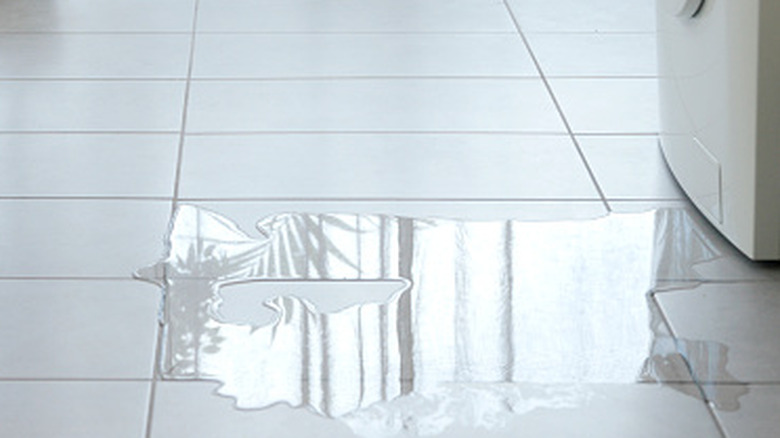
Beyond noise, you also need to be careful of leaks, especially if you have downstairs neighbors. It's possible for the hose to disconnect from your sink, or your sink could clog and overflow. Portable washing machines also tend to leak near door seals or from underneath. To avoid leaks, also check that the hose is installed correctly and examine seals and gaskets for signs of wear.
Experts also recommend that you keep the door open between uses, allowing moisture to evaporate and reducing the risk of mold or mildew. Before you add your laundry, be sure the machine is level so it doesn't move during the wash and pull the hose loose. If you experience a leak that you can't fix, check your warranty and get an estimate to see if the cost of the repair is even worth it.