

How To Level A Washing Machine (And Why You Should)
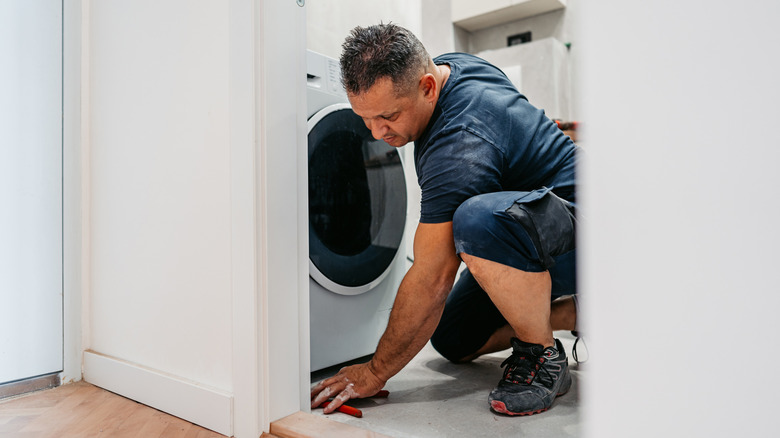
Is your washing machine level? With everything else you have to take care of around the house, it might not be the first question at the top of your mind. But nevertheless, a washing machine needs a solid, level surface to work properly, and taking the time to adjust it can help cut down on excess noise and help it last as long as possible. After all, nobody wants to replace a major household appliance sooner than they have to.
Basically, when a washer sits unevenly, it's going to be more prone to move around during the spin cycle. Over time, that extra movement is only going to get worse. Before long, it can start damaging the washing machine's internal components (not to mention the flooring it sits on). That can mess with how efficiently the machine spins and drains, and will affect how well your clothes get washed, as well. If you don't step in and level it out, your washing machine could break.
How to level a washer

To begin, remove everything from inside and on top of the washer and make sure there's enough space between the machine and the wall. (Front-loading models should also have their shipping bolts removed before leveling.) Then, place a bubble level on top of the machine and check it from side to side and front to back. The washer should sit firmly on the floor, with all of its leveling feet making contact with the surface. If the machine rocks, it needs to be leveled. Same if the washer is walking across the floor during a spin cycle. Both are clear signs that the machine's not balanced.
For a front-loading or top-loading washer, loosen the clamp nuts and adjust the leveling feet until the machine is level. Typically, turning the feet counterclockwise will raise the washer, while turning them clockwise lowers it. For washers on pedestals or as part of a stacked washer-dryer setup, you'll need another person to help lift the machine and use a wood block or shim to support it while you adjust the feet. Once the machine is level, tighten any clamp nuts to hold the adjustments in place.
Your best bet is to level the appliance on installation, but that's not to suggest you can just set it and forget it. Even a perfectly balanced washer can become unbalanced over time as its lock nuts loosen or uneven flooring makes it easy to move around.