

What Does Bleach Do To A Diesel Engine?
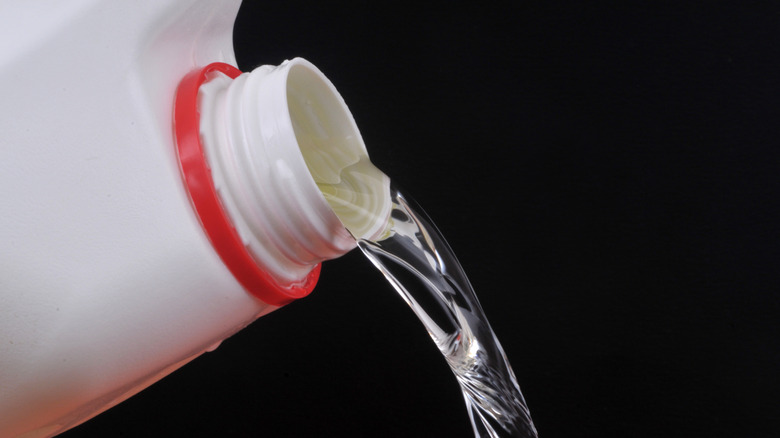
Car engines, like many machines, need maintenance and cleaning to continue running and delivering the best possible performance. The same principle applies to diesel engines, which can be long-lasting. However, some substances just don't mix well with a car engine, and putting the wrong substance in can have serious consequences. Vinegar, for instance, can do bad things to an engine, but you can do far worse than that by using bleach, which can severely impact both performance and durability.
A primary component of bleach is sodium hypochlorite, a highly corrosive chemical compound. If it gets into a diesel engine (or gas engine), it reacts with the metal components inside, causing them to rust and break. It can also cause rubberized seals to deteriorate. Beyond that, if bleach gets into your engine oil or coolant, it reacts with the fluids and creates harmful byproducts. Oil, for example, won't lubricate as well, which means more friction and faster wear on engine parts. And if the coolant is contaminated, it may cause overheating and damage the cooling system.
Basically, when bleach comes into contact with anything in a diesel engine, be it components or fluids, the result can be catastrophic. In case your engine comes into contact with bleach by accident, immediately turn off the engine and drain the fluids. Alternatively, if you're not sure or don't have the know-how to deal with the situation, call a professional.
How do you get rid of carbon build-up in a diesel engine?
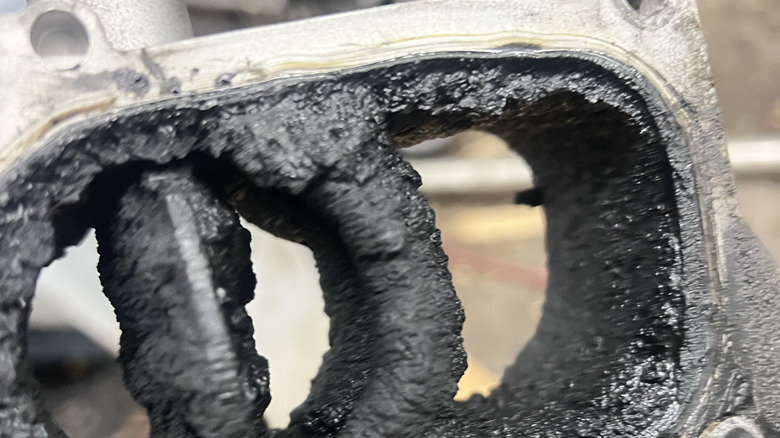
While you can obviously avoid using bleach in a diesel engine, carbon build-up is another story. As one of the downsides of diesel engines, carbon build-up accumulates over time, and how you get rid of it depends on where it is and how bad it's gotten. The parts that get hit most are often the exhaust gas recirculation valve, the diesel particulate filter, the intake manifold, piston crowns and rings, cylinder heads and valves, exhaust ports, and turbochargers. Left unchecked, carbon build-up can damage a diesel engine and make it less efficient.
Fortunately, there are ways to fix this. You can opt for manual cleaning, where you take the engine apart and clean everything by hand. This would require removing parts such as cylinders and pistons, scraping the carbon off with brass brushes or plastic scrapers, then soaking the parts in a decarbonizing solution. This, of course, takes time and expertise, so only do this if you're sure of your abilities. There's also an option of chemical cleaning that lets you remove carbon without taking the engine apart. With the right products, you can spray or soak the parts, let the solution sit for around 30 minutes to break down the carbon, then wipe or rinse it off.
These options, alongside using a solid fuel system cleaner, are best for mild carbon build-ups and can be seen as low-cost regular maintenance. However, in a situation where your diesel engine has heavy carbon build-up, it might be best to leave things to professionals. Mechanics are knowledgeable in these matters and have specialized equipment and chemicals for the job, something that a regular car owner likely doesn't have.