

This Tesla Drove Itself For 20K Miles With Zero Human Intervention Involved
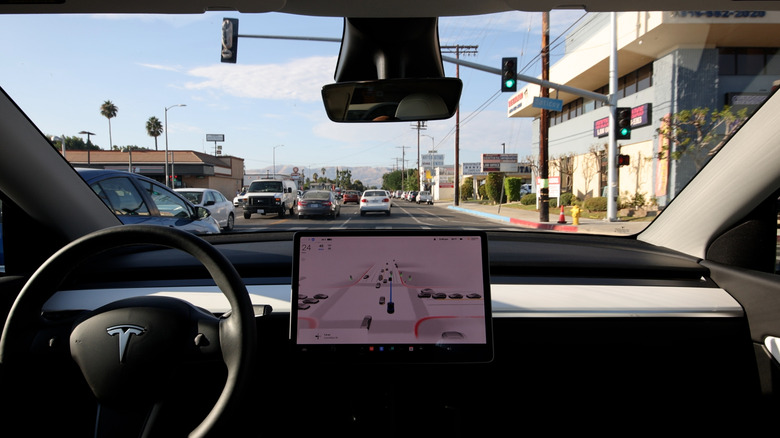
In July 2026, a LiDAR equipment salesman from Washington made headlines after reporting that he took his Tesla Model 3 on a 20,000-mile adventure without any input from a human. David Moss says he used the v14.2 version of Tesla's Full Self-Driving mode (FSD) technology to achieve this. One aspect of it, the streak feature, essentially tracks how many miles a car travels using FSD without a human intervening to touch the brakes or steering wheel.
This wasn't the first time Moss has tested what a Tesla's FSD can do. In 2025, he drove 10,000 consecutive miles using FSD. Soon after, he drove 2,732 miles in two days and 20 hours without a single human output, driving from the Tesla Diner in Los Angeles to Myrtle Beach, South Carolina. Other car owners have also performed similar FSD-led cross-country trips in the past.
Tesla itself documented Moss' drive to South Carolina, claiming it was a cross-country journey that "demonstrates the reliability, capability and ease of FSD." However, the recent 20,000-mile record comes at a time when Tesla is under scrutiny regarding some of its technology and has also been the subject of critcism.
This 20K Tesla journey sparked controversy
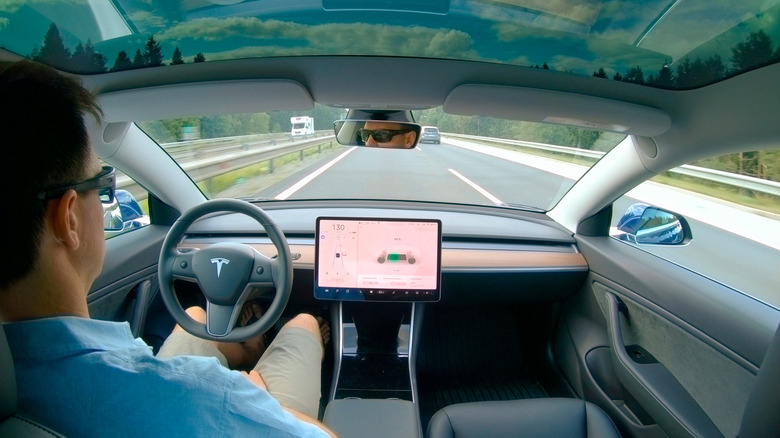
Tesla's FSD streak feature allows drivers to track how many miles they use in this mode without intervention. Once a human intervenes, even to grab the wheel in an emergency, the streak ends. For David Moss to reach over 20,000 miles without any human input, he had to endure certain tricky scenarios, like going over massive potholes or getting turned around a bit in parking lots. The new record and this kind of use of the streak feature has drawn critiques on sites like Reddit.
In fact, Tesla's FSD has been under a critical eye for years. California banned the company from marketing its vehicles as self-driving, and the National Highway Traffic Safety Administration (NHTSA) has been investigating FSD's camera capabilities in certain conditions. Tesla has also found itself in legal trouble in multiple fatal accidents, recently paying $243 million in damages after FSD was ruled to be partially responsible for a crash.
CEO Elon Musk admitted FSD was not autonomous — as he previously claimed — in early 2026, just before Tesla planned to expand its Cybercab services, which have been accused of "dangerous" testing by a former employee. Some are worried the FSD capabilities have been overblown, while others are concerned that people will try to push the streak feature too far. After all, this is a Level 2 system, which explicitly means that it does indeed require human supervision.