

What Does DL Mean For A Chainsaw Chain?
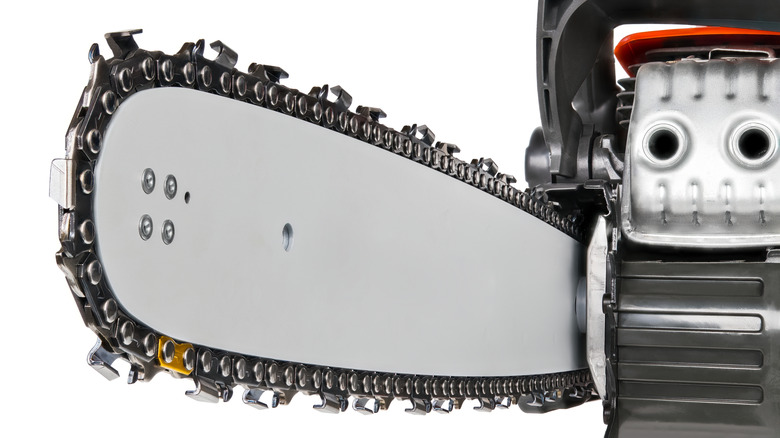
If you've ever needed to replace a chainsaw chain, you've likely had a bevy of questions, like what "full chisel" means, or what does the DL number indicate? There's a fairly simple answer to the latter: DL stands for drive links.
Drive links are the small, tooth-shaped tabs that live on the underside of the chain to run around the guide bar and engage with the sprocket. These are not to be confused with the sharper teeth on the top of the chain, the business end where the actual cutting takes place. Instead, the drive links are what allow the saw's clutch and sprocket to pull the chain around the bar, like the teeth in a clockwork's cog meshing with other cogs to drive a timing mechanism.
You'll usually find the DL count alongside two other metrics that you should also have in hand when it's time to buy a replacement bar or chain: Pitch and gauge. Pitch refers to the spacing between chain rivets, while gauge indicates the thickness of each drive link's lower tang. It's important to ensure that all three of these metrics match your chainsaw or you'll end up with the wrong chain/bar.
Why the correct count matters
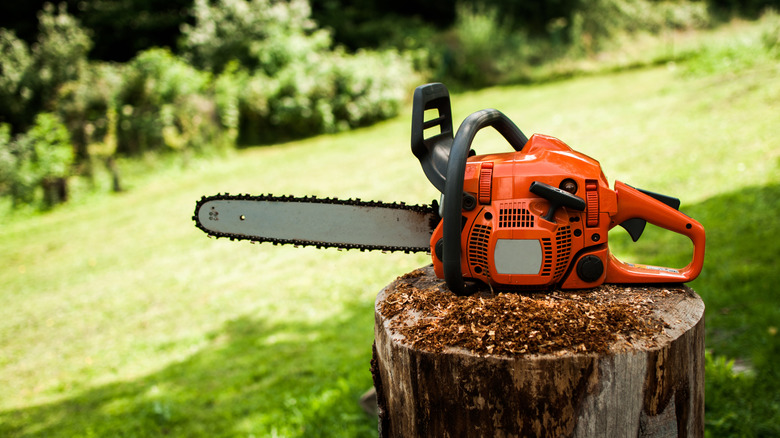
When it's time to replace your chainsaw chain, knowing the DL count is crucial. This is because a chain with the right count can affect everything from performance to safety, and even the lifespan of your saw. If you end up with a chain with too few links, it may not even fit, even if you've loosened the tensioner as much as possible. On the other end of the spectrum, if your chain has too many links, it may be too loose to be usable even after adjustments. You really need a Goldilocks, i.e. just the right fit, as a loose chain can detach during use or damage the saw body or chain catcher. It can even cause nasty kickback, which is a serious injury hazard.
The link count is usually expressed as a simple, single number, like 56 DL, 62 DL, or 72 DL. The count may be stamped near the base of the guide bar, printed in the manual, or searchable by the chain manufacturer's model number. In rare cases, the DL may be listed on the chain, though that's fairly unusual. You can also manually count out the links if you're concerned about an inaccurate listing, just make sure you're counting the tabs on the bottom of the chain and not the cutters along the top. You may want to mark the tab you start on with a piece of tape or marker so you don't lose your place during a long count.