

3 Tech Brands That Used To Make Laptops – But Don't Anymore

Hard to imagine today, but if you go back a quarter-century, you'll find a laptop market crowded with far more names than the select handful we have now. Looking back, a few of those once very well-known manufacturers have outright exited the space in the years since. At the time, Sony, IBM, and Toshiba were all top players in the PC business. Each built its own notable laptop lines, only for all three to ultimately abandon the market as competition heated up.
Margins narrowed, corporate priorities changed, and the going got much tougher as a result. So, the brands got out while they still could. But that doesn't necessarily mean these laptop lines disappeared. In fact, each one of these laptop brands simply came under new ownership or went on under a different name. No matter where their laptop lines ended up, the fact remains: Sony, IBM, and Toshiba are no longer manufacturing laptops like they once were. And each had a very good reason to cease operations. Let's get into the rise and fall of all three.
Sony
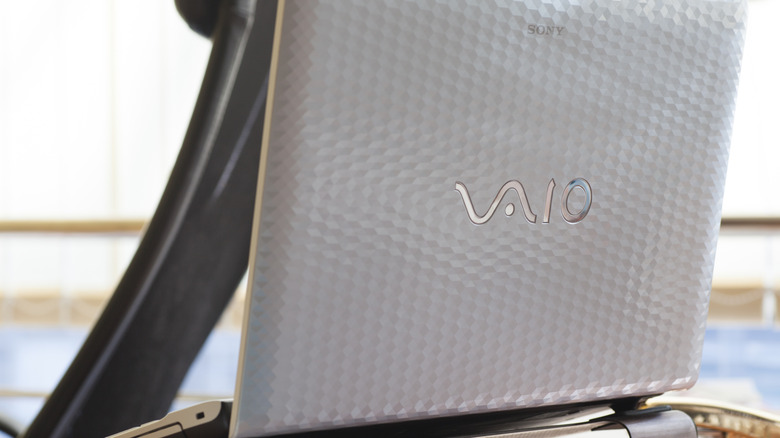
The end of Sony's VAIO laptops came during a particularly difficult period for the Japanese electronics giant. In 2014, Sony announced that it would be selling its VAIO laptop division to private equity group Japan Industrial Partners (JIP) for an estimated 40-50 billion yen. (That's around $380 to $475 million in USD at the time, though it'd convert to less today.) Sony had spent 17 years in the PC business, but more and more losses for the company convinced execs they needed to redirect their engineering resources more toward smartphones and gaming (not to mention its movie and music businesses).
For context, Sony had already eliminated 10,000 jobs two years earlier in 2012. There were another 5,000 in 2014, as well. The company felt the hurt the most in electronics, with its television and computer businesses both performing worse than expected. So, Sony saw in VAIO an opportunity to recoup. The brand had nearly two decades of success behind it when Sony decided that laptops no longer fit its strategic priorities. Thus, the VAIO division was sold off. The brand is still around today, but JIP actually sold it themselves in 2025. It's now owned by Japanese electronics retailer Nojima.
IBM
IBM introduced the ThinkPad in 1992, and it didn't take long for it to become one of the most influential notebook lines ever produced. As a matter of fact, the ThinkPad helped change IBM's reputation in the laptop space after years of struggling to make an impact. Its hard black exterior and distinctive red TrackPoint separated it from a lot of the more beige, vanilla laptops that dominated the market at the time. But it was a success for more than just aesthetic reasons, The ThinkPad was also a hit for its practicality. IBM designed the ThinkPad around the realities of working away from a desk, equipping it with novel features (for the time) like a front-loading floppy drive, removable hard drive, a modem, and nearly four hours of battery life.
Within two months of its introduction, IBM had over a hundred thousand ThinkPad orders. By the end of its first year, IBM had banked more than a billion on ThinkPad sales alone. Come 2000, it had become one of the bestselling computers of all time. IBM rode the ThinkPad wave with new models and technologies, but, before long, growth slowed and profit margins declined. In 2004, IBM announced that Lenovo would acquire its Personal Computing Division, and the ThinkPad was no longer synonymous with IBM. Lenovo still owns ThinkPad and continues to make new models to this day.
Toshiba
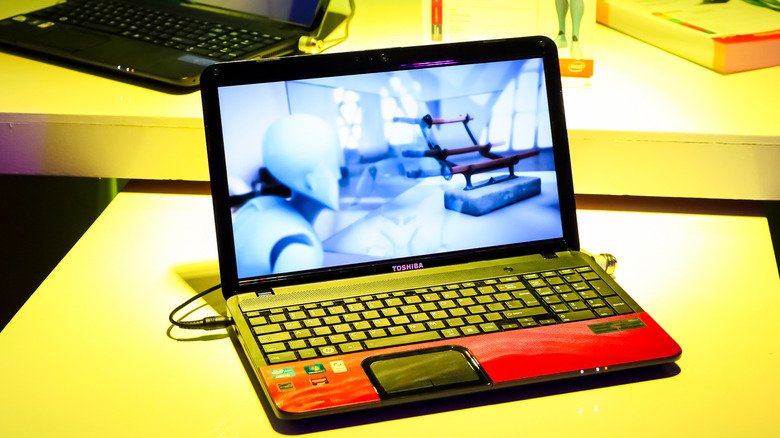
And then there's Toshiba: a rise and fall a bit more dramatic than that of VAIO or ThinkPad. The company first started making laptops in 1985, allowing them to become a significant force in the PC market simply because of how early Toshiba was to the market. Alas, its position weakened as cell phones became more powerful and the industry started consolidating around the top laptop brands we know today. Toshiba's hardware and pricing just couldn't keep the company competitive, and its PC operations were pushed toward the margins because of it.
In 2018, Sharp purchased 80% of Toshiba's laptop manufacturing arm for $36 million. It's hard to believe it could go for such a relatively small amount compared to the scale the business had once commanded, but that's just the way the story goes sometimes. Sharp exercised its option to the remaining shares in 2020, officially giving it control of Toshiba's once massive laptop business. Sharp renamed the business Dynabook, meaning Toshiba's 35-year run was (and remains) done. Today, Toshiba's more about industrial electronics with other consumer businesses such as televisions, home theater equipment, and hard drives still chugging right along in the background.