

Apple M6 Vs M5: How Big Of An Upgrade Is The New Chip?
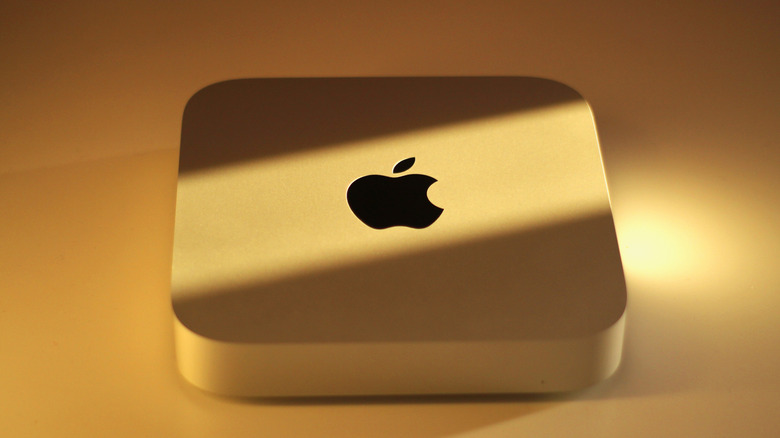
Less than a year ago, in October 2025, Apple refreshed the 14-inch MacBook Pro, iPad Pro, and the Apple Vision Pro with a new generation M5 chip. A few months later, in early 2026, the M5 family was expanded further with the launch of the even more powerful M5 Pro and M5 Max chips. Fast-forward to August 2026, and the base M5 has found a successor in the form of the brand-new Apple M6 chip. The first in a series of future M6 series processors, the M6 chip will be first used in the latest generation of Apple's popular Mac Mini, which was introduced today. Also part of this mid-year launch is the new performance king within the M5 series chips; the Apple M5 Ultra, which is positioned above the M5 Max and M5 Pro chips launched earlier this year.
The question, however, is whether the new entry-level chip — the Apple M6 — can stack up to the M5 series. More importantly, does the arrival of this chip render your M5 Apple devices obsolete? Apple's major talking point with the M6 series chip is the new 2nm architecture, making it the first in Apple's family to move to a 2nm manufacturing node. The switch from 3nm to 2nm took a little over three years, considering that the first 3nm chip (Apple A17 Pro) launched in late 2023, slightly ahead of the M3 chips the same year.
Apple M6 chip: What else has changed from the M5?

The switch to a smaller 2nm manufacturing process is, without a doubt, the biggest change to the M6 compared to the M5. This single change should theoretically result in several performance and efficiency gains, but more extensive testing will need to be done. However, the changes to the M6 chip aren't restricted to just the process nodes. Also new with the M6 chip is that it gains two extra cores over the standard M5 chip, and features a 12 core CPU. The M6's CPU core now includes 2 super cores, 4 performance cores, and 6 efficiency cores. Apple also claims that the M6 — as things stand now — offers the world's fastest single-threaded performance.
Moving on to the GPU, it also now has 12 cores, as opposed to just 10 on the M5. Apple claims that the higher core count enables the M6 to deliver a 30 percent improvement in GPU compute for AI applications. Staying with AI, Apple's neural engine is where things get interesting. Compared to the M5's single 16-core neural engine, the M6 gets twin 16-core neural engines, which should make on-device AI tasks on M6 devices noticeably faster.
In graphics-oriented tasks, the two additional cores should translate to meaningful performance gains. Apple has also updated the shader core architecture, Dynamic Caching, and improved hardware-accelerated ray tracing, which should add to a noticeable performance bump. Another area of improvement is the increased bandwidth for unified memory, which has gone up from 150 GB/s to 170 GB/s; a 10% increase over the M5.
Should M5 users upgrade to M6 devices?
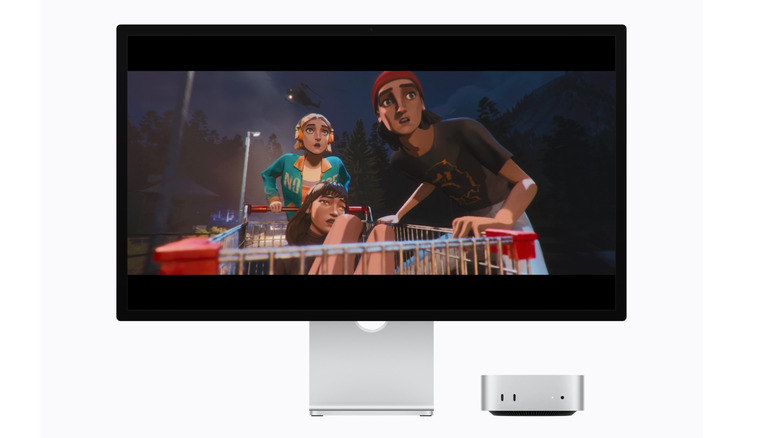
The only device a current M5 MacBook Pro owner can upgrade to in order to access the performance gains of the M6 is to switch to a Mac Mini. However, even after Apple's future notebook lineup transitions to the M6, an upgrade is probably not a must. Sure, Apple claims several performance gains on the M6 compared to the M5, but these gains may not be noticeable to the vast majority of M5 users. It is also prudent to remember that the M5 chip itself is less than a year old, and will hold up well for the next couple of years. In fact, we would extend this logic to folks who are using even older M4 series chips on their Apple products.
Folks who may want to look at the upcoming Apple M6-based products are those who are still using devices powered by the Apple M3 or older chips. An upgrade from these three-generation-old devices will feel like a meaningful upgrade, and the newer machine will feel noticeably faster than the device it replaces.
In simpler terms, switching to Apple M6-based systems currently only makes sense for people buying their first Apple system or those using devices running Apple Silicon from well over 3 years ago.