

Is It Harder To Fly A Plane Or A Helicopter? Here's What Pilots Say
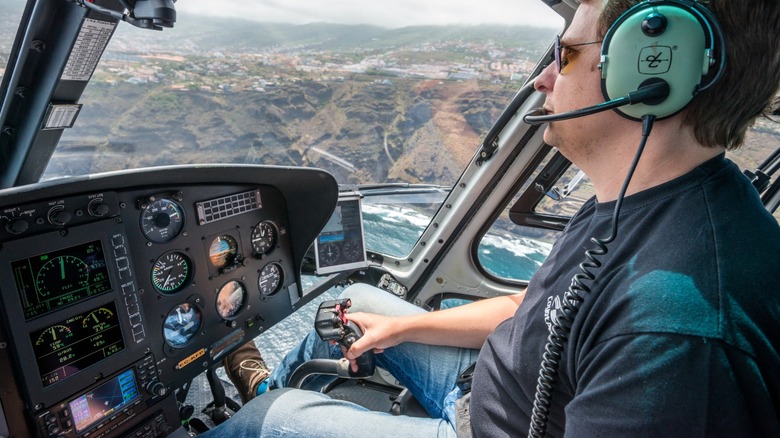
Helicopters are flying marvels of engineering, especially when we see them taking off from the ground without needing a runway. Because of this, many believe that flying a helicopter is infinitely harder than flying a plane, but is that really true? I'm a private pilot and had this exact discussion with a couple of chopper pilots from my local airfield, and they agreed that helicopters are more complicated to fly than fixed-wing aircraft.
This is especially the case as the former is inherently less stable compared to the latter. Choppers require both hands and feet to operate their flight controls, as you always need to be in control of the aircraft through the cyclic (which controls your attitude and helps you change direction and speed), collective (which controls the pitch of all the rotor blades to control the amount of lift and also houses the throttle), and pedals (which control the tail rotor).
By comparison, you can fly a plane with one hand on the yoke or control column, which controls your attitude, and the other on the throttle (which adjusts engine power and affects lift), and your feet on the rudder pedals. Aside from not requiring constant, simultaneous input on every control, most airplanes can fly on their own once in cruise. For example, even if I fly an old, heavily used Cessna 152 without an advanced autopilot, I can just set the throttle at a specific RPM, adjust the elevator trim, and fly hands-free, provided that the weather cooperates. On the other hand, helicopters without an autopilot must be hand-flown at all times, especially because even a slight change in one control affects the others.
Helicopters become easier to fly as you get used to them
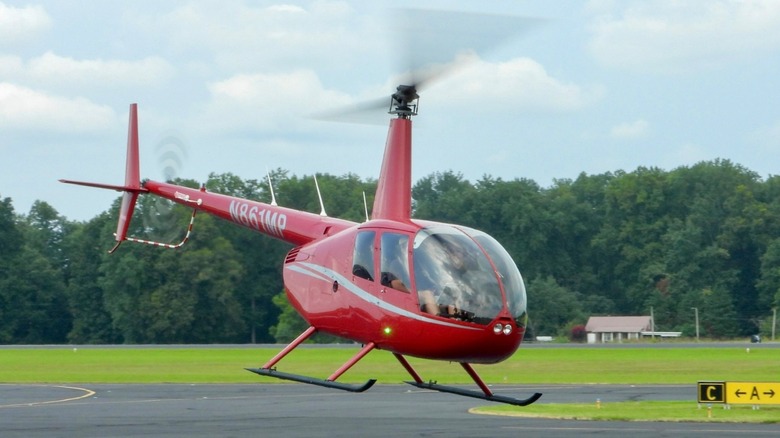
Even though helicopters have more complicated controls, training overcomes this. Once a pilot becomes used to flying a chopper, it becomes second nature and isn't much more difficult than, say, driving a car once you have hundreds of hours of experience on the type. This is exactly what it felt like after I logged over 100 hours of flying in the Cessna 152 — although I still had to be mindful of procedures and safety, I no longer felt nervous every time I started the engine, taxied to the runway, and took off into the skies. Although helicopter training is different from learning to fly a fixed-wing aircraft, many helicopter pilots would agree that the feeling is the same once you gain confidence in operating that machine.
You're also not thrown into the deep end, so to speak, when it comes to helicopter flight training. Instead, you must first go through ground school to master the theory before flying a chopper. Once you've passed your ground exams, you're slowly eased into actual helicopter flight training. Students are often taught to master the difficult but basic aspects of helicopter flying, like hovering and taking off. Once a student gets the hang of these maneuvers, they should gain more confidence in less demanding operations, like straight-and-level flying and landings. You need a minimum of 40 hours of actual flight training before you can get your license, but that does not mean that you're automatically given one after you hit that requirement — instead, most instructors ensure that you've actually mastered flying before recommending that you get your check ride, ensuring you're proficient and safe before you earn your license.